I still vividly remember the cold steel of Jin Sakai’s katana meeting Lord Shimura’s blade under the blood-red maple leaves. That duel wasn’t just a clash of swords; it was the culmination of a heartbreaking rift between honor and necessity. When I chose to spare my uncle’s life, I knew I had finally fully embraced the Ghost, shattering the last remnants of the samurai code that once defined me. Now, in 2026, with the sequel on the horizon, I find myself haunted by a question: will Ghost of Tsushima 2 truly make me feel the weight of that choice, or will it once again protect me from the very consequences its story so beautifully sets up?
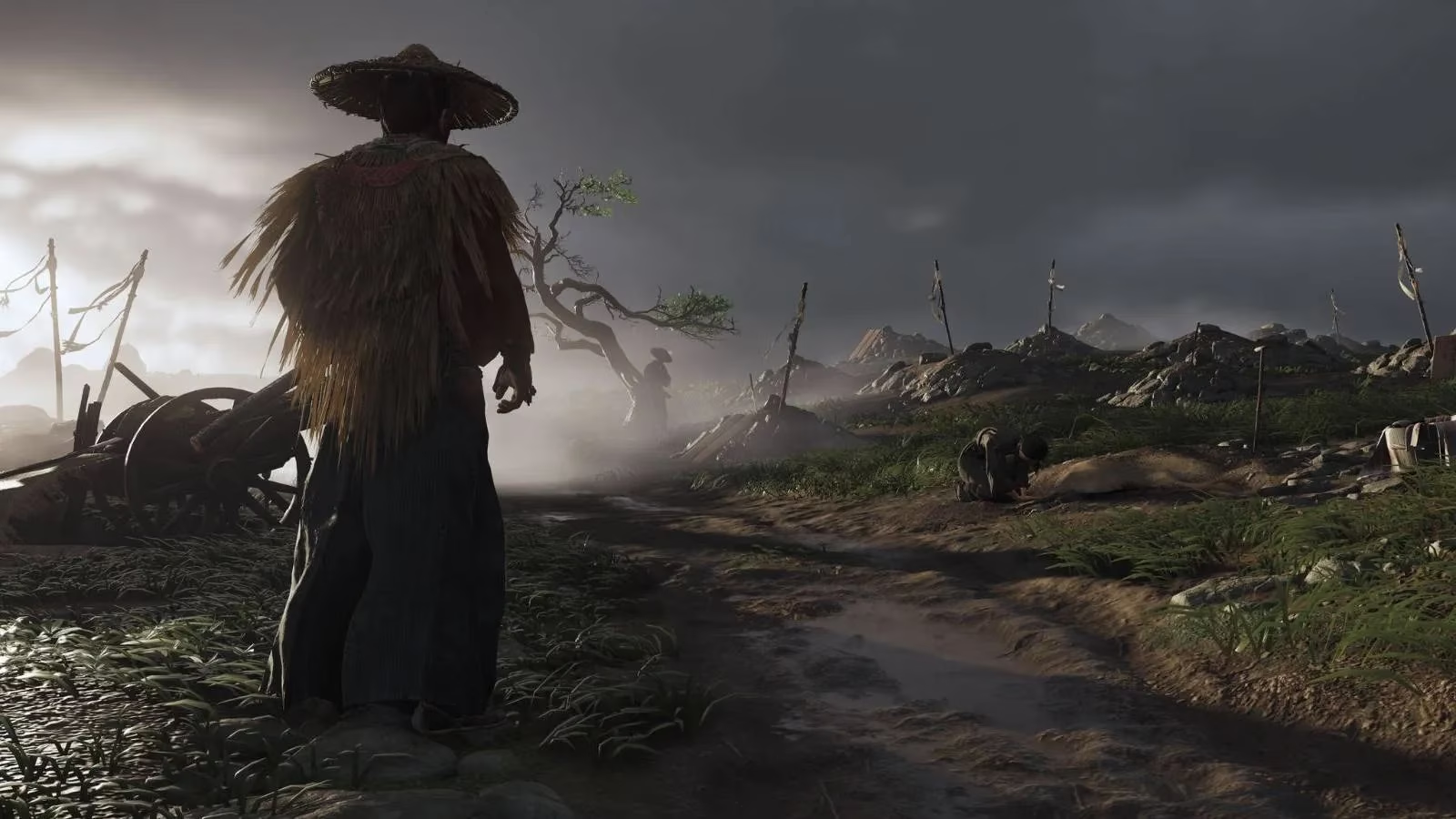
The original game presented a masterful narrative paradox — Jin became the Ghost precisely because the samurai’s rigid honor would have doomed Tsushima. Yet, for all its emotional storytelling, the gameplay let me slip through the cracks of that conflict untouched. I could assassinate Mongol patrols from the shadows, poison their camps, and terrify them with ghostly tactics, but my reputation among the people of Tsushima remained a static, reverent admiration. The separation between Jin and Shimura was talked about, never truly felt in the interactive world. It was like being told about a storm while standing under a perfectly clear sky — the description was vivid, but I never got wet.
This design choice likely stemmed from a desire not to limit playstyles, but it insulated me from the central theme. In the sequel, I want a reputation system that acts less like a binary morality meter and more like a living memory. Imagine if the island’s inhabitants no longer simply cheered when I passed by. Merchant prices could fluctuate based on my recent actions — fear might bring discounts, but also slammed doors. Allied samurai might refuse to fight alongside a dishonorable Ghost, or worse, betray my location to the shogun’s hunters. This wouldn’t punish creativity; it would validate it by making every shadowy kill a deliberate, consequential act. Jin’s soul became a shattered mirror reflecting both the samurai and the Ghost, and it’s time the world started showing him those fractured reflections.
Speaking of reflections, Shimura’s role in Ghost of Tsushima 2 must not soften. The idea of him accepting Jin’s methods would dismantle the original’s tragic foundation like a potter smashing his finished vase to recycle the clay — the material remains, but the artistry is lost. As I see it, Shimura should evolve into an antagonist bound not by hatred, but by a love as sharp as a ceremonial tantō, carefully preserved but poised to draw blood. He is a man who has chosen to let his heart be guided by the very honor that Jin abandoned, and that makes him far more dangerous than any Mongol warlord. If the sequel pits us against each other again, it must do so with the full, agonizing weight of that bond. Sparing him was the canon ending, meaning Jin deliberately left that blade dangling above his own future. I want that threat to feel real in every mission, knowing that Shimura’s hunters are always one step behind, torn between duty and a desire to save the nephew they once loved.
Some might argue that a reputation system contradicts Jin’s conviction — he has already chosen the Ghost’s path, so why bother second-guessing it? But that’s precisely the point. Conviction doesn’t erase consequences; it only gives you the courage to face them. In Ghost of Tsushima 2, I want to feel the island’s complex reaction to my vigilantism. Perhaps villages I’ve saved welcome me with hushed gratitude, while those caught in the shogun’s retribution curse my name. This would transform Jin’s journey into a delicate dance on a fraying silk rope stretched across a canyon of public opinion — every step calculated, every wobble potentially fatal.
By 2026, I expect Sucker Punch to deliver more than just expanded bamboo strike mechanics. The sequel has an opportunity to weave the narrative’s dishonor directly into the fabric of gameplay, making me experience the same painful rift that Jin and Shimura died metaphorically — and almost literally — for. Jin once whispered that without the Ghost, Tsushima would fall, but carrying the Ghost should feel like carrying a burning lantern through a paper village. Let the fire warm the innocents, but let the sparks show me, relentlessly, what I’ve already scorched.