Imagine riding through fields of pampas grass, the wind at your back, a katana gleaming under a blood-red sun. Ghost of Tsushima has captured hearts since its 2020 debut, and even in 2026, with its PC port and Director's Cut still fresh in memory, the game remains a masterpiece of atmosphere and combat. But as players guide Jin Sakai on his quest to free Tsushima from Mongol invaders, a quiet curiosity lingers: did any of this actually happen? Was Jin a real samurai? Did Khotun Khan truly face a vengeful ghost?
Spoiler alert, noble warriors—the answer is more fascinating than a simple yes or no. The game is a breathtaking tapestry woven from real history and sweeping fiction. Let\u2019s ride into the storm and separate fact from legend.
\ud83c\udf0a Setting the Scene: Tsushima, 1274
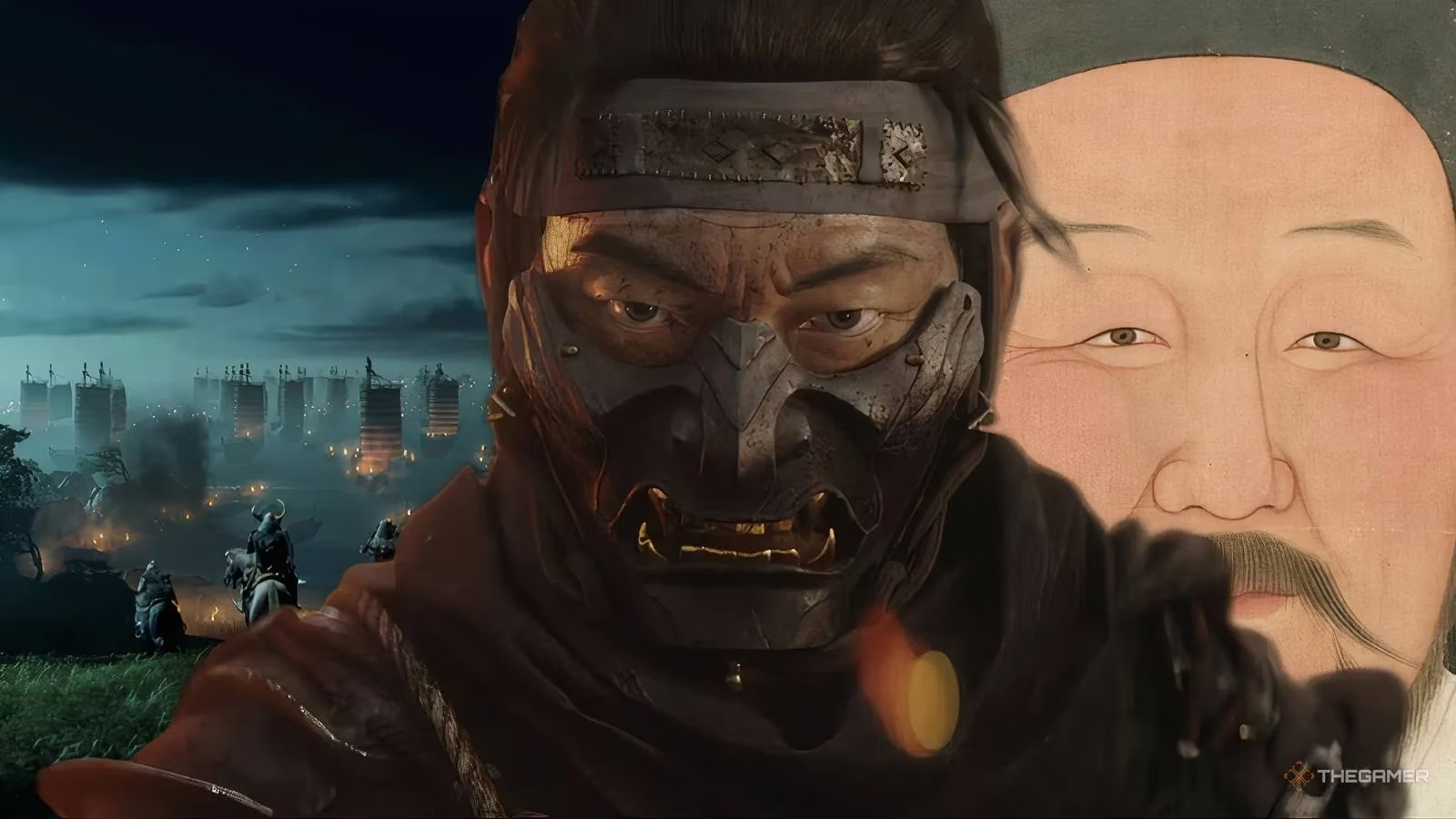
Yes, absolutely. Ghost of Tsushima is rooted in a real historical event\u2014the Mongol invasion of Japan in 1274. The game nails the when and where: it\u2019s set on Tsushima Island, and later Iki Island in the Director\u2019s Cut expansion. During that fateful year, these two islands were the first targets of the Mongol Empire\u2019s attempt to swallow Japan whole.
But here\u2019s the twist. While the backdrop is historically accurate, the events that unfolded after the Mongols landed\u2026 well, they played out far differently than Sucker Punch\u2019s narrative. Almost unbelievably differently.
\u26a1 Jin Sakai: The Hero That Never Was
Let\u2019s address the elephant\u2014or ghost\u2014in the room: Jin Sakai is not a real person. He\u2019s a fictional creation, dreamed up by the studio Sucker Punch to give players an emotional, personal journey. No records exist of a lone samurai turning into a legendary \u201cGhost\u201d to repel the invaders. In fact, as game director Nate Fox confirmed back in an E3 2018 interview, there are zero real historical NPCs you can meet in the game. The developers considered adding actual figures but decided against it, feeling it would be insensitive to depict real people within such a dramatically altered story.
So every farmer, every ally, every enemy you encounter is a product of imagination\u2014crafted purely for the sake of entertainment.
\ud83d\udc32 The Villain: Khotun Khan vs Kublai Khan
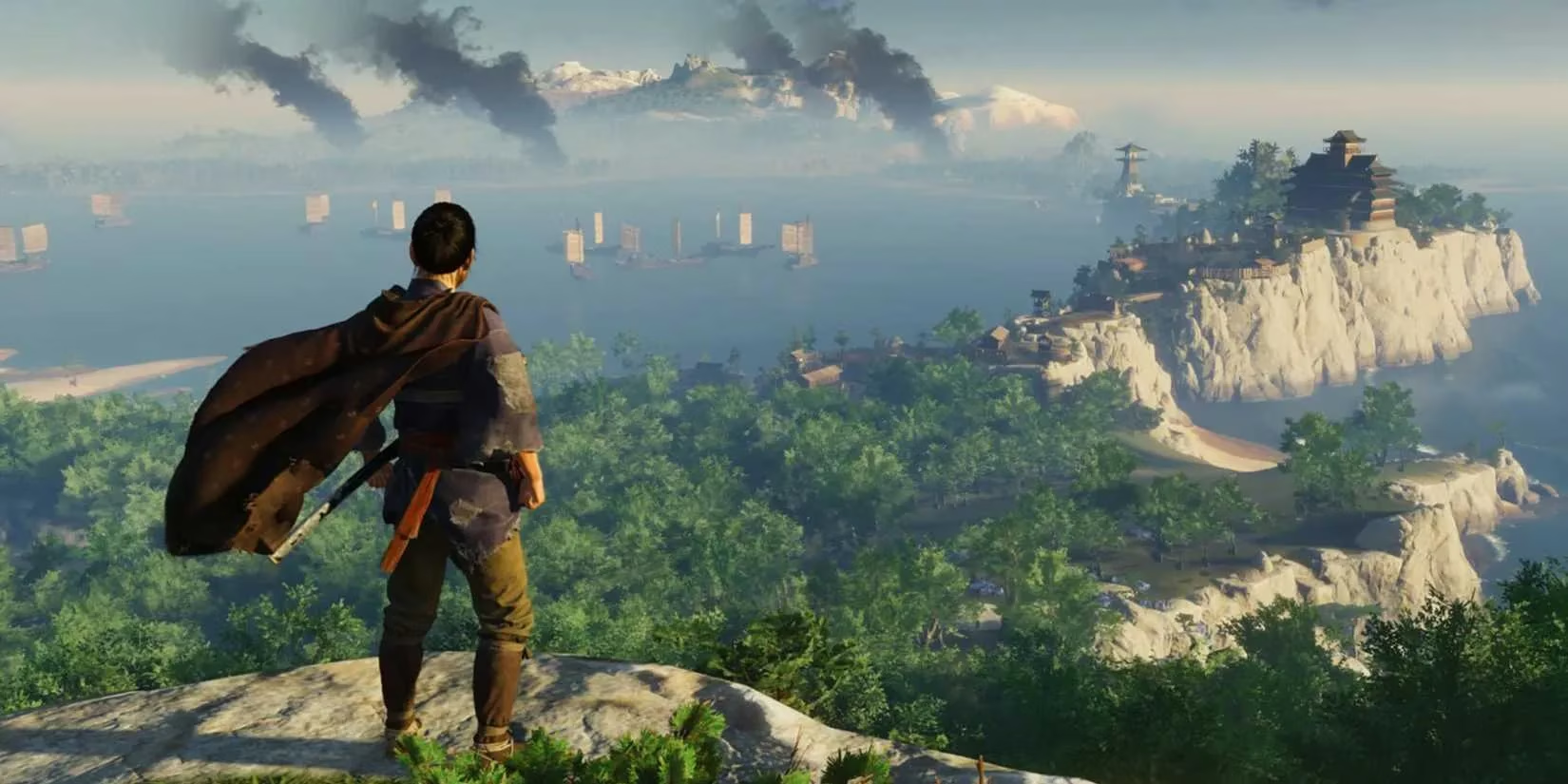
Now, that intimidating Mongol leader you spent dozens of hours plotting against? Khotun Khan is just as fictional as Jin. The real grandson of Genghis Khan who led the invasions was Kublai Khan\u2014a name you might recall from history class. And unlike his game counterpart, Kublai didn\u2019t meet his end at the tip of a samurai\u2019s blade. He lived to the ripe old age of 78, dying from natural causes in 1294, two full decades after the first invasion.
Ghost of Tsushima wraps up with Jin defeating Khotun in a climatic duel, because video games need final bosses. Real history isn\u2019t so obliging.
\u2694\ufe0f Samurai Gear: Anachronisms Galore!
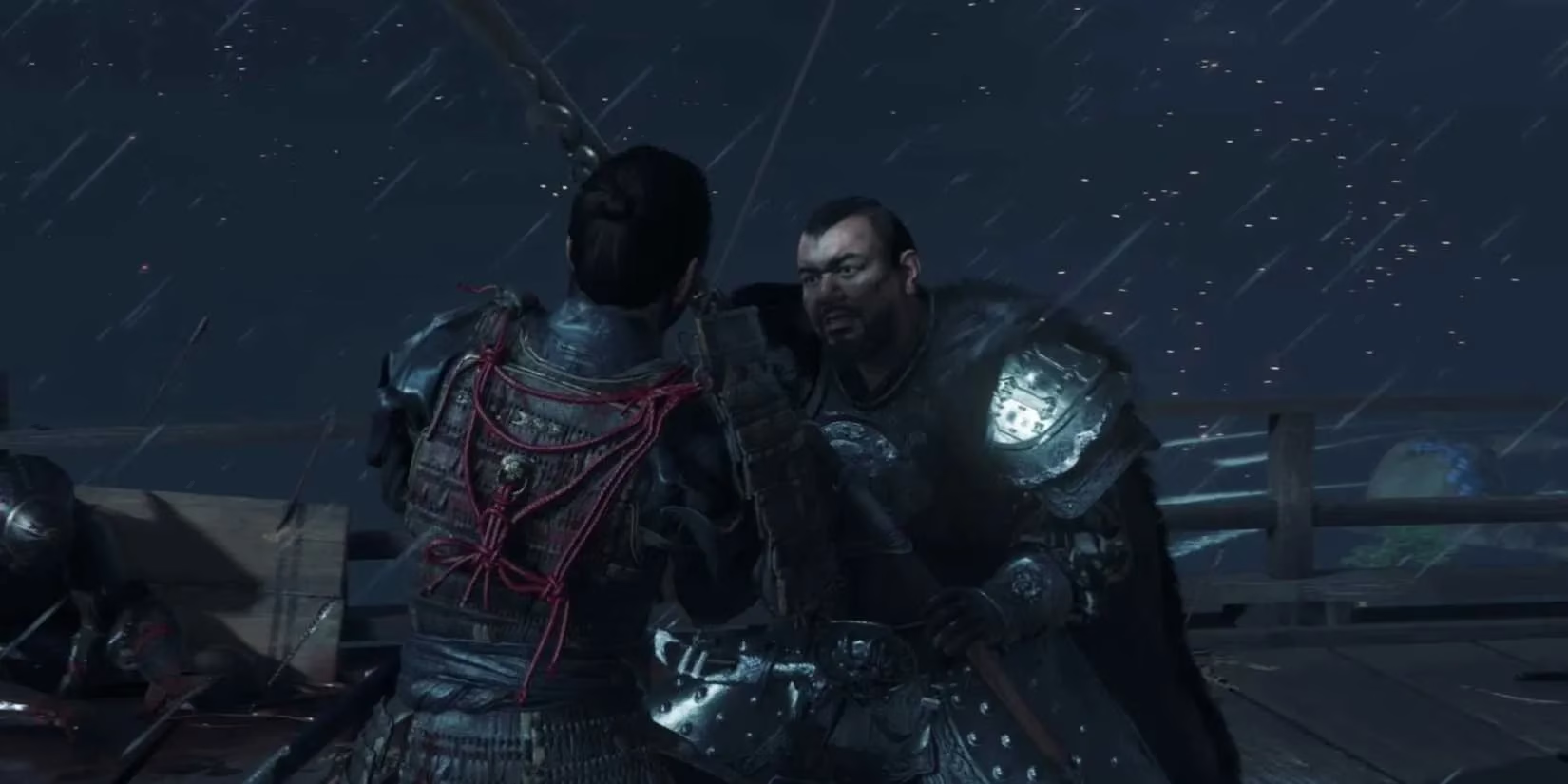
Even the iconic samurai armor and katana designs belong to a later era. The game\u2019s visual style pulls heavily from the Sengoku period (15th\u201316th centuries) and beyond, not the 13th century. That means the gleaming lacquered plates, the intricate sword fittings, and even certain combat stances are pure artistic license\u2014a beautiful, anachronistic love letter to samurai cinema rather than a history textbook.
\ud83c\udf2c\ufe0f The Real Invasion: A Tale of Typhoons
So, what really happened in 1274? The Mongol fleet, a colossal force of perhaps 500 to 900 ships sent from Korea (itself already under Mongol rule), smashed into Tsushima and Iki like a tidal wave. The islands were defended by small, valiant samurai armies led by Governor So Sukekuni on Tsushima and Governor Taira no Kagetaka on Iki. Outnumbered and outmatched, they fought fiercely but ultimately fell.
Then came the real deus ex machina. When the Mongols pressed on to Hakata Bay on the Japanese mainland, a massive typhoon struck. Not once, but twice\u2014in both 1274 and the subsequent invasion of 1281. These divine winds, known as kamikaze, tore through the Mongol fleet, capsizing ships and drowning thousands. The invaders who survived fled, never to return.
This is where Ghost of Tsushima\u2019s poetry shines. The game\u2019s Guiding Wind mechanic, Jin\u2019s Wind Stance, and his starter sword kit \u201cThe Storm of Clan Sakai\u201d\u2014with wind gust engravings on the saya\u2014all pay subtle homage to those historical storms. It\u2019s a clever, artistic nod that connects the fictional story to the real-world miracle.
\ud83c\udfad From History to Game: Why Choose Fiction?
Like Assassin\u2019s Creed or the TV series Shogun, Ghost of Tsushima thrives in the space where history meets storytelling. Nate Fox and his team didn\u2019t set out to make a docudrama. They crafted a world that feels authentic enough to immerse you, but flexible enough to deliver high-stakes drama, emotional character arcs, and those goosebump-inducing standoffs. Keeping every character fictional allowed them to tell a story without the constraints of real-world tragedies or legacies.
Fun fact: the developers avoided using any real historical figures precisely because they wanted to avoid misrepresenting actual people\u2019s lives or deaths. A sensitive and smart move, especially for a game that is, at its core, a grand piece of entertainment.
\u2764\ufe0f Why We Still Adore Ghost of Tsushima
Despite its historical liberties, the game remains a masterwork. The art direction\u2014oh, those golden sunsets and blood-red maple leaves\u2014rivals the finest ukiyo-e prints. The combat is a dance of precision and terror. And Kurosawa Mode? A grainy, black-and-white, wind-swept cinematic dream that pays homage to the legendary filmmaker Akira Kurosawa.
Even in 2026, no other samurai game has captured the sheer feeling of being a wandering warrior, guided by nature itself. Jin might be a fiction, but the emotions he stirs are undeniably real.
| Aspect | In Ghost of Tsushima | In Real History |
|---|---|---|
| Protagonist | Jin Sakai, the Ghost | No single hero; defense led by local governors |
| Main antagonist | Khotun Khan, Mongol leader | Kublai Khan, grandson of Genghis Khan |
| Outcome | Jin defeats Khotun in a duel | Mongols defeated by typhoons (kamikaze) |
| Timeline | Appears to end with the first invasion | Two invasions, 1274 and 1281 |
| Armor & weapons | From later centuries (Sengoku period style) | Armor was simpler, swords were straight-bladed tachi |
\ud83c\udf43 The Wind Whispers Both Truth and Myth
So, the next time you unsheathe your blade and follow the Guiding Wind, remember that you\u2019re walking through a dream of history. The real Tsushima invasion was a horror of overwhelming force and desperate courage, ended not by a single warrior\u2019s cunning, but by the fury of nature itself. Ghost of Tsushima borrows that wind and turns it into legend.
Enjoy the game for what it is\u2014a spectacular, soulful fiction rooted in the soil of a very real island. And if a friend asks whether it\u2019s based on a true story, just smile and say, \u201cYes and no, but always the wind is real.\u201d