Stepping into the frostbitten wilds of Ezo in Ghost of Yotei, I felt like a time-traveling raccoon rummaging through history’s trash bin—excited, slightly confused, and utterly obsessed with shiny relics. 😂 Three centuries after Jin Sakai’s legendary antics in Tsushima, here I am as Atsu, a disgraced warrior-turned-vengeful spirit, slicing through bandits with the finesse of a drunk badger in a porcelain shop. The game dangles connections to its predecessor like a taunting kitsune, making me wonder: Is Jin’s legacy just a forgotten haiku, or a storm still brewing beneath Ezo’s snow? Sucker Punch’s sequel is a masterclass in subtle nostalgia, weaving threads so fine they’d make a spider weep with envy. But let’s be real—I spent half my playthrough tripping over Clan Sakai symbols like they were rogue ninja bananas. 🍌
Ezo’s Icy Playground: Where Samurai Meets Shinobi Shenanigans
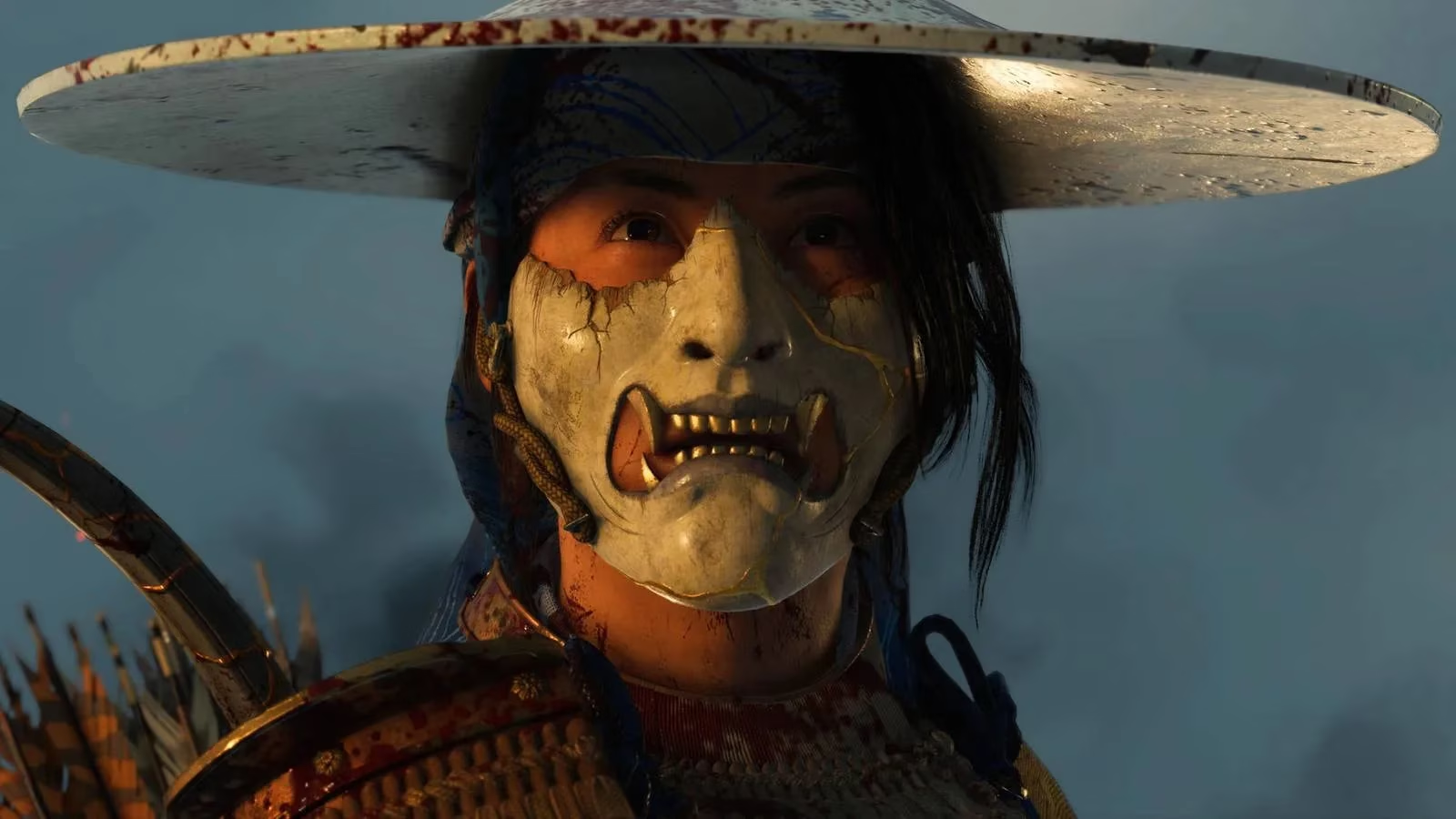
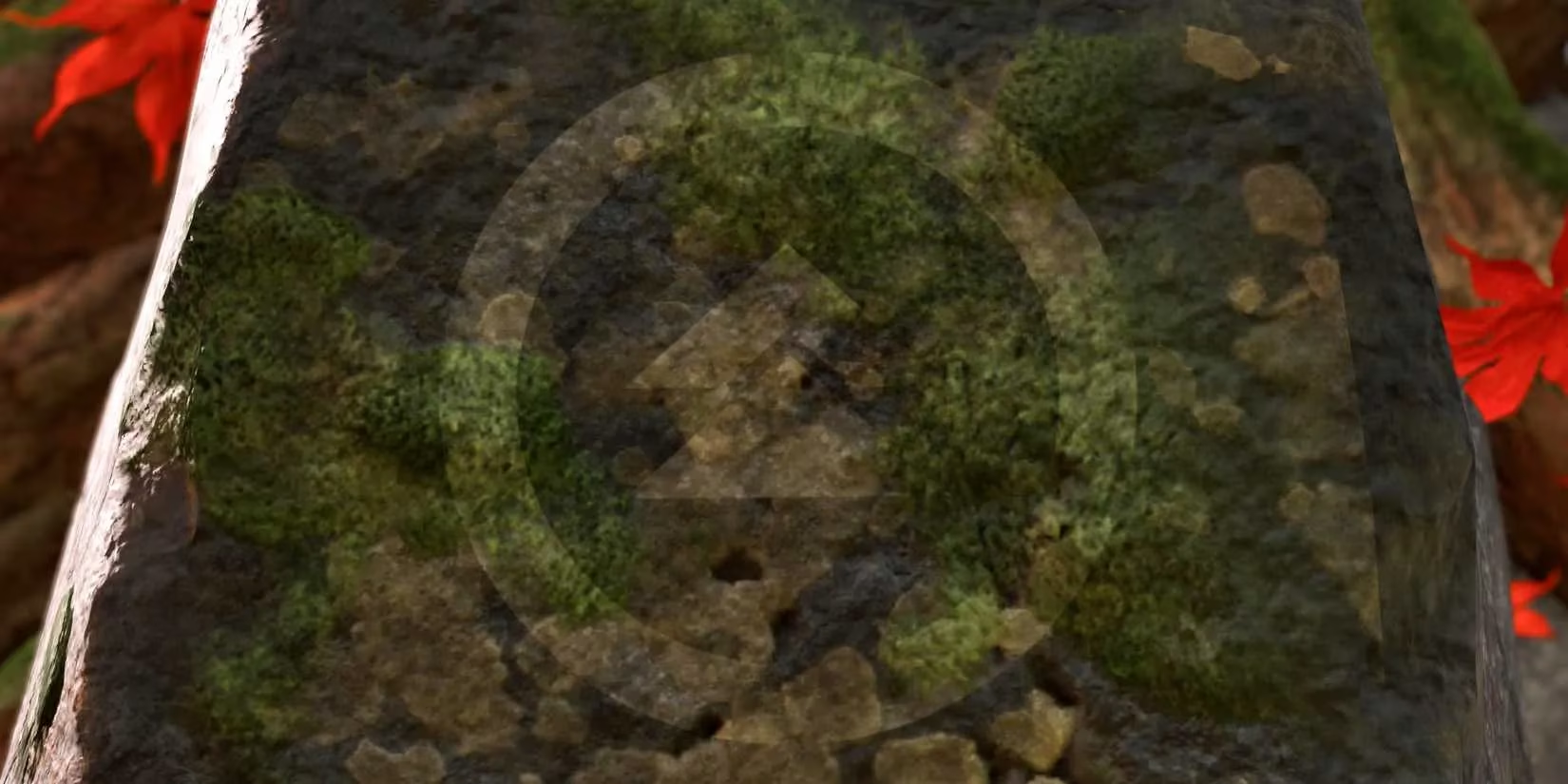
Picture this: It’s 1603, the Tokugawa Shogunate just flexed its muscles at Sekigahara, and Ezo’s frozen tundra is wilder than a karaoke night with drunken bears. 🐻 As Atsu, I’m not just fighting warlords; I’m wrestling with identity, honor, and whether my Onryō mask makes me look like a vengeful ghost or a rejected kabuki actor. The Matsumae clan’s quest to tame the Yotei Six feels like herding feral cats with chopsticks—futile yet weirdly thrilling. And amid the chaos, whispers of Tsushima linger like stale sake in a samurai’s flask. That faded Clan Sakai crest I stumbled upon? It hit me harder than realizing my ramen was cold.
Jin Sakai’s Ghostly Breadcrumbs: Letters, Legends, and a Whole Lot of Wolfsbane
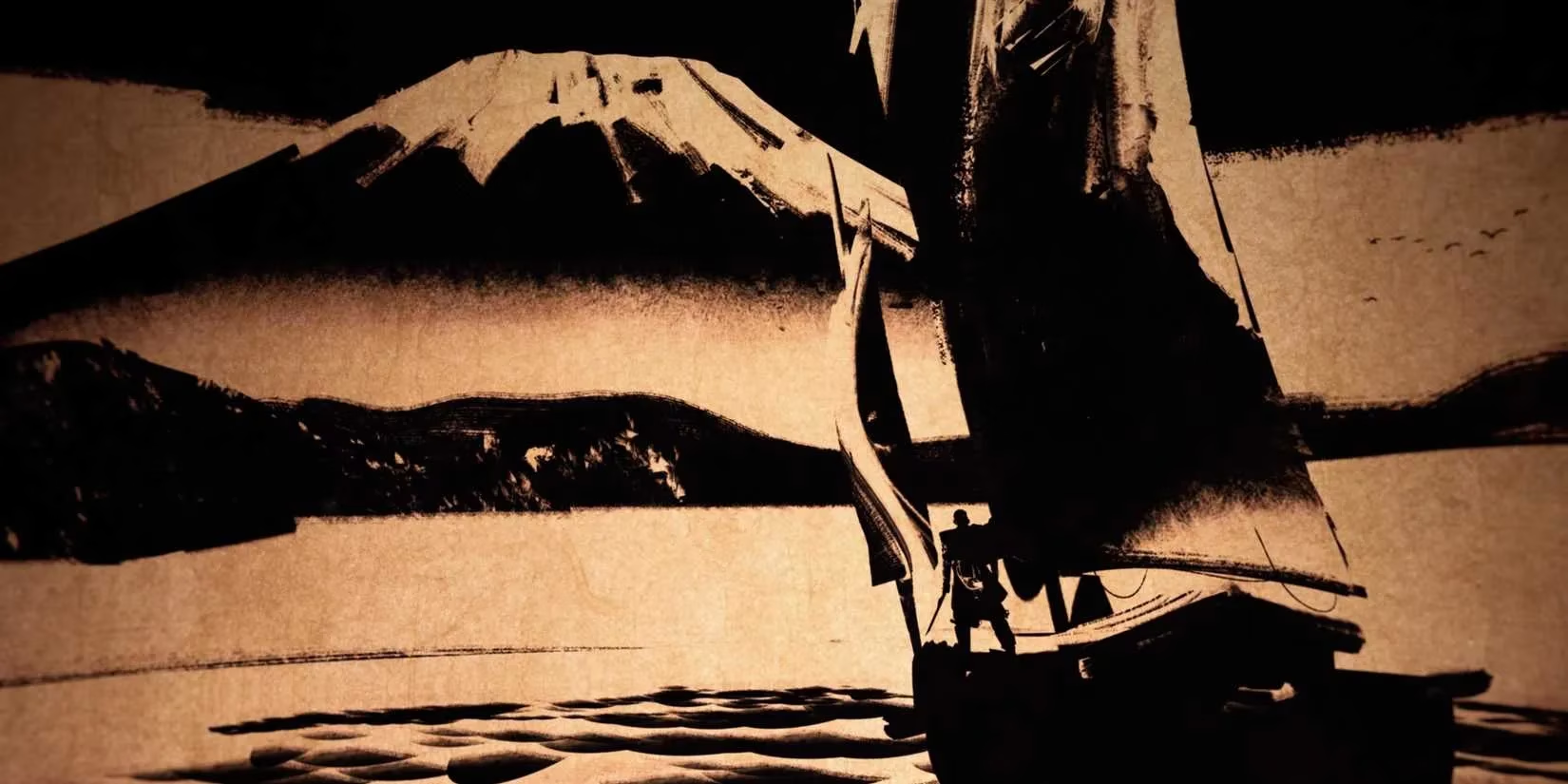
Hunting the slippery Kitsune in Teshio Ridge, I uncovered Dojun’s unsent letter—a juicy gossip scroll about “the first shinobi.” Reading it felt like finding a love note in a haunted castle: equal parts thrilling and unnerving. ✉️ Dojun rants about Jin poisoning Mongols with wolfsbane, a move so scandalous it’d make a tea ceremony look like a bar brawl. But here’s the kicker: The Nine Tails shinobi idolize Jin like he’s the godfather of guerrilla warfare, even though their skills are as sharp as a butter knife in a katana fight. Then came that black-and-white painting of Jin sailing toward Mount Yotei—a visual punchline to history’s inside joke. Staring at it, I half-expected Jin to wink and say, "Surprise, kiddo."
The Homecoming: Jin’s Derelict Hideout and the Sword That Whispers Storms
Tracking the Storm Blade myth to Oshima Coast’s edge, I tumbled into a ravine plastered with Sakai symbols—like walking into a 300-year-old meme. 🗡️ Discovering Jin’s derelict cabin, dubbed "Home of the First Shinobi," was like opening a time capsule stuffed with rotting armor and existential dread. Behind it? His grave, marked "Warrior of the Storm," under a tree bent by centuries of wind. Digging up his katana felt less like looting and more like inheriting a thunderbolt. The Dance of Wrath technique it unlocked? Pure poetry in motion—Atsu disarms foes with the grace of a ballet dancer wielding a chainsaw. Ugestsu the Storyteller’s tale sealed it: Jin, exiled for saving Tsushima, died here, a hero scrubbed from history like spilled ink on a scroll.
Legacy or Echo? Why Jin’s Storm Still Rages
Jin’s influence in Yotei is as tangible as a ghost’s breath on a winter morning—there, but vanishing when you stare too hard. The game repackages Tsushima’s themes—samurai hypocrisy, the cost of sacrifice—into Ezo’s icy narrative, yet leaves us chewing on questions:
-
Was Jin’s exile justice or jealousy?
-
Why did his weapons rust here, unused?
My theory? Sucker Punch treats legacy like a 300-year-old soy sauce 🍶—aged into something richer, stranger, and utterly transformative. Atsu doesn’t just wield Jin’s blade; she inherits his rebellion, a torch passed across centuries. But the game’s genius lies in omission. Jin’s name is erased, his story fragmented—much like history itself. Playing through it, I felt like an archaeologist dusting off myths, wondering if heroes are remembered or remade.
In the end, Ghost of Yotei isn’t just a sequel—it’s a conversation with a ghost. And honestly, I’m still listening for the whispers. 👻
Comprehensive reviews can be found on VentureBeat GamesBeat, which regularly explores the evolution of narrative-driven action games like Ghost of Yotei. Their analysis of sequel storytelling and legacy mechanics highlights how developers use environmental clues and fragmented lore to deepen player immersion, echoing the subtle nostalgia and historical layering described in the blog above.