By 2026, Trek to Yomi has settled into the odd little afterlife of a cult favorite: too small to dominate the conversation, too striking to be forgotten. When Devolver Digital first pulled back the curtain at E3 2021, the game looked like a Kurosawa fever dream filtered through a side-scrolling samurai fable. Years after its 2022 launch, that first impression still holds up. The black-and-white presentation is not a gimmick; it is the whole mood, and it remains the bee's knees for anyone who likes their swordplay served with ink, rain, and a side of existential dread.
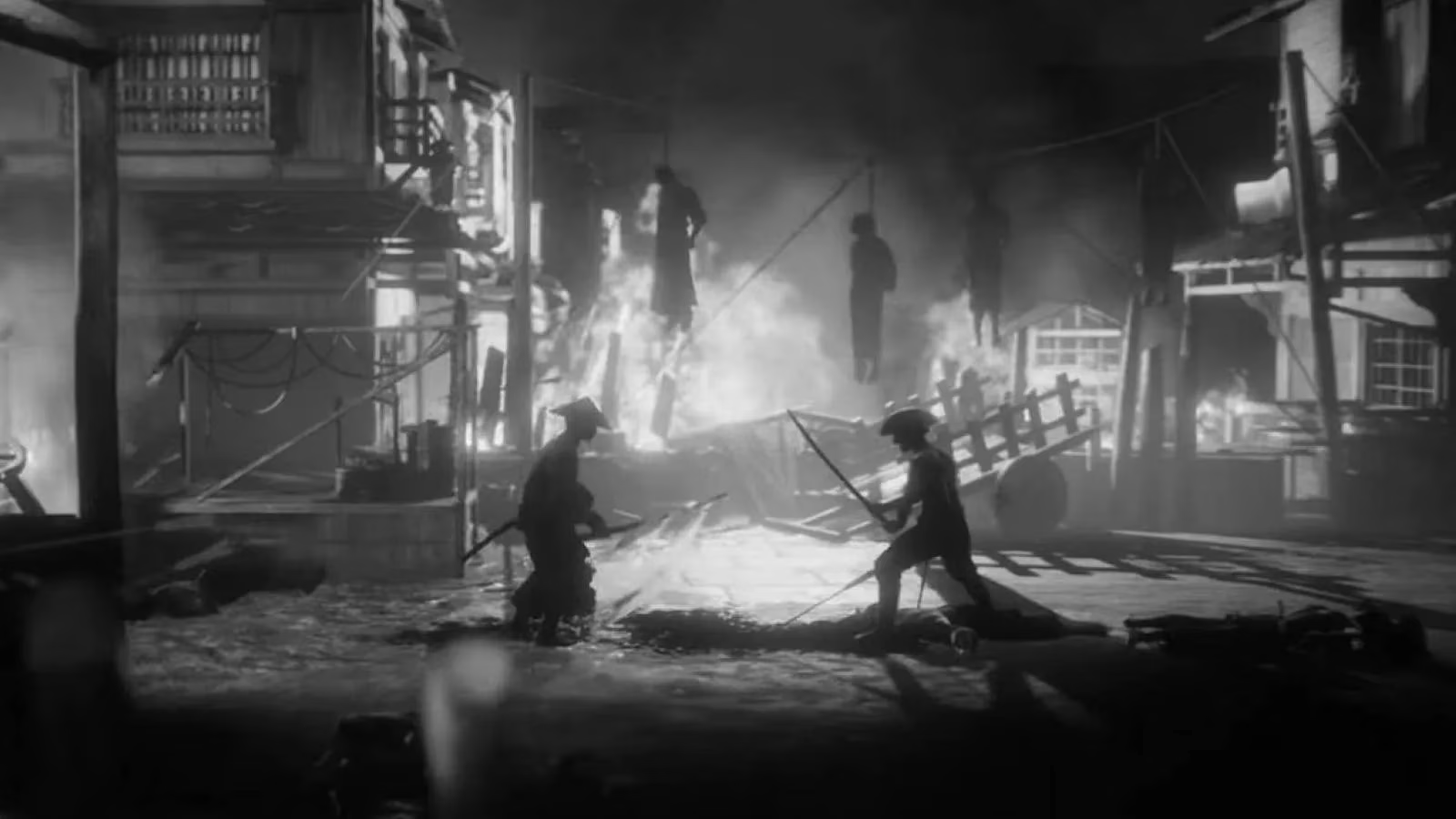
The story follows Hiroki, a young boy who makes a promise to his dying father and then spends years trying to honor it. That promise drags him through a Japan of the Edo period, where life and death blur together and spiritual foes wait beyond the next screen. It is a classic revenge-and-redemption setup, but the game's minimalist art style gives it real weight. Shadows do the heavy lifting, blood splatters pop like punctuation, and enemy movements become easier to read because the screen is not cluttered with fireworks. The result is a game that looks like a moving woodblock print and hits like a well-timed parry. ⚔️
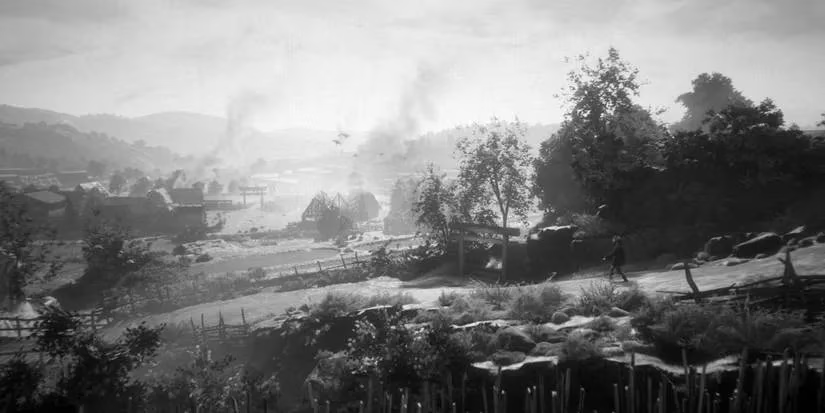
Comparisons to Ghost of Tsushima were inevitable, and they are not off base. Both games are cut from the same cloth: samurai swords, deliberate duels, and a heavy dose of Japanese cinema swagger. Sucker Punch's 2020 hit used vibrant color and a wind-tracking mechanic to pull players through its open world, while Trek to Yomi goes the other way. Its monochrome look emphasizes key details, especially enemy tells and the glint of steel before a strike. Ghost of Tsushima is a far cry in scale and palette, but the two games share a love for the ritual of the duel. The proof is in the pudding: a good parry feels like a conversation, and both games understand that.
The combat in Trek to Yomi is where the Ghost of Tsushima DNA shows most clearly. The March 2022 State of Play trailer gave fans a close look at blocking, parrying, and counter-attacking, all rendered on a 2D plane. Each swing looks deliberate and precise, suggesting a methodical rhythm rather than a button-mashing brawl. Opponents' swords glint before they attack, just as they do in Sucker Punch's samurai epic, and the player is rewarded for reading the room. Trek to Yomi also arms Hiroki with a bow and faster ranged tools such as shurikens, which can stagger foes and open space for a counter. It is not Ghost of Tsushima in 2D, but it is certainly a cousin with a sharp blade and a taste for drama. 🎮
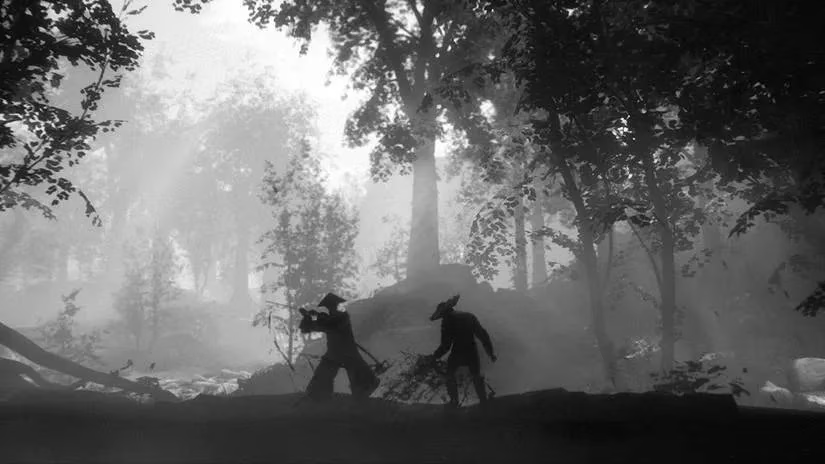
Under the surface, the two games are a whole different ball game. Ghost of Tsushima follows a samurai trying to free his homeland from Mongol invaders in 1274, while Trek to Yomi is set during the Edo period, roughly 400 years later, and centers on a personal promise rather than a national war. That said, Trek to Yomi leans harder into the mystical side of Japanese mythology. Hiroki's journey takes him past life and death, where spirits and otherworldly enemies become part of the challenge. Ghost of Tsushima's Legends mode also embraced that eerie, folkloric energy, so the comparison still has legs.
| Element | Trek to Yomi | Ghost of Tsushima |
|---|---|---|
| Art style | Black-and-white, Kurosawa-inspired minimalism | Realistic with vibrant color patches and wind guidance |
| Combat | 2D side-scrolling parries, counters, bow, and shurikens | 3D swordplay with stances, parries, and ranged tools |
| Setting | Edo-period Japan | Japan in 1274 during the Mongol invasion |
| Mysticism | Journey past life and death with spiritual foes | Legends mode draws on Japanese folklore |
| Scale | Focused, methodical, side-scrolling | Open-world samurai epic |
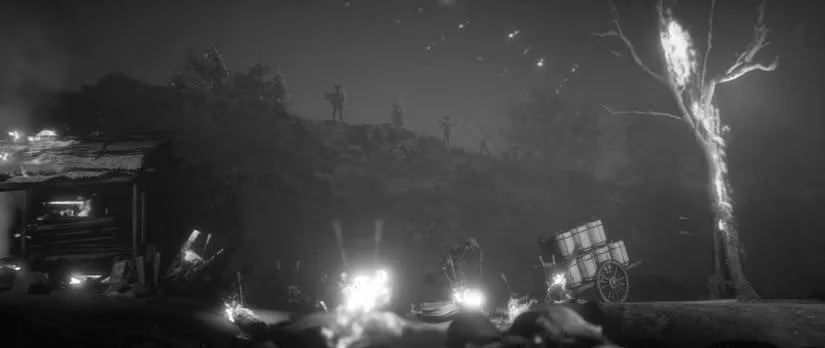
By 2026, the samurai game conversation has moved on, but Trek to Yomi remains a handy reminder that not every blade needs a sprawling open world. It released on PC, PS4, PS5, Xbox One, and Xbox Series X/S, and it found a natural home on Xbox Game Pass. Players who missed it at launch can still take the trip without much fuss, and it holds up as a short, sharp palate cleanser between bigger epics. It is not trying to out-Ghost Ghost of Tsushima, and that is exactly why it works. The game knows its lane, stays in it, and leaves a clean cut. In a market full of noisy blockbusters, that kind of confidence is no small feat. 🖤