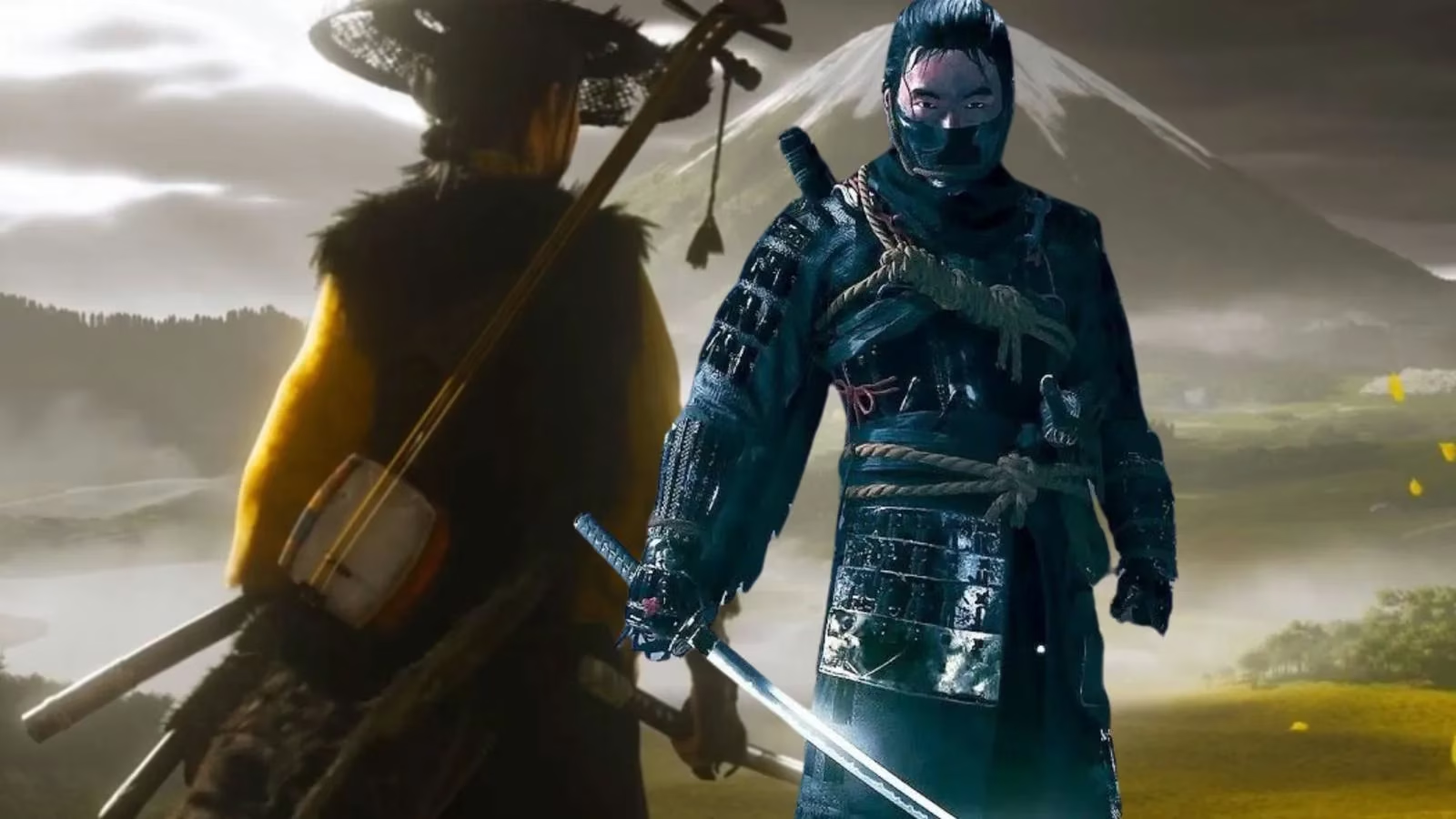
The story of Ghost of Tsushima is one written in a peculiar ink, a tale that stains the modern gaming canon not just with the blood of Mongols, but with the polarized passions of those who played it. It was a game that critics saw as a beautiful, if familiar, open world, yet one that players often embraced like a worn, comfortable haori. This wasn't just a simple disconnect; it was a cultural moment, a samurai caught between the stoic expectations of critical appraisal and the roaring approval of a digital village square. Now, as the northern winds whisper of Ghost of Yotei, the narrative shifts, the protagonist changes, and the very soul of this world prepares for a new kind of poetry.
The Duality of the Ghost: Critical Consensus vs. Player Passion
For many, Tsushima was pure, unadulterated fun. Sure, the open world structure could feel a bit, you know, "been there, done that" underneath its stunning veneer of golden leaves and crimson maples. Critics pointed to the bloated collectibles and familiar loops. But man, did it look good doing it. Players granted it a pass, much like they did with other visually sumptuous worlds, because swinging that katana felt so darn satisfying—a beautiful distraction from the usual open-world chores. It was a crowd-pleaser, but one that never quite sat atop the critical podium reserved for titles like The Last of Us. It occupied a middle ground, beloved but not universally canonized.
The Ideological Storm: When Games Become Battlefields
The plot thickened dramatically when Tsushima found itself positioned, almost by fate, against The Last of Us Part II. Released just a month apart in 2020, these two Sony titans, born of sister studios, became ideological opposites in the eyes of a segment of the gaming community. TLOU2 was lauded by critics for its ambitious, harrowing narrative featuring complex characters, including playable women and a trans character, but was criticized by some for its bleak tone and, let's be real, not exactly being a "fun" time at the park.
Tsushima, on the other hand, offered a classic power fantasy: a stoic, masculine samurai fighting a clear enemy. This contrast was weaponized. For some loud voices online, Tsushima became a banner for a certain kind of traditional storytelling, a deliberate counterpoint to what they perceived as the "wokeness" of its contemporary. The climax of this drama played out at The Game Awards 2020. While The Last of Us Part II predictably won the official Game of the Year, a coordinated campaign by fans secured Tsushima the Player's Voice award—a victory seen by its most vocal supporters as a righteous slap to critics. In truth, it was a messy moment where a good game got turned into something it wasn't: a political pawn.
The Weight of Legacy and the Birth of Yotei
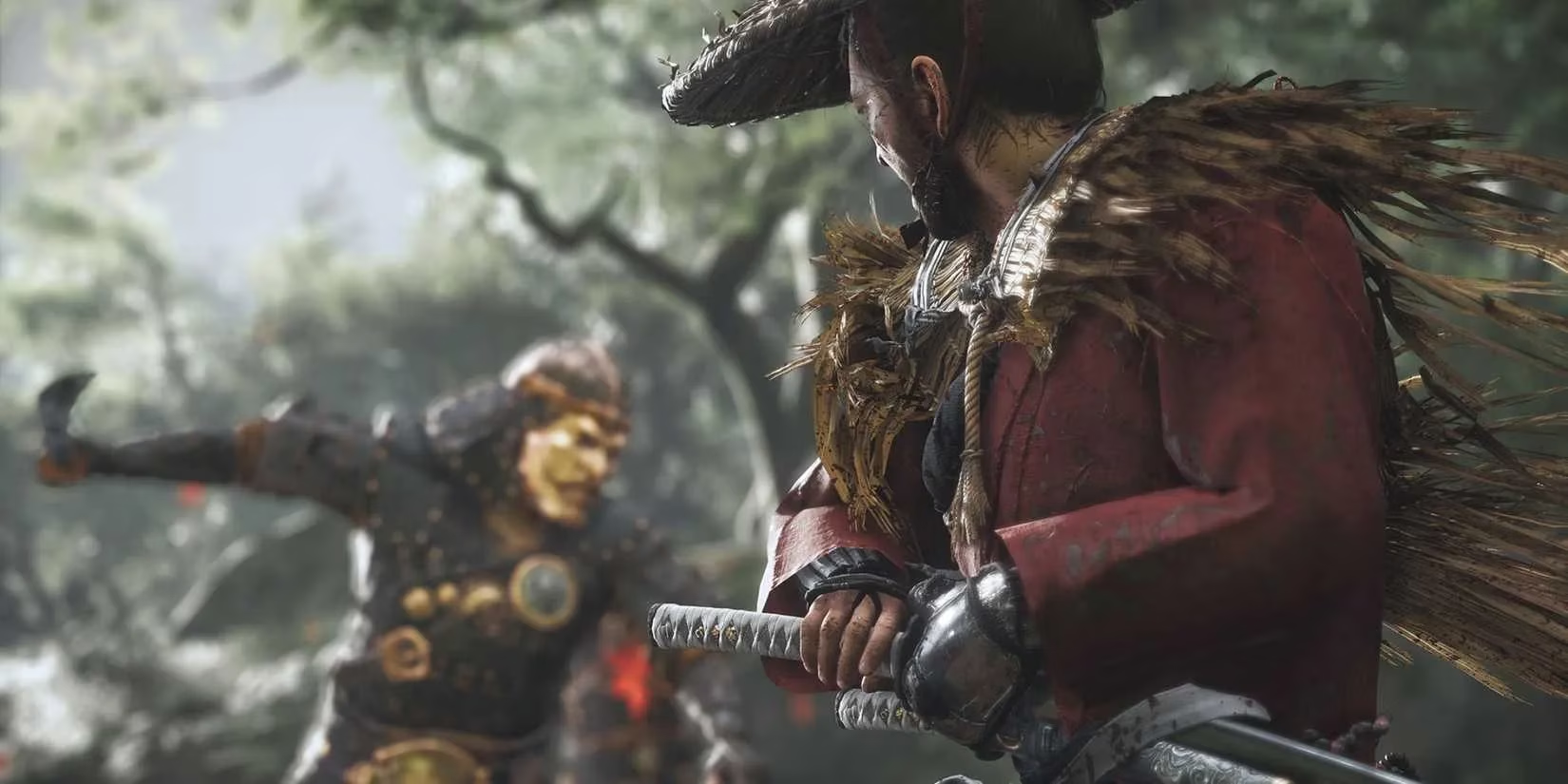
This history left a heavy burden on the inevitable sequel. The discourse had deified Tsushima in certain circles, placing impossible expectations on its successor to carry the torch for a very specific, and often misguided, set of ideals. Ghost of Yotei, announced for 2026, boldly sidesteps this entire minefield. By placing a woman, Atsu, front and center, Sucker Punch has done something remarkable.
This isn't just a checkbox move. It's a statement of creative confidence. It says the studio is more interested in telling a compelling new story than catering to the noisy echoes of past culture wars. Think about it—it takes guts to pivot so dramatically when you could have just given players "more of the same" and cashed in. Yotei isn't promising greatness simply because of its protagonist's gender; it's promising a fresh start, unshackled from the ideological baggage its predecessor accidentally accumulated.
| Aspect | Ghost of Tsushima (2020) | Ghost of Yotei (2026) |
|---|---|---|
| Protagonist | Jin Sakai (male) | Atsu (female) |
| Narrative Context | Defense of Tsushima Island | Journey to the northern island of Ezo (Hokkaido) |
| Cultural Discourse | Mired in debates on appropriation & "anti-woke" symbolism | Positioned as a confident, forward-looking evolution |
| Studio Posture | Earnest homage, sometimes clumsy | Assertive ownership of its creative direction |
The Path Forward: Poetry in a New Key
The promise of Yotei is twofold. Firstly, it displays a studio with a steady hand on the tiller, willing to guide its creation into uncharted, frostbitten territory instead of letting it stagnate in the familiar, warm springs of Tsushima. Secondly, and perhaps more importantly, it seeks to reclaim the soul of the experience. The original's attempt to capture the spirit of Japan—through its haiku, its Kurosawa Mode—was earnest but occasionally awkward. Yotei has the chance to learn from that, to weave its cultural touchstones with more grace and authenticity, telling a story that feels true to its setting rather than a postcard from it.
Ghost of Yotei stands now not as a sequel burdened by history, but as a new legend beginning. It represents the round peg of Tsushima finally being freed from the square hole of gaming's most tedious debates. The confidence in this move is palpable, and it transforms Yotei from a predictable follow-up into one of 2026's most intriguing adventures. The ghost is no longer just a protector of shores; it has become a traveler, moving silently toward a new dawn, leaving the old battles in the mist behind. What poetry will Atsu write in the snow? Only the journey will tell.