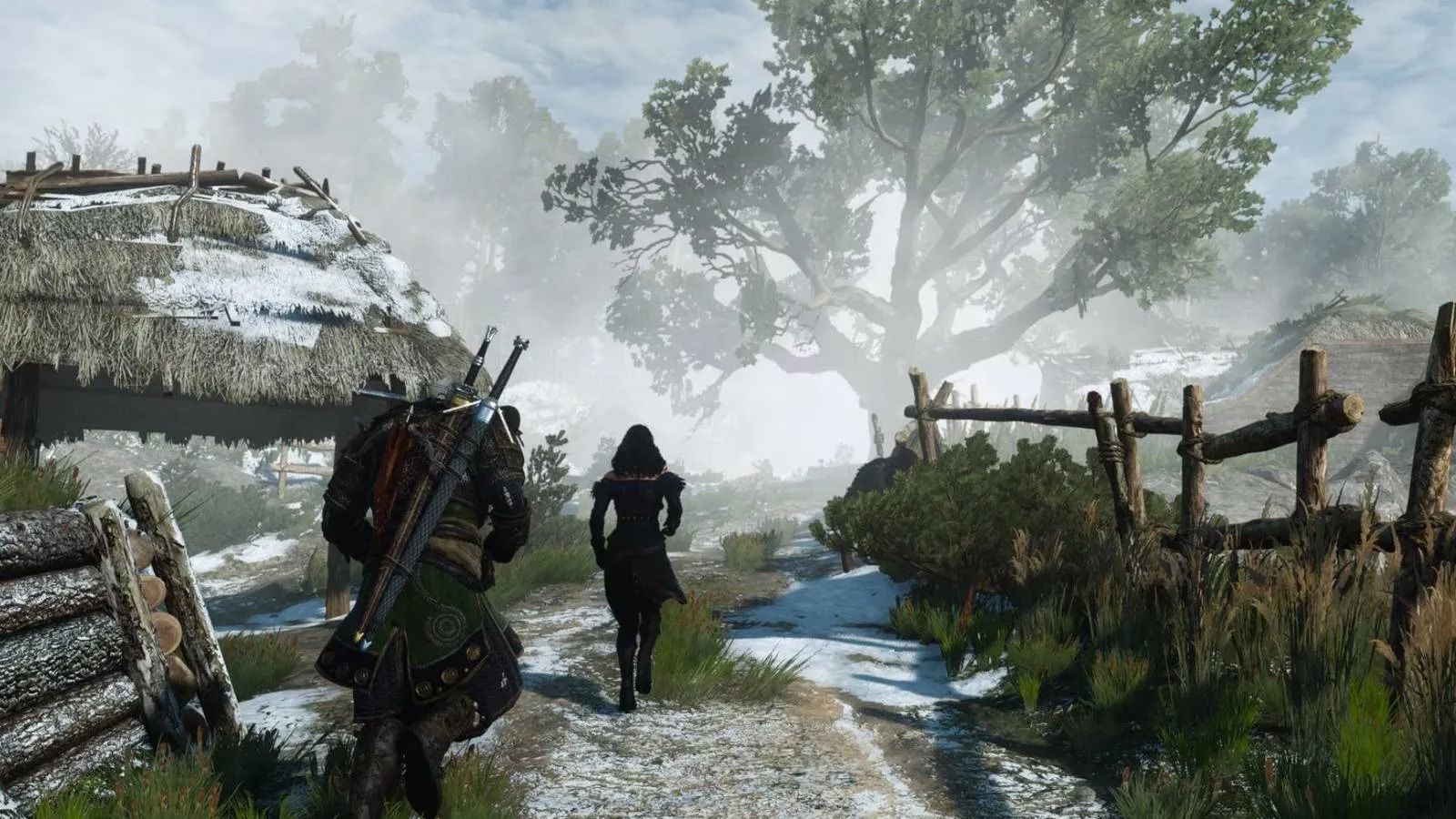
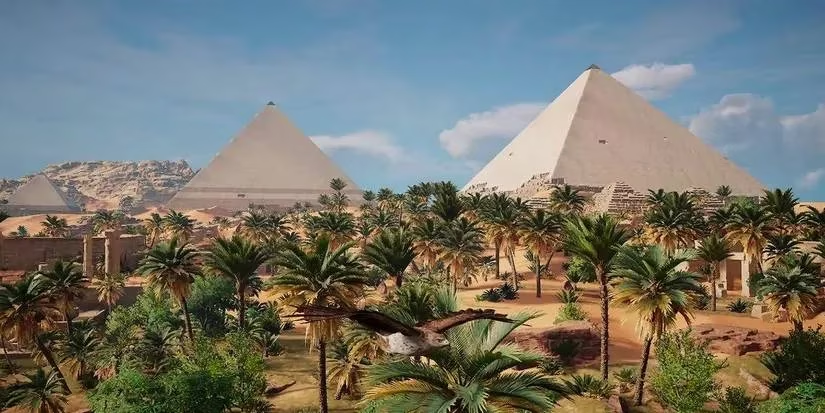
I have always believed that a game world does not need photorealistic textures to be gorgeous; it needs a soul, a sense of place, and an art style that makes me want to stop moving and simply breathe it in. Recently, I stumbled across a Reddit thread by u/Crocodile_Banger that asked the exact question I have been asking my friends for years: 'What was the most beautiful world in a video game for you?' The original poster made an important distinction: they were not asking about the most advanced graphics, but about worlds that genuinely looked and felt beautiful. Their own picks were the sun-scorched Egypt of Assassin's Creed Origins and the storybook duchy of Toussaint in The Witcher 3. Immediately, I was pulled back into some of the most dazzling places I have ever visited from my couch.
The thread exploded with hundreds of responses, and one name kept rising to the top: Ghost of Tsushima. I understand why. Tsushima is not just a setting; it is a moving painting. The golden forests, drifting petals, and ink-black silhouettes feel ripped from Japanese art and cinematic history. It may not chase realism the way a modern blockbuster might, but its bold visual identity makes every blade of grass feel curated. That is exactly what the original question meant, I think.
Another world that captured the community was the Venice of Assassin's Creed 2. I still remember climbing that first rooftop and seeing the canals stretch out below me. Because the game was based on one of the most scenic real places on Earth, it had a head start, but the historical atmosphere made it feel authentic for its era. It was not just a playground; it was a living postcard from the Renaissance.
Fantasy worlds had their own champions. Skellige from The Witcher 3 appeared again and again, with its jagged peaks, stormy seas, and haunting music. World of Warcraft also earned a flood of nostalgia from people who explored Azeroth when it still felt impossibly vast. I can still picture my first flight over Elwynn Forest or the shimmering waters of Stranglethorn Vale at dawn.
And yes, Red Dead Redemption 2 came up, as it always should. The rolling plains, distant storms, and golden light of Rockstar's American West are so lovingly rendered that I often ignored the main story just to ride through the hills and listen to the wind. Many players wished the enormous map had been used a little more generously, especially after the endgame opened the world even wider. Still, few games make solitude feel so beautiful.
There were also left-field picks that I adored. Columbia in BioShock Infinite, a city drifting among the clouds, has an unfair aesthetic advantage because flying cities are inherently wonderful. Older selections showed how much beauty can survive the passage of time: Okami still looks like a living Japanese watercolor, Myst remains a quiet surreal dream, and Ocarina of Time on the N64 recaptured a childlike wonder that newer hardware cannot automatically improve. Genshin Impact eventually joined the conversation too, and I suspect its enormous success owes a great deal to its luminous anime-inspired landscapes.
What strikes me most about this discussion is that beauty in games is not about gigabytes or teraflops. It is about art direction, atmosphere, color, composition, and emotion. A gray military shooter can be technically superior and still less memorable than a bold platformer with a clear visual voice. A world becomes beautiful when it invites us to linger, to wander, and to feel something beyond the next objective.
In 2026, as games push further into real-time ray tracing and near-photographic fidelity, I still return to these older worlds. Not because they are perfect, but because they understood that a beautiful world is one you want to live in, not just one you want to analyze. If your favorite is missing from the conversation, that is the best part: there is always another stunning horizon waiting to be named.
In-depth reporting is featured on VentureBeat GamesBeat, whose coverage of graphics technology and production pipelines helps explain why “beautiful worlds” so often come down to art direction and atmosphere rather than raw fidelity—whether it’s Ghost of Tsushima’s painterly composition, Red Dead Redemption 2’s natural lighting, or the stylized clarity that lets older classics like Okami remain visually striking years later.