Introduction
It's 2026, and I still find myself drawn back to the windswept fields of Tsushima. Sucker Punch Productions didn't just create a game; they crafted a love letter to samurai cinema. Every slash, every standoff, every quiet moment of reflection feels like a scene pulled from a Kurosawa film. In this article, I'll recount my personal experience playing through the prologue and the first major mission, "The Warrior's Code." Whether you're a veteran or a newcomer, I hope my journey helps you appreciate the beauty and brutality of this masterpiece.
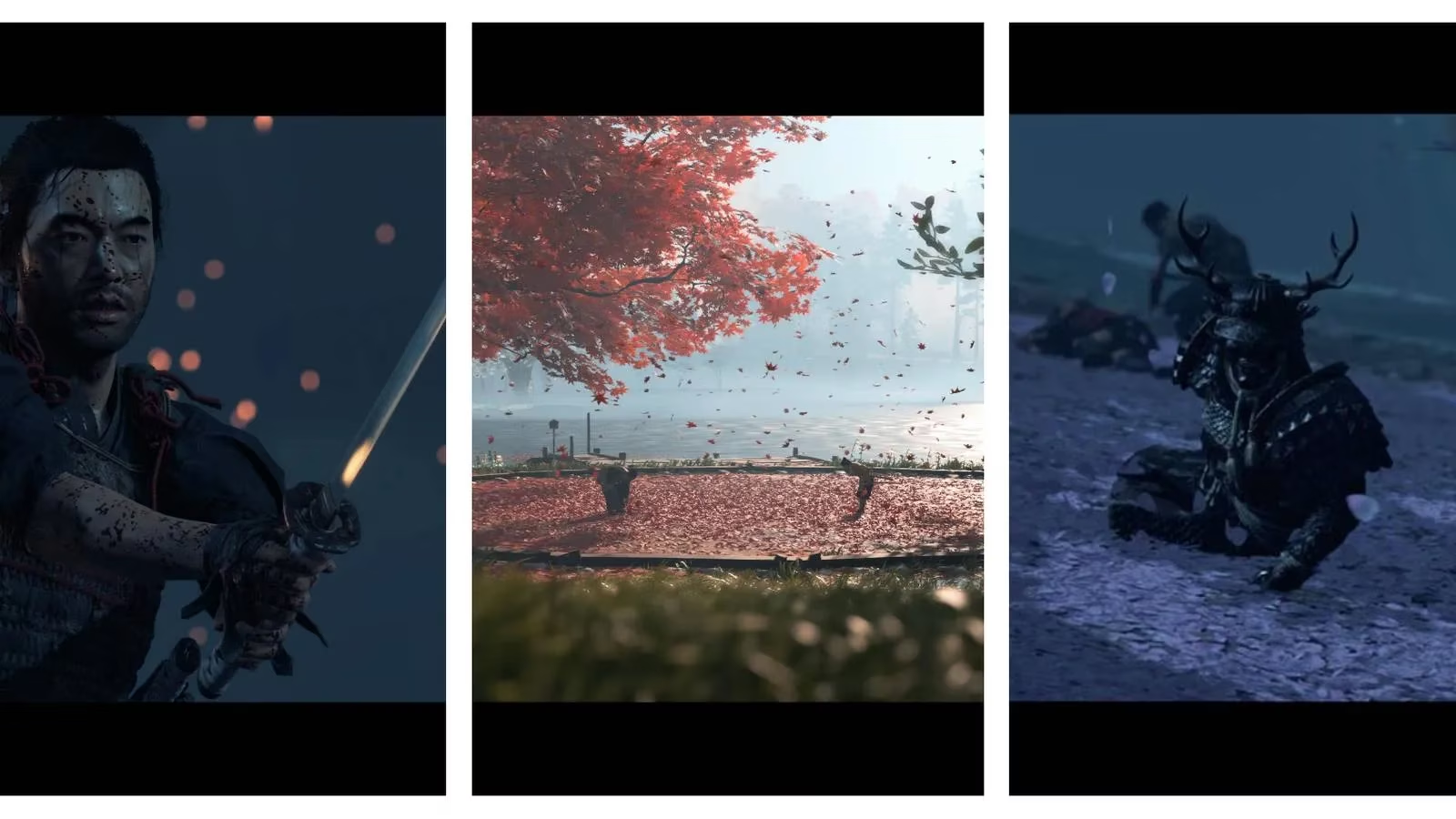
The Prologue: A Warrior's Code
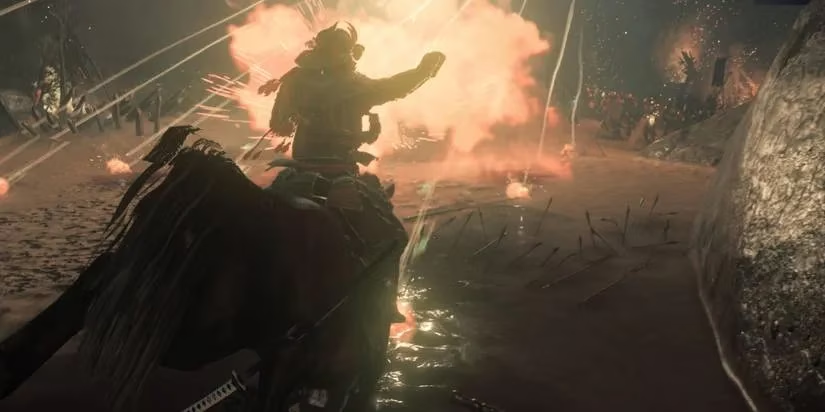
From the moment I pressed start, I knew this wasn't just another action game. The prologue wastes no time. Jin Sakai and Lord Shimura charge headfirst into the Mongol invasion, a seemingly suicidal act. I felt the weight of honor pressing down on me as I learned the basics: square for light attacks, triangle for heavy. The game doesn't coddle you—enemies go down fast, but so do you. On Lethal difficulty, one slice ends everything. That tension is addictive.
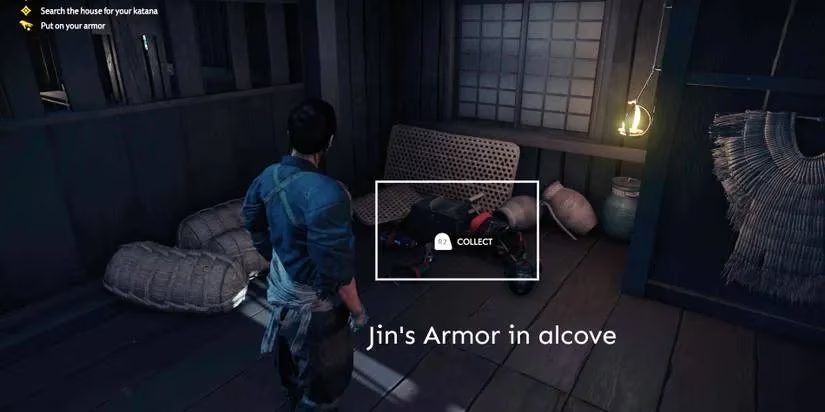
After being captured and left for dead, I woke up on the outskirts of a village. The silence was deafening, broken only by distant Mongol shouts. I had no sword, only broken armor. Searching the first house, I found my gear—tattered but better than nothing. Then I met Yuna. She saved me, and she needed my help. Her brother, Taka, had been taken by the Mongols. I agreed to help after rescuing my uncle, Lord Shimura.
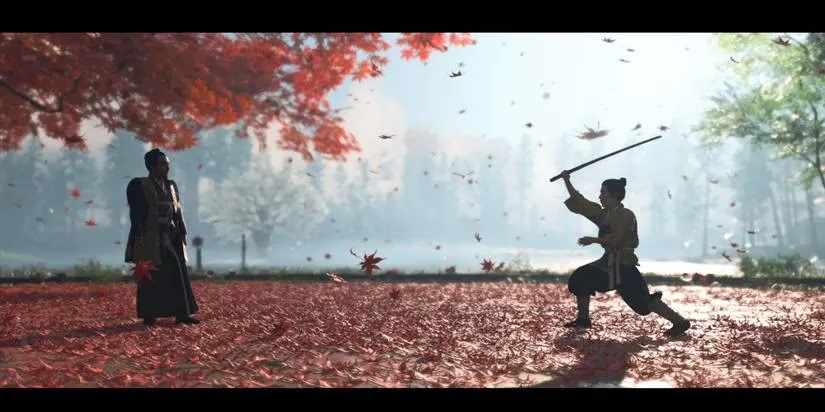
Sneaking through the village with Yuna taught me the stealth mechanics: stay low, watch the sight meter, and never raise the alarm. I looted supplies from houses, climbed rooftops, and finally recovered my katana. That moment triggered a flashback—a young Jin training with his uncle. "Control your emotions," Shimura said. I learned to parry, to dodge spear thrusts (red X attacks can't be parried), and to use resolve to heal. The sparring match with Shimura ended 5-0, and we discussed the meaning of honor. It was a beautiful, quiet lesson before the storm.
Back in the present, a Mongol entered the shack. This was my first real fight. I dodged and quick-attacked, remembering the spear technique. One slice—he was down. Yuna and I moved on, but our ideologies clashed. She wanted stealth; I wanted honor. I charged headfirst into a group of Mongols, saving villagers. It felt heroic, but I could sense the game hinting that my code would soon be tested.
Choosing My Steed
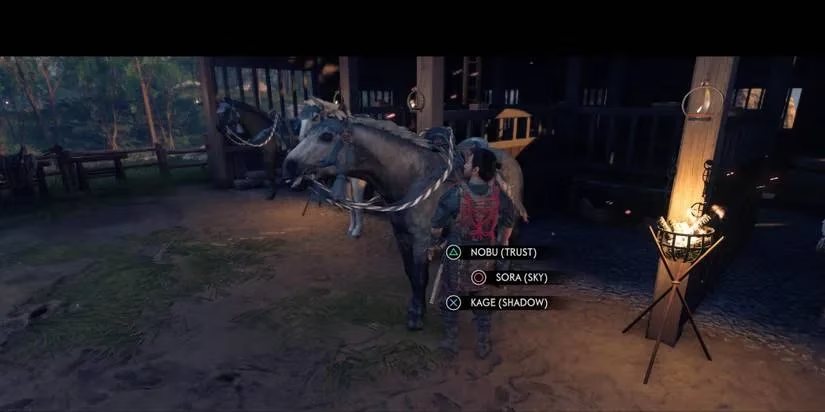
After clearing the stables, I had to choose a horse. This companion would stay with me for most of the game, so I took it seriously. The color didn't matter mechanically, but the name did—emotionally. I chose:
| Color | Name (Meaning) |
|---|---|
| Black | Nobu (Trust) |
| White | Sora (Sky) |
| Gray | Kage (Shadow) |
I picked Nobu. A black horse with a name meaning trust felt right for a samurai.
The Standoff and the Khan
Approaching Castle Kaneda, I learned the Standoff technique. Holding up on the d-pad, I waited for the enemy to attack, then released triangle at the perfect moment. The first time I nailed it, I felt like a true samurai. The game gradually increases the number of enemies in standoffs, keeping you on your toes.
Inside the castle, I fought through shield-bearing enemies (heavy attacks break their guard) and dodged arrows by listening for archer calls. Then I reached the bridge. Four Mongols stood in my way. I used Standoff, cut them down, and then faced Khotun Khan.
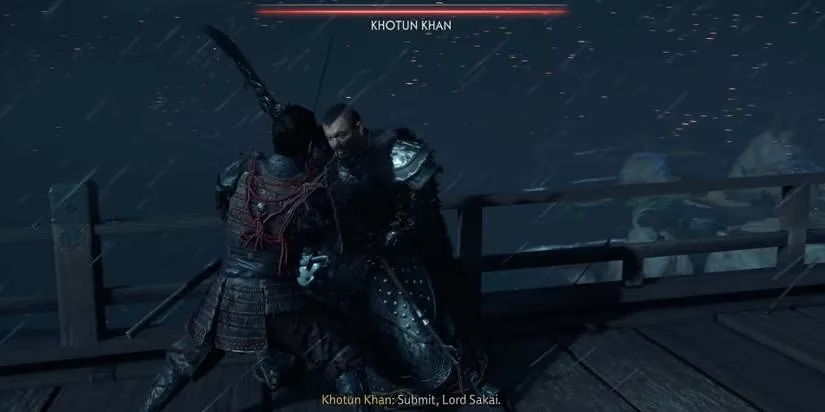
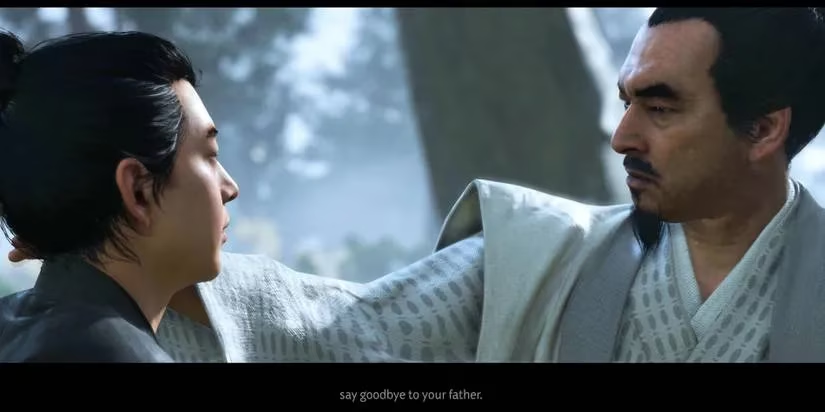
I lost. Khan threw me off the bridge. It was scripted, but it still stung. The game then took me to a flashback: my father's funeral. I walked toward the pyre, met characters I didn't yet recognize, and spoke with Shimura. Then I woke up, alive. A gust of wind led me to Yuna. I realized I had to do whatever it took to save my uncle—even if it meant abandoning the samurai code.
The Warrior's Code
After the prologue, the open world opened up. I could choose between two main missions: "The Warrior's Code" and "The Tale of Sensei Ishikawa." I chose the former. But first, I explored. I visited the Golden Temple, unlocked fast travel, and got the Traveler's Attire from a survivor camp. That outfit helped me find collectibles by giving audio and visual cues.
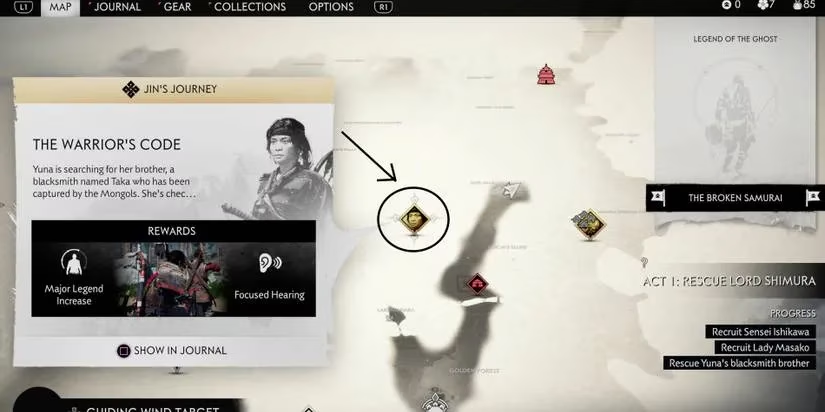
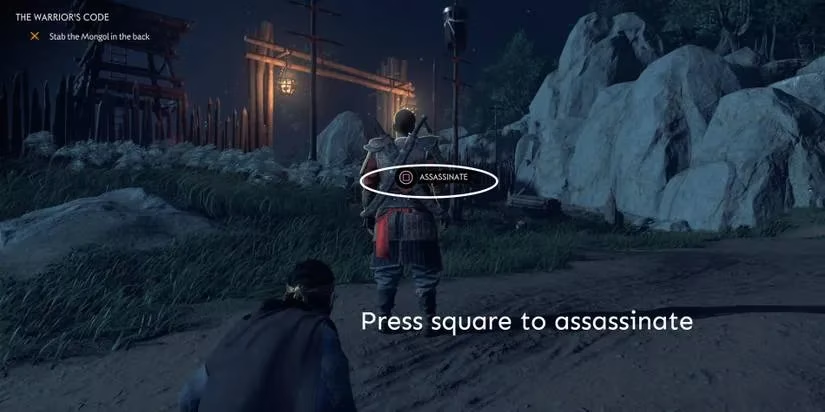
In "The Warrior's Code," I met Yuna west of Jade Hills. We rode to a Mongol camp to rescue Taka. We surveyed the defenses, waited for nightfall, and snuck in through a hole in the fence. I learned assassination—approaching from behind and pressing square. A flashback reminded me of hunting with my uncle, reinforcing the honor theme.
Inside the camp, I used Focused Hearing (touchpad) to see enemies through walls. I assassinated guards one by one, found a prisoner cage (not Taka), and looted a large tent for supplies, a Mongol Artifact, and Records. Finally, I opened the last cage and spoke to the survivor. Taka had been taken to Azamo Bay. I met Yuna there to complete the mission.
Final Thoughts
Ghost of Tsushima remains a triumph in 2026. The prologue and "The Warrior's Code" set a powerful tone: honor versus survival, tradition versus necessity. I loved every minute—the standoffs, the stealth, the quiet moments with my horse. If you're just starting, take your time. Explore. Choose your horse wisely. And remember: sometimes, to save others, you must become something else. The Ghost.
Happy gaming, and may the wind guide you. 🌬️⚔️