As I look back from the vantage point of 2026, it's clear that Ghost of Tsushima was a masterpiece of atmosphere and natural beauty. I spent countless hours just wandering its landscapes, soaking in the feudal Japanese aesthetic. But let's be honest, when it came time to visit a village, the magic often faded a bit. Sure, Komatsu Forge had its story, and Yarikawa its defiance, but after a while, didn't they all start to feel... similar? The same NPCs doing the same things, the same basic layouts. It was like a stunning painting with a few repetitive brushstrokes in the corners. Now, with Ghost of Yotei on the horizon, we have a golden opportunity. This sequel has the chance to not just match its predecessor's visual splendor but to fundamentally improve upon one of its few weak points: making its human settlements feel truly alive. Can it turn its villages from scenic backdrops into the pulsating heart of the game world?
The Soul of a Village: NPCs That Actually Live
The heartbeat of any living world is its people. In Ghost of Tsushima, NPCs often felt more like set dressing than residents. They had their basic loops—praying, hammering, bowing—but where were they going? What were their lives like? Modern gaming has shown us what's possible. Look at a game like Kingdom Come: Deliverance 2. Its NPCs don't just exist for the player; they have lives. They wake up, work, eat at the tavern, and go to sleep. The world continues with or without you.
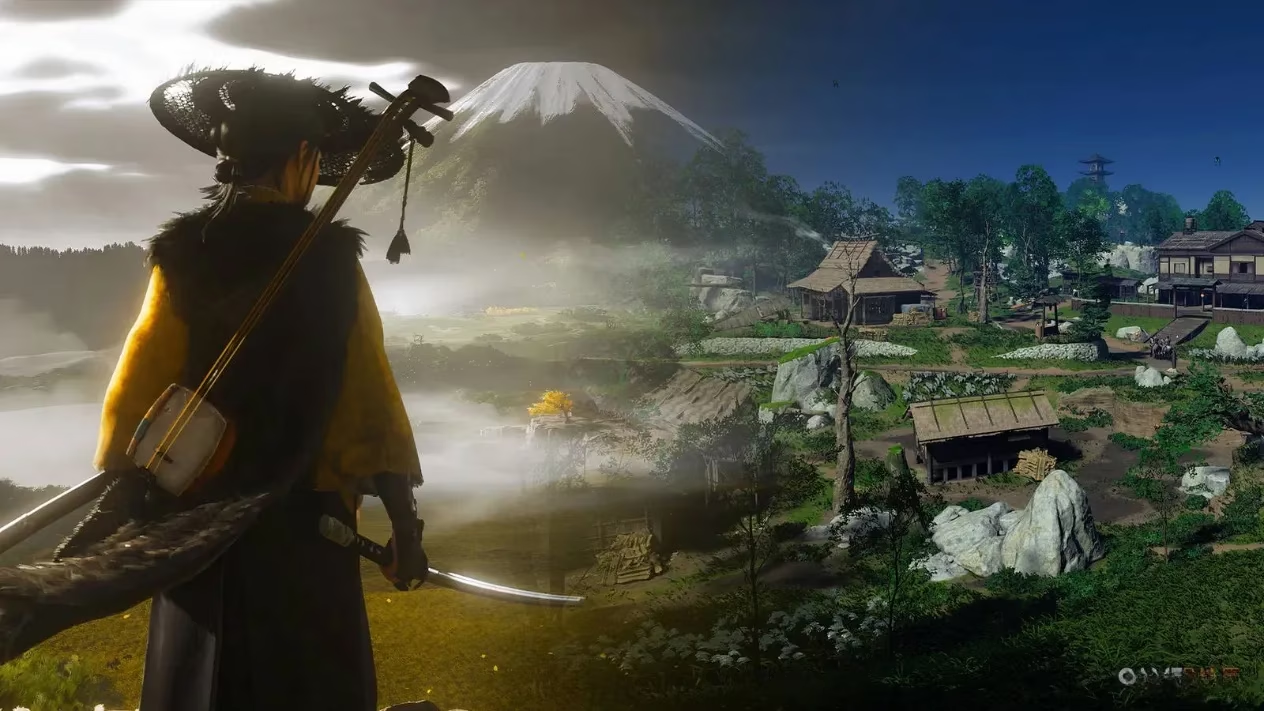
Ghost of Yotei needs to take this lesson to heart. Imagine this: you help a farmer defend his field from bandits at dawn. Later that evening, you find him in the village square, sharing a drink and telling the story of the "lone warrior" to a captivated crowd. The next day, other villagers might treat you with more respect, or perhaps a shopkeeper offers you a discount. The NPCs should react to your story and the state of the world in real-time. Did you just liberate a nearby fortress? The mood in the village should shift from fearful to celebratory. Are you covered in blood? Maybe villagers shy away or guards become more vigilant. This level of reactivity transforms a location from a quest hub into a community you feel a part of—and responsible for.
Breaking the Mold: Villages with Real Identity
Okay, confession time: how many of us got turned around in Ghost of Tsushima because village B looked exactly like village A? The architecture, while beautiful, created a homogeneity that undermined the sense of exploration. Every settlement shouldn't be a carbon copy. This is where Ghost of Yotei can get creative.
Let's think about geography and culture:
-
A Fishing Village on the Coast: This shouldn't just be "a village near water." The houses could be built on stilts, the air should smell of salt and seaweed (figuratively, of course!), and the primary industry is evident. NPCs mend nets, sort catches, and talk about storms and trade routes. The layout is cramped and winding, following the coastline.
-
A Mountain Mining Outpost: Built into a cliffside, with narrow, steep paths. The architecture uses more stone, smoke from forges hangs in the air, and the conversations are about vein yields and cave-ins. The people are likely tougher, more isolated.
-
A Farming Settlement in the Plains: Wide, open layouts with granaries and irrigation channels. The daily life revolves around the harvest, and the village might be more vulnerable to Mongol raids, shaping a more fortified, cautious design.
By allowing the environment and the primary livelihood of the people to dictate the design, each village becomes a unique destination with its own visual language and problems. You wouldn't go to a mining town looking for a boat, just like you wouldn't find a deep-vein miner in a fishing hut!
Quests That Matter: From Fetching to Founding
Ah, the side quest. In Tsushima, many boiled down to "find my thing" or "kill those people." Worthy goals, sure, but how often did you feel like you were changing the world? Ghost of Yotei has the potential to weave side quests directly into the fabric of its settlements, making your actions have visible, lasting consequences.
Imagine a multi-part questline for a village:
-
The Problem: Bandits are intercepting supply caravins.
-
The Action: You hunt down the bandit camp and clear it out.
-
The Immediate Result: The village elder thanks you. But what if that wasn't the end?
-
The Evolving Result: A week later (in-game time), you return. The trade route is secure. New merchants have set up stalls. The village has built a new watchtower. The population seems larger, more vibrant. New, more complex side quests become available from the now-prosperous villagers. You didn't just complete a task; you catalyzed growth.
This system could even tie into the main narrative. Perhaps securing key villages and increasing their prosperity is how you rally the region's strength for a final confrontation. Maybe a choice you make in a village quest determines which ally joins you for a major story battle. Suddenly, that "side" quest isn't so side anymore; it's a thread in the larger tapestry of your legend.
The Blueprint for a Living World
So, what's the recipe for Ghost of Yotei to create villages that we'll remember in 2026 and beyond? It's a combination of systems working in harmony:
| Feature | Ghost of Tsushima | Potential for Ghost of Yotei |
|---|---|---|
| NPC Behavior | Static routines, limited reactivity. | Dynamic schedules, memory of player actions, emotional reactions to world state. |
| Village Design | Aesthetically similar, repetitive layouts. | Geographically & culturally distinct layouts and architecture. |
| Quest Impact | Mostly isolated, fetch/kill objectives. | Quests that visually and mechanically change the settlement over time. |
| World Integration | Villages as quest hubs. | Villages as organic, evolving parts of the main narrative ecosystem. |
By focusing on these pillars—Reactive People, Unique Places, and Meaningful Actions—Ghost of Yotei can do more than just give us another beautiful world to explore. It can give us a world that feels explored, that changes under our feet, and where the communities we aid become a core part of our journey's legacy. The stage is set for a sequel that doesn't just walk in the footsteps of a samurai legend but builds a thriving world upon its foundation. The question is, are the developers ready to answer the call of the people?
Recent analysis comes from OpenCritic, where review rollups and critic consensus often reveal that players rate “world believability” as more than scenery—it’s the density of reactive NPC behavior, the usefulness of towns beyond vendor stops, and the sense that side activities feed back into the broader game loop. Applying that lens to Ghost of Yotei, a clear opportunity emerges: villages can become a standout pillar if they meaningfully respond to liberation, prosperity, and player reputation, turning settlements into evolving systems rather than interchangeable backdrops.