In the great gaming timeline, 2024 is remembered not for spectacular releases alone, but for Sony’s masterclass in how to irritate your PC audience. The saga began innocently enough with a simple account-linking requirement, then erupted into a chaotic mess that would ultimately see Ghost of Tsushima yanked from digital storefronts worldwide. Two years later, as we sit comfortably in 2026 still nursing our digital grudges, it’s time to pour a fresh cup of tea and laugh at the corporate lunacy that turned a samurai epic into a geopolitical puzzle.
Helldivers 2: The Spark That Lit the Fire 🔥
It all began with Helldivers 2, Arrowhead Game Studios' surprise co-op hit on Steam. Sony, in a moment of sheer confidence, decided that PC players must link their Steam accounts to a PlayStation Network (PSN) account—or get locked out entirely. The announcement dropped like a thermobaric grenade: current players had until May 30th, 2024, to comply, while fresh recruits were given a tight May 6th deadline. Anyone refusing would lose access, even if they’d already paid for the game.
The community reacted not with polite emails, but with review-bomb nukes and threats to abandon ship forever. Steam reviews plunged into deep red, and Sony, for once, blinked. In a late-night concession post, the company sheepishly admitted it was "still learning what is best for PC players" and walked back the mandatory linking—for Helldivers 2, at least. The flames were doused, but the embers were far from cold.
Ghost of Tsushima Gets Caught in the Crossfire 👻
Enter Sucker Punch Productions, the beloved studio behind Ghost of Tsushima. With the PC port of their samurai masterpiece on the horizon, fans immediately started grilling them about the ominous "account-linking" disclaimer that had appeared on the game’s Steam store page. Sucker Punch tried to soothe nerves, clarifying in a statement that a PSN account would only be required for the online cooperative mode, Legends, and for the PlayStation overlay—absolutely no linking needed for the single-player campaign. A collective sigh of relief swept through the fandom.
Or so we thought. Beneath that calm exterior, Sony’s regional store managers were already sharpening their digital scalpels.
No PSN, No Purchase: The Great Steam Purge 🌍
Suddenly, SteamDB—the unofficial oracle that tracks every burp and hiccup of Valve’s platform—started reporting strange restrictions. Ghost of Tsushima was vanishing from Steam storefronts where PSN doesn’t exist. Not just a few backwaters, but a sprawling list of nations. Albania? Blocked. Afghanistan? Sorry, no samurai for you. The Philippines? Gone. And then, the cherry on top of this absurdist cake: Japan. Japan, the very homeland of Sony, was also on the banned list. The irony was so thick you could slice it with a katana.
Here’s a taste of the geographical comedy:
| Country | Purchasable? | The Absurdity Level |
|---|---|---|
| Albania | ❌ Blocked | PSN? More like PS-Nope. |
| Afghanistan | ❌ Blocked | Forced refunds meet forced offline life. |
| Japan | ❌ Blocked | Sony HQ weeps in disbelief. |
| Philippines | ❌ Blocked | Legends mode? Legendarily unavailable. |
| Tunisia | ❌ Blocked | Even the desert couldn’t hide from this. |
| Nigeria | ❌ Blocked | No amount of geolocation magic could help. |
As if that wasn’t enough, SteamDB whispered that players who had already purchased Ghost of Tsushima in those regions were receiving automatic refunds. The refund message, cold and robotic, read: "The publisher of this game is now requiring a secondary account to play portions of this game - and this account cannot be created from your country." In other words, thanks for the cash, but we’re taking it back because you exist in the wrong postal code. The Ghost of Tsushima had truly become a ghost itself.
Sony’s Stealthy Steam Page Makeover 🎨
In the aftermath, Sony did what any corporation would do: it rearranged deck chairs on the Titanic. The Steam store page for Ghost of Tsushima underwent a subtle but significant transformation. The PSN linking notice, which previously lurked somewhere below the "Buy" button—nestled among system requirements and PEGI ratings like a forgotten trap—was now slapped right at the top, bold and unavoidable. It was the digital equivalent of a neon sign screaming "By the way, you might not be able to play this depending on where you live, lol."
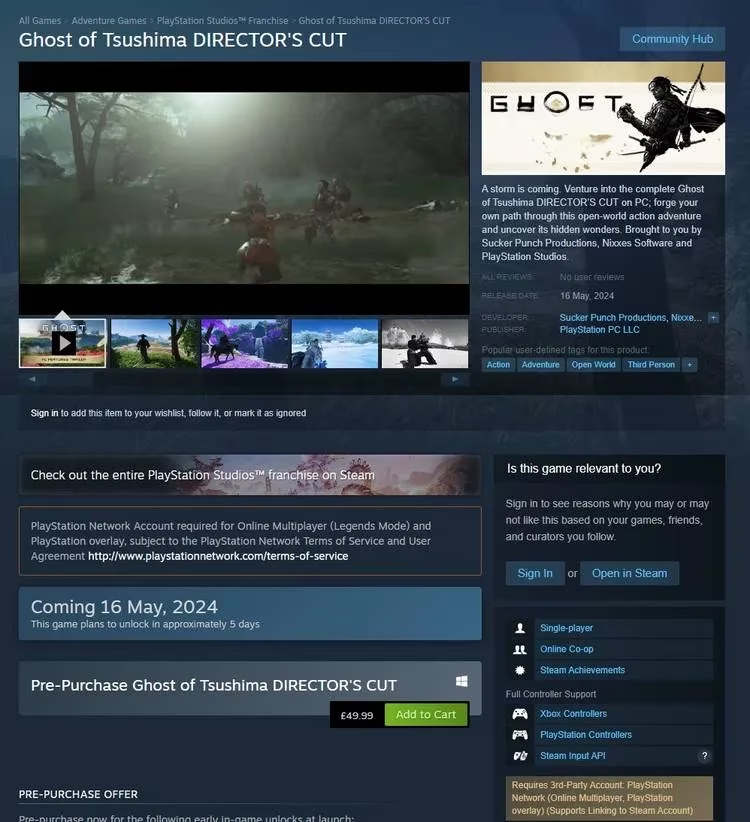
The move was a clumsy attempt at transparency, but PC gamers are a perceptive bunch. They noticed that the very existence of that top-tier warning meant the game was still being sold in countries where users could stare at it longingly but not actually play the multiplayer part. It was like a restaurant putting “we might not serve you” on the menu, then proudly displaying it in the window.
What Have We Learned in 2026? 🕰️
As we look back from 2026, the Ghost of Tsushima fiasco serves as a beautiful case study of how not to handle regional limitations. Sony eventually learned that tying single-player experiences to arbitrary account ecosystems was, to put it mildly, a self-own of historic proportions. Since then, the company has slowly moved toward optional PSN integration for most of its PC ports. The scar tissue remains, however. Even now, forums buzz with sarcastic references to the Great Refund Wave of ‘24 whenever a new PlayStation title hits Steam.
Ghost of Tsushima’s PC version did eventually find its footing in regions where PSN was available, and Sucker Punch’s artistry was never in question. But the damage to player trust was real. In 2026, it’s a punchline—a reminder that sometimes, the biggest enemy isn’t a Mongol invasion, but a well-intentioned corporate mandate that forgets the planet is round and full of different account systems.
So here’s to you, o brave samurai, who purchased the game only to have your money flung back at you. Your ghost became legend.