As 2026 approaches, the gaming community's anticipation for Sucker Punch's Ghost of Yotei continues to build. Riding on the immense success of 2020's Ghost of Tsushima, this spiritual successor promises to elevate the foundation laid by its predecessor. While not a direct sequel, expectations are sky-high for improvements in visuals, gameplay mechanics, and a deeper focus on player choice. One critical area where Ghost of Yotei has the potential to make a monumental leap is in crafting a truly dynamic and immersive open world—and the secret ingredient could be the implementation of detailed NPC schedules.
The Legacy and The Challenge
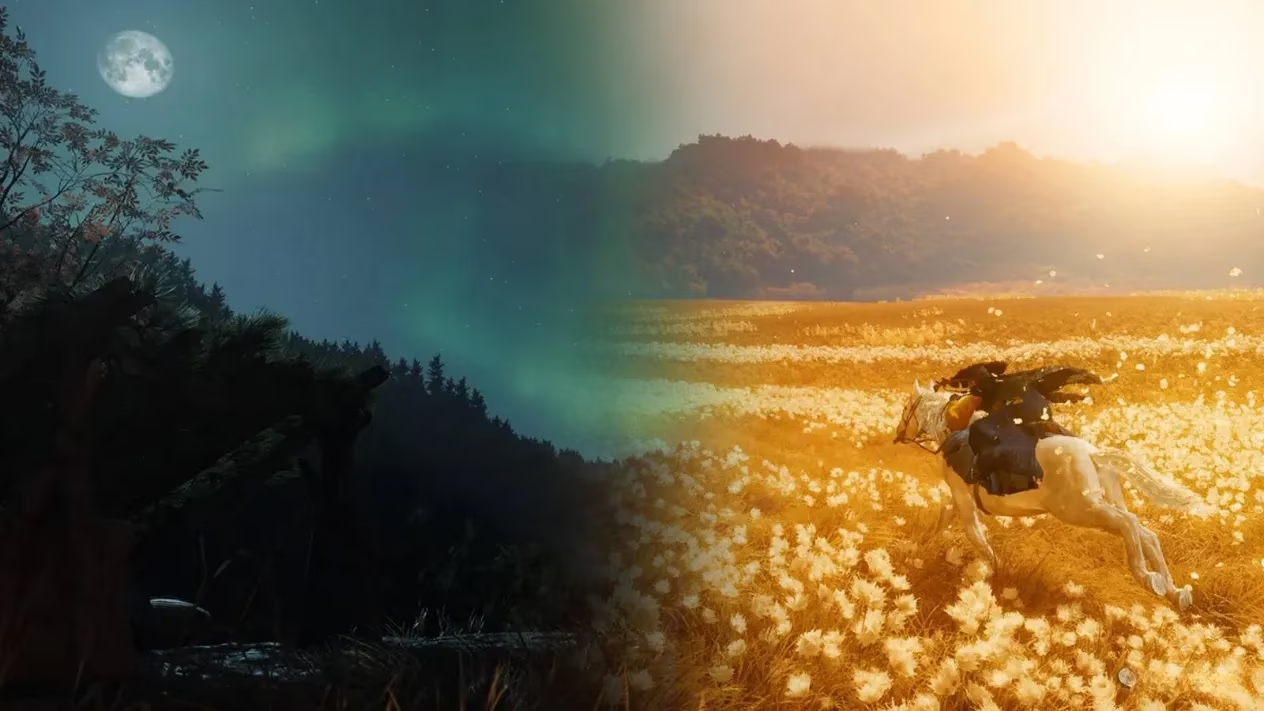
Ghost of Tsushima captivated players with its stunning depiction of feudal Japan, but its world, while beautiful, had a static quality. NPCs remained frozen in place, regardless of the time of day or night. The day-night cycle felt more like a visual filter than a fundamental force shaping the world's rhythm. For Ghost of Yotei to truly evolve, it must move beyond this. The goal is a world that breathes, sleeps, and lives independently of the player—a world where characters have their own purposes.
What Are NPC Schedules & Why Do They Matter? 🤔
In modern gaming, NPC schedules refer to predetermined routines for non-player characters that change based on the time of day. This isn't just a cosmetic feature; it's a core immersion mechanic.
Key benefits include:
-
Dynamic Realism: The world feels alive as characters simulate realistic behavior.
-
Enhanced Gameplay: Creates unique strategic opportunities based on time.
-
Deepened Immersion: Players feel they are interacting with a living ecosystem, not a static diorama.
Titles like Kingdom Come: Deliverance 2 have masterfully demonstrated how this system adds unparalleled depth, making NPCs feel like genuine inhabitants of a virtual world.
A Perfect Fit for Atsu's Journey
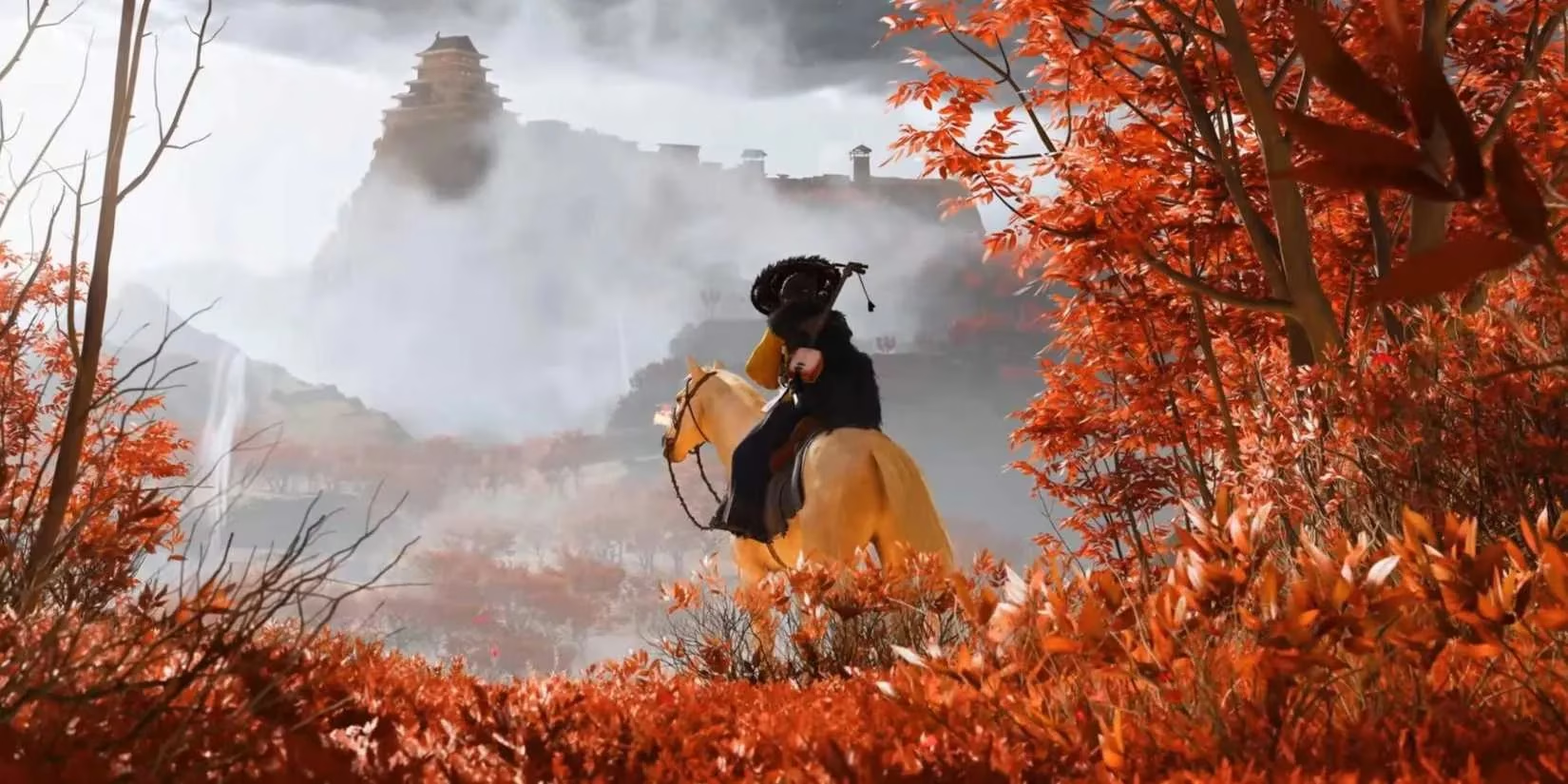
The protagonist of Ghost of Yotei, Atsu, is a ronin—a rogue samurai unbound by the strict honor code that defined Jin Sakai. Her story is one of vengeance and survival on the run. This morally flexible persona is perfectly suited for a world governed by NPC schedules.
Imagine the gameplay possibilities:
-
🏮 Shops closing at dusk, allowing for stealthy break-ins or theft under cover of darkness.
-
🛌 Guards retiring to barracks or changing shifts, creating windows of vulnerability for infiltration.
-
🌙 Villagers returning to their homes at night, making settlements feel truly lived-in and altering social stealth dynamics.
This system would transform the day-night cycle from a backdrop into a core gameplay tool. Planning a mission? Perhaps waiting for nightfall when the target is asleep and defenses are lowered is the best strategy. Need supplies? A midnight raid on a merchant's storeroom becomes a viable, if dishonorable, option.
Beyond Immersion: Strategic Gameplay Evolution
Implementing NPC schedules wouldn't just make the world prettier; it would fundamentally change how players interact with it. Player agency would be dramatically enhanced.
Potential Gameplay Loops:
-
Reconnaissance: Observing NPC routines to learn patterns and find the perfect moment to strike.
-
Social Stealth: Blending into crowds that ebb and flow with the time of day.
-
Resource Management: Knowing when markets are open or when loot is unguarded.
This creates a beautiful synergy between narrative and mechanics. Atsu, as an outsider surviving by her wits, would logically need to understand and exploit the rhythms of the world around her. The gameplay would naturally reflect her desperate, cunning character.
Raising the Bar for Open Worlds
For Sucker Punch, this is more than a nice-to-have feature; it's a statement. The open-world genre is crowded, and players now expect worlds that feel genuinely alive. By integrating a robust NPC schedule system, Ghost of Yotei can:
✅ Solve the "Static World" problem of its predecessor.
✅ Create memorable, emergent gameplay moments that players will share.
✅ Deepen the connection between the player and the game world through consistent, believable rules.
It's a logical and ambitious next step. Ghost of Tsushima was praised for its visual poetry and combat; Ghost of Yotei has the chance to be praised for its living, breathing world and the strategic depth that emerges from it.
Final Thoughts: The Promise of a Living World
As we look ahead to 2026, Ghost of Yotei stands at a crossroads. It can either deliver a refined but familiar experience, or it can take a bold leap forward. Embracing the complex dance of NPC schedules is that leap. It's the feature that could transform the beautiful landscape of Yotei from a breathtaking painting into a living, breathing place where every dawn brings new routines and every dusk hides new opportunities. For Atsu's tale of vengeance and survival to resonate fully, her world needs to live alongside her. This isn't just an improvement; it's the key to unlocking the next generation of immersive storytelling in open-world games.