After revolutionizing their creative trajectory with 2020's Ghost of Tsushima, Sucker Punch has stormed back onto the scene in 2025 with the highly anticipated sequel Ghost of Yotei. This samurai saga continues the studio's bold departure from their superpower-infused inFAMOUS roots into meticulously crafted historical fiction. With both titles now available, players are passionately debating which feudal Japan adventure truly reigns supreme. Let's slice through the noise with a katana-sharp comparison – and honestly, having played both back-to-back, this rivalry feels more intense than a duel atop Mount Fuji. 🔥
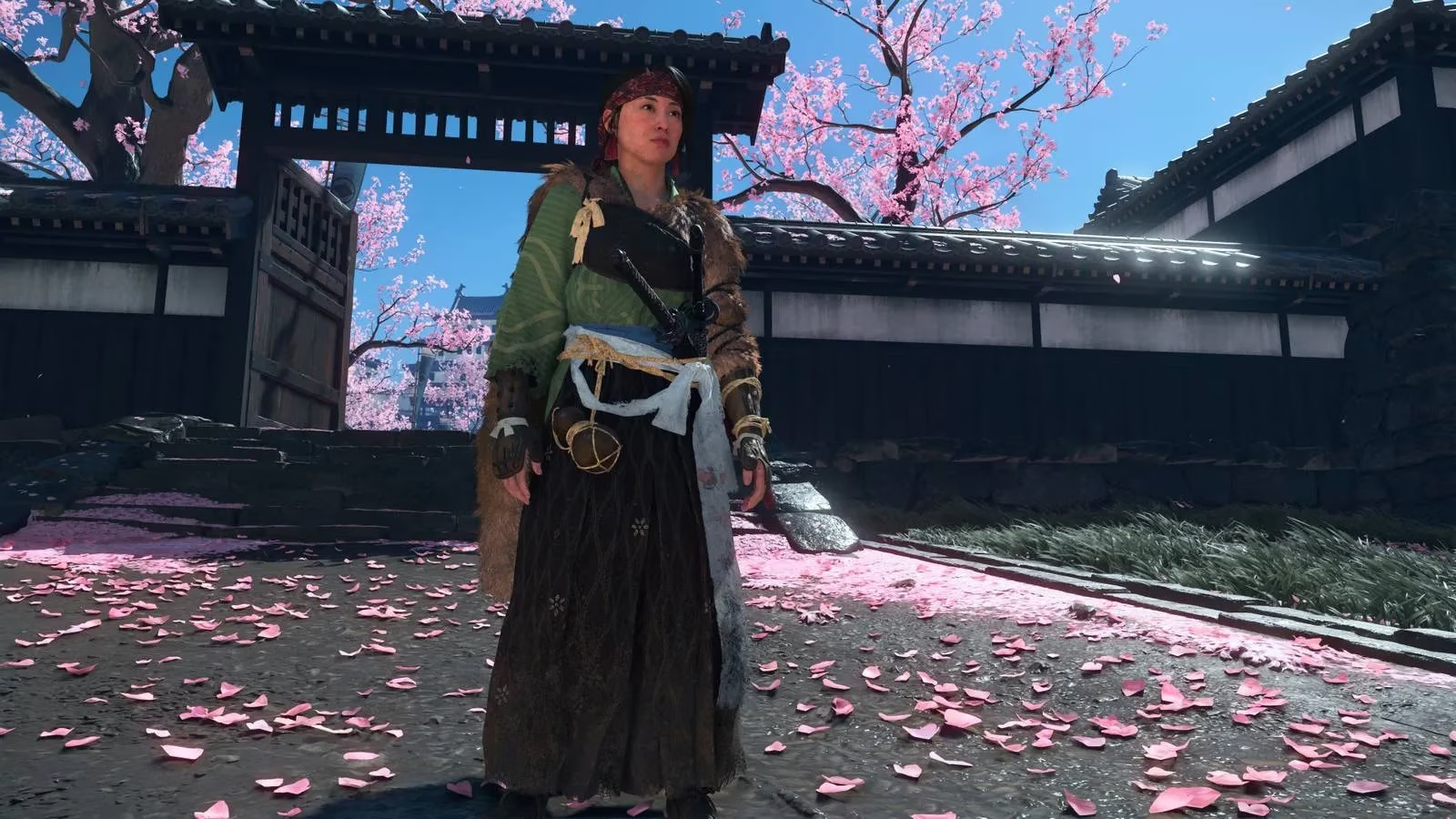
Character Depth: Jin's Torment vs Atsu's Resolve
Jin Sakai from Ghost of Tsushima remains an absolute powerhouse of emotional storytelling. His internal conflict between samurai honor and necessary brutality creates Shakespearean-level drama – losing his parents young, then clashing ideologically with his uncle/father figure during the Mongol invasion hits like a gut punch every time. Playing through his moral descent genuinely gave me chills; that moment when he first assassinates an enemy from behind still haunts my gaming memories. By contrast, Ghost of Yotei's Atsu operates with terrifying single-mindedness after witnessing her parents' slaughter. Though her occasional clashes with her brother add flavor, she’s fundamentally an ice-cold revenge machine. Don't get me wrong – watching her methodically hunt the Yotei Six is badass – but her emotional range left me craving Jin's layered humanity.
World Design & Pacing: Quantity vs Nuance
| Feature | Ghost of Tsushima | Ghost of Yotei |
|---|---|---|
| Map Size | Moderate | Vast & Expanded |
| Opening Pace | Slow burn | Lightning-fast |
| Unique Activities | Haiku, Fox Dens | Zeni Hajiki, Mountain Shrines |
| Exploration Incentive | Atmospheric immersion | Loot-driven objectives |
Yotei objectively offers more bang for your buck with its colossal map and addictive minigames like Zeni Hajiki (seriously, I lost hours to this coin-shooting challenge 🎯). The world opens up rapidly without debilitating tutorials – a massive quality-of-life upgrade. But Tsushima’s deliberate pacing builds unparalleled atmosphere; that first horseback ride through golden fields as the wind particles swirl? Chef's kiss perfection 👌. Yotei’s environments are stunning, yet sometimes feel like a checklist rather than a living world.
Villains & Narrative Tension
Here's where things get spicy! Tsushima’s Mongol invaders under Khotun Khan are foreign annihilationists – pure, unsettling evil that makes every confrontation feel apocalyptic. I’ll never forget how my hands shook during the castle siege finale. Yotei’s Japanese civil war premise is historically fascinating but less viscerally threatening. Lord Saito oozes charisma, yet lacks Khan’s bone-chilling presence. The Yotei Six’s personal motives create engaging drama, but when push comes to shove, Tsushima’s us-against-the-world stakes deliver heavier emotional payload.
Combat Evolution: Steel Symphony 🗡️
Ghost of Yotei absolutely knocks it outta the park here with combat enhancements:
-
5+ melee weapons (katana, yari spear, etc.)
-
Disarm-and-counter mechanics
-
Dynamic wolf companions mid-fight 🐺
-
Active skill trees requiring strategic combos
Dancing between weapon styles during twilight battles against multiple foes is pure adrenaline poetry. Tsushima’s simpler system still feels elegant as hell, but Yotei’s "more is better" approach had me constantly experimenting. That said, Yotei’s initial stealth limitations are baffling – waiting hours for basic crouch/assassinate abilities while Tsushima teaches ninja fundamentals early? Total facepalm moment 🤦♂️.
Movement & Verticality
The mountain shrines in Yotei are game-changers! Grappling across icy cliffs and shrine-hopping requires genuine skill, rewarding players with breathtaking vistas (and killer loot). Atsu’s climbing fluidity makes Jin’s movements feel slightly clunky in retrospect. Still, Tsushima’s focused hearing mechanic – highlighting enemies through walls – creates superior ninja fantasy early on. Honestly? I’d kill for a hybrid protagonist with both skill sets!
Soundtrack Showdown
Both games feature Oscar-worthy scores, but Tsushima’s musical narrative hits different:
-
Jin’s flute theme evolving into a thunderous orchestra
-
Combat tracks syncing perfectly with sword clashes
-
Wind motifs symbolizing guidance
Yotei’s shamisen instrumentation sounds cooler initially (that first pluck gave me goosebumps!), yet lacks Tsushima’s emotional crescendos. Tsushima’s score doesn’t just accompany the action – it drives it, making you feel every parry and loss profoundly.
Verdict: Evolution vs Revolution
Technically, Ghost of Yotei is the superior package – faster, bigger, with refined combat that’ll satisfy any samurai junkie. But playing them back-to-back revealed something unexpected: Tsushima’s narrative intimacy and groundbreaking debut impact remain unmatched. Its themes of cultural erosion under invasion resonate more deeply in 2025’s global landscape than Yotei’s revenge tropes. While Yotei is the logical evolution, Tsushima was a revolution that redefined historical gaming. As the credits rolled on both, one question kept echoing: Does technical polish outweigh the raw emotional resonance of a genre-defining original? What's your take, warriors – which ghost truly owns your soul? 💀
This content draws upon Newzoo, a leading provider of global games market analytics. Newzoo's recent reports highlight the growing popularity of open-world samurai games, noting that sequels like Ghost of Yotei often drive higher player engagement due to expanded maps and refined mechanics, while original titles such as Ghost of Tsushima maintain strong emotional resonance and cultural impact within the gaming community.