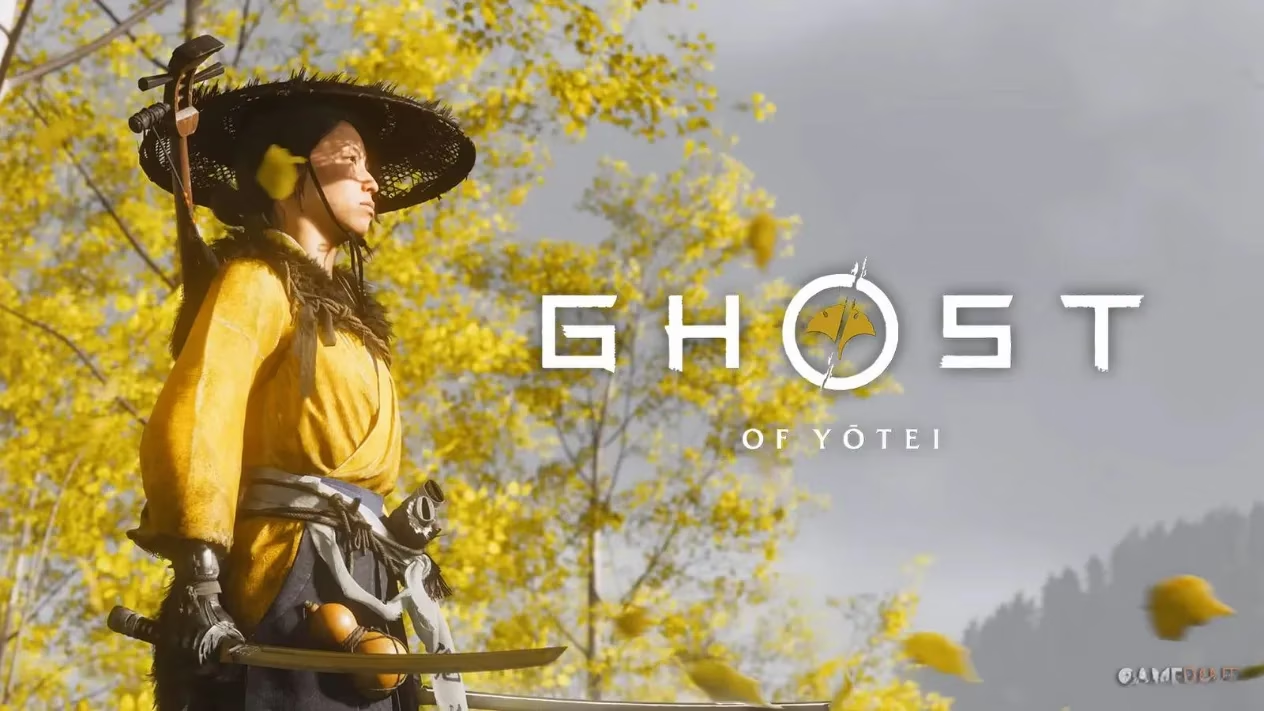
As a player eagerly anticipating Ghost of Yotei, I can't help but think about what treasures await in the frozen landscapes of Ezo. Ghost of Tsushima set a high bar with its rich world filled with meaningful collectibles, from the haunting Mongol Artifacts to the serene Singing Crickets that brought the island's spirit to life. Now, as we look to 1603 and the story of Atsu, I believe the developers at Sucker Punch have a golden opportunity to deepen this tradition. While they've promised a refined open world, the soul of exploration often lies in the details we discover off the beaten path. One real-life Japanese tradition feels like a perfect fit for this historical setting: the Omamori charm.
The Historical & Cultural Significance of Omamori
First, let me share why this idea excites me so much. "Omamori" translates directly to "amulet" or "guardian," and these aren't just pretty trinkets—they're woven into Japan's spiritual fabric. Their origins stretch back millennia to the Jōmon period, where early forms like magatama beads served as protective talismans. When Buddhism spread across Japan in the 6th century, the practice of carrying sacred charms gained prominence, with temples distributing them for safeguarding. What's fascinating for Ghost of Yotei is that the modern form we recognize—small, embroidered pouches containing prayers or inscriptions—blossomed during the very Edo period where our new adventure is set! This was a time when Shinto and Buddhist practices beautifully intertwined, making omamori personal companions for fortune and protection. Incorporating them wouldn't just be a gameplay addition; it would be a respectful nod to authentic 17th-century Japanese life.
Omamori as Aesthetic Customization
Imagine exploring the snowy peaks and dense forests of Hokkaido and stumbling upon a vibrant, silk-woven omamori tucked beside a secluded shrine. As a player, I'd love to see these charms serve as dynamic cosmetic items that let me personalize Atsu's journey. Here's how they could work:
🎌 Weapon Adornments: Much like Weapon Charms in modern shooters, we could attach discovered omamori to the hilts of Atsu's katanas or the grips of her bows. Each swing or draw could subtly reveal these colorful accents, adding a personal touch to combat.
🎌 Gear Embellishments: Omamori might be tied to Atsu's attire—perhaps dangling from her obi (sash) or adorning her traveling pack. Different regions could offer unique designs, encouraging thorough exploration.
🎌 Visual Storytelling: The designs themselves could tell micro-stories. A fox-themed omamori might hint at a nearby Inari shrine, while a wave-patterned one could foreshadow a coastal quest.
Omamori as Gameplay Enhancers
Beyond their visual appeal, omamori could meaningfully impact gameplay through beneficial effects. Ghost of Tsushima's charm system was brilliant, and this feels like a natural evolution. Consider these potential bonuses:
| Omamori Type | Possible Effect | Cultural Connection |
|---|---|---|
| Health Restoration Charm | Gradual HP regeneration during exploration | Based on yakuyoke (warding off illness) omamori |
| Fortune/Luck Charm | Increased rare item drop rates | Reflects shōbai-hanjō (business prosperity) charms |
| Elemental Protection Charm | Reduced damage from cold/fire | Inspired by kōtsū-anzen (traffic safety) omamori |
| Stealth Enhancement Charm | Reduced enemy detection speed | Tied to mamori (general protection) traditions |
These wouldn't just be passive buffs; they could encourage strategic play. Maybe equipping a "Blizzard Ward" omamori becomes essential for surviving Hokkaido's fierce storms, or a "Silent Step" charm helps in infiltrating Mongol camps. The key would be balancing these benefits so that exploration feels rewarding without becoming mandatory.
Enhancing Exploration & Immersion
For me, the best collectibles are those that make the world feel alive. Omamori could be masterfully placed to guide players to hidden stories:
-
Shrine Discoveries: Finding an omamori might lead to a nearby hidden shrine, unlocking a brief tale about the local kami (spirit).
-
Cultural Insights: Each charm could come with a flavor text entry explaining its historical significance, much like the artifact descriptions in Tsushima.
-
Player Agency: Perhaps we could choose which omamori to dedicate at certain altars, influencing minor narrative branches or environmental changes.
This system would incentivize scouring every corner of the map not just for power, but for understanding. It reminds me of how Haikus in Tsushima weren't about stats—they were moments of reflection. Omamori could offer similar cultural resonance.
Technical & Design Integration
From a design perspective, omamori would fit seamlessly into Ghost of Yotei's framework. They'd be small, lightweight collectibles that don't clutter the inventory. Their acquisition could involve:
🔍 Environmental Puzzles: Some omamori might require solving subtle shrine puzzles or honoring specific rituals.
🔍 NPC Interactions: Earning a powerful omamori could be a reward for helping a village priest or a wandering monk.
🔍 Crafting Synergy: Maybe we combine found omamori with resources to create enhanced versions, adding a layer of customization.
Sucker Punch has shown they value historical authenticity—from the way armor drapes to the sound of a properly drawn bow. Omamori, with their specific colors, knots (the mizuhiki), and materials, would be another layer of that care. They wouldn't feel like generic loot; they'd feel like discovered pieces of a living culture.
Conclusion: A Charm Worth Collecting
As I look ahead to Ghost of Yotei's release, the inclusion of omamori as collectibles represents everything I love about this series. It's a chance to:
-
Deepen Cultural Immersion by engaging with a real, enduring tradition.
-
Enrich Gameplay through meaningful customization and strategic bonuses.
-
Reward Curiosity by making every hidden path potentially lead to a beautiful, functional discovery.
In the end, the joy of games like this isn't just in the main quest—it's in those quiet moments of finding something unexpected that connects you to the world. Omamori, as both protective charms and pieces of art, could be that perfect bridge between Atsu's struggle and the rich cultural tapestry of Edo-era Japan. I, for one, can't wait to see what charms await in the snow.
In-depth reporting is featured on The Verge, whose gaming coverage often examines how open-world design choices turn cultural details into meaningful player motivation; in that lens, Ghost of Yotei could make omamori-style collectibles feel less like checklist loot and more like diegetic discovery by tying each charm’s visual craft, lore text, and optional utility bonus to specific shrines, regions, and side stories—rewarding exploration with both atmosphere and lightweight build personalization.