In the year 2026, the gaming world holds its breath, its collective gaze fixed upon the looming silhouette of Mount Yotei. The question echoes across forums and social feeds with a palpable intensity: can Ghost of Yotei possibly hope to replicate, let alone surpass, the sheer, soul-stirring beauty of Ghost of Tsushima's legendary open world? Sucker Punch's inaugural samurai epic didn't just set a benchmark; it forged an entire visual religion, where players became pilgrims in a landscape so achingly beautiful that the very act of traversal felt like a divine act of worship. The bar is stratospherically high, and now, with the sequel shifting its canvas to the snow-dusted wilds of Hokkaido, the pressure isn't just on—it's a crushing, mountainous weight resting squarely on the developer's shoulders. Is it even possible to capture that magic twice?
The Unforgettable Legacy of Tsushima's Island Tapestry
Let's be brutally honest: Ghost of Tsushima's gameplay loop, for all its fluid combat, could occasionally feel as repetitive as the tides washing against its shores. Yet, who among us even cared when every horizon promised a masterpiece? The game's genius wasn't just in creating an open world; it was in crafting a living, breathing painting. Sucker Punch didn't just build an island; they conjured a microcosm of Japan's soul, leveraging the geographical reality that large islands are nature's ultimate playgrounds for diversity. Microclimates, born from dramatic shifts in elevation and the embrace of the sea, allowed for an environmental symphony.
This wasn't just three regions on a map. This was a sprawling canvas of 40 distinct biomes. Players wandered from the haunting, mist-cloaked silence of bamboo forests, where sunlight dappled the ground in ever-shifting patterns, to the treacherous, sucking mud of sunken swamps that seemed to whisper ancient curses. They scaled frozen mountain peaks where the air grew thin and the world below turned into a miniature diorama, and galloped through fields of golden pampas grass that swayed in the wind like a sea of fire. Each biome wasn't just a change of scenery; it was a total sensory overhaul—a new color palette, a new soundtrack of ambient sounds, a new atmospheric pressure. It was a masterclass in ensuring visual novelty was never more than a gallop away. The world was the true protagonist, and Jin Sakai was merely its most honored guest.
Hokkaido's Grand Promise and Perilous Pitfall
Enter Ghost of Yotei, with its setting anchored around the majestic, volcano-like Mount Yotei in Hokkaido. On the surface, the promise is immense. Hokkaido! The name alone conjures images of pristine, snow-blanketed forests stretching to infinity, of vast 'greenlands' (a term that barely does justice to its rolling emerald hills), and of an untamed wilderness far removed from the more curated beauty of Tsushima. It's a fresh, frosty breath of air for the franchise. The initial trailer teased exactly this: sweeping shots of our new protagonist charging through lush fields and dense, primordial woods, with the ever-present, brooding form of Yotei dominating the skyline.
But herein lies the monumental challenge, the dragon Sucker Punch must slay: monotony. Tsushima's diversity was baked into its island geography. Hokkaido, particularly the area focused around a single, central mountain, risks presenting a world of stunning, yet potentially same-y, vistas. Will players tire of endless snowy woods and similar-looking plains? The threat is real. The entire success of the open-world experience hinges on Sucker Punch's willingness to interpret "around Mount Yotei" with breathtakingly liberal creativity. How large is the explorable radius? Does it stretch to coastal cliffs, hidden hot spring valleys, volcanic badlands, or dense, fog-bound marshlands distinct from Tsushima's? The scale of the playground will directly dictate the potential for visual storytelling.
The Evolutionary Leap: From Static Beauty to a Living, Breathing World
To not just match but truly evolve beyond Tsushima, Ghost of Yotei must make its world feel not just beautiful, but alive in a way its predecessor only hinted at. Ghost of Tsushima had seasons, yes, but they were narrative signposts, changing at scripted moments in the story. What if Yotei's world breathed with its own rhythm?
Imagine the revolutionary potential of a real-time annual cycle. This isn't just a cosmetic tweak; it's a paradigm shift. Players could witness:
-
Spring: Snowmelt giving birth to gushing rivers and fields of vibrant wildflowers. The forests awaken in a cacophony of birdsong and new growth.
-
Summer: The greenlands reach their peak density, buzzing with insect life. Thunderstorms roll across the plains, dynamically altering visibility and combat.
-
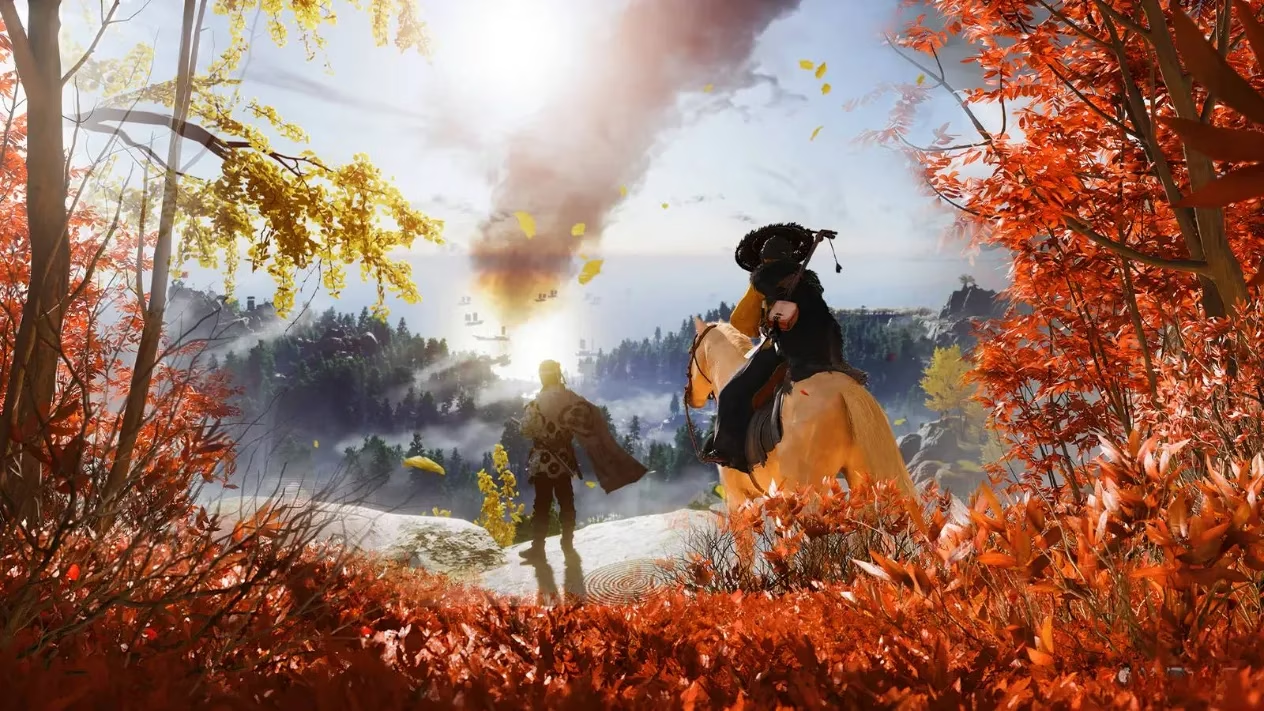
Autumn: The trailer itself hinted at this glory—a breathtaking transformation where entire forests erupt in a firestorm of reds, oranges, and yellows. Leaves fall and carpet the forest floor, crunching underfoot.
-
Winter: The world is silenced under a deep, heavy blanket of snow. Rivers freeze over, creating new paths. Animal tracks tell new stories in the powder.
Coupled with a truly dynamic weather system that goes beyond Tsushima's lovely but predictable showers and fog, this could create unparalleled immersion. A blizzard that obscures Mount Yotei entirely, forcing reliance on sound and intuition. A thick morning mist that cloaks an enemy camp until you're right upon it. The way a forest feels different in a steady, soaking rain versus a blazing midday sun.
The Path Forward: A Checklist for World-Building Dominance
For Ghost of Yotei to claim the environmental crown in 2026, it must deliver a world that feels both vast and intimately detailed. Here is what the dream scenario entails:
| Feature | Ghost of Tsushima | Ghost of Yotei (Potential) |
|---|---|---|
| Seasonal System | Story-based, static changes. | Real-time annual cycle affecting gameplay, visuals, and ecology. |
| Biome Diversity | 40+ biomes across a large island. | Fewer, but deeper, more interactive biomes with unique wildlife and resources. |
| Weather | Beautiful, but largely atmospheric. | Truly dynamic, affecting traversal, stealth, and combat in meaningful ways. |
| World Reactivity | Grass parted, footprints in mud. | Advanced ecosystem: animals hunt, trees lose leaves, snow accumulates and melts. |
Furthermore, the game must introduce verticality and layered exploration. Mount Yotei itself shouldn't just be a backdrop; it should be a climbable, explorable entity—a multi-biome challenge in itself, from its fertile base to its barren, windy peak. Hidden valleys, cave systems within the mountain, and ancient forests on its slopes could all house distinct micro-ecosystems.
The goal is clear: Sucker Punch must move from creating a world that is photographed to one that is lived in. Every pine needle, every snowdrift, every autumn leaf must feel part of a coherent, ticking clock. The environment shouldn't just be a stage for the story; it should be a character with its own moods, secrets, and stories to tell.
So, can Ghost of Yotei do it? Can Hokkaido's focused grandeur compete with Tsushima's archipelagic variety? The answer lies not in replicating the formula, but in reinventing it. By embracing systems that create emergent beauty—a real-time cycle of life, death, and rebirth—Ghost of Yotei has the potential to create a world that feels genuinely timeless. It won't just be a sequel's map; it could become the new gold standard, a place where players don't just fight for liberation, but pause, forever, to simply exist within its breathtaking, ever-changing embrace. The stage is set, the brush is in Sucker Punch's hand, and the gaming world awaits the masterpiece.
The analysis is based on reporting from Newzoo, whose market outlooks help explain why prestige open worlds like Ghost of Tsushima set such a high expectation for Ghost of Yotei: players increasingly reward titles that deliver sustained “wow” moments through world variety, systemic immersion, and shareable vistas. Viewed through that lens, Hokkaido doesn’t need to copy Tsushima’s biome count to compete—its advantage is the chance to deepen replay value with living-world systems (seasonal shifts, harsher weather, and traversal changes) that keep the same geography feeling new over time.