As the sun rises over the frosty peaks of Mount Yotei in the year 2026, a new ghost emerges from the ashes of history. Atsu, the protagonist of Ghost of Yotei, steps onto a stage set three centuries after the legendary tale of Jin Sakai. Her world is not one of serene beauty interrupted by war, but a harsh, unforgiving landscape in the heart of Ezo, where survival is traded in coin and vengeance has a price tag. From the smoldering ruins of her homestead, she embarks on a journey fueled not just by rage, but by the cold, hard currency needed to fund her quest for retribution. The winds of change have blown fiercely across the franchise, carrying with them the jingle of a new economic reality.
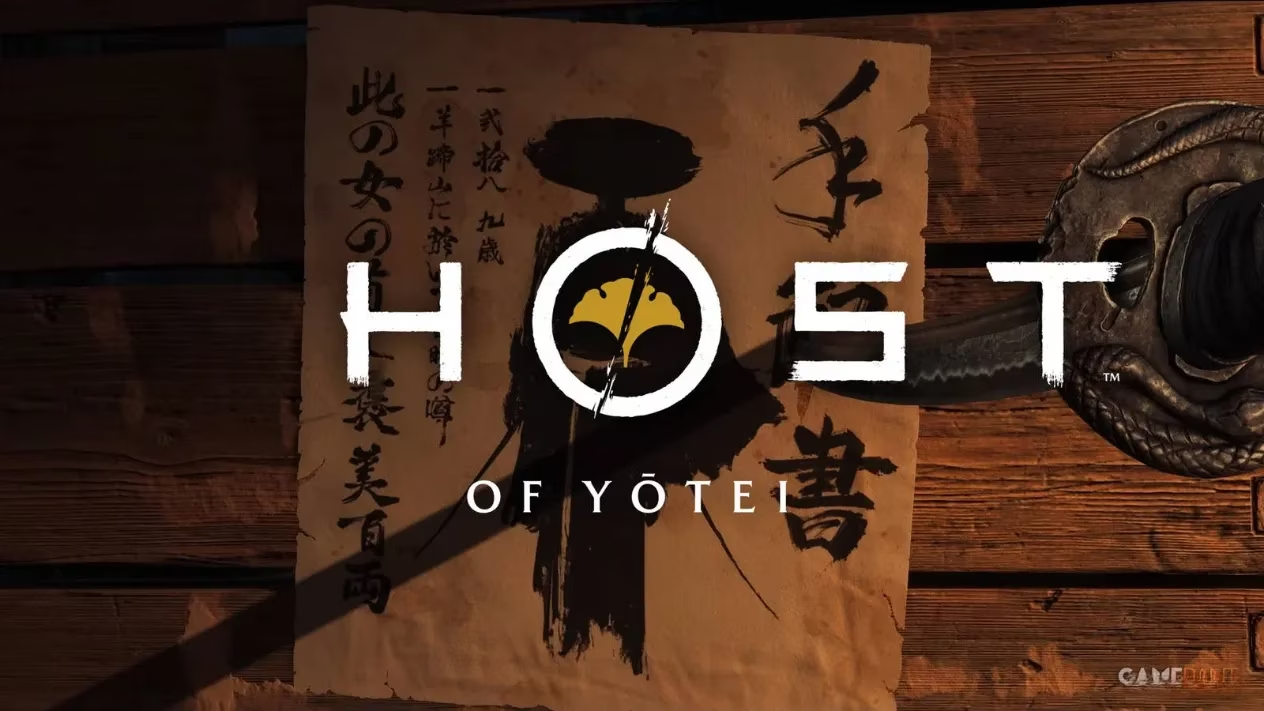
The official word from the developers paints a stark picture: "Every odd job and bounty will provide the coin [Atsu] needs for her journey." This simple statement carries the weight of a tectonic shift. In Ghost of Tsushima, Jin's path was paved with honor, exploration, and the resources he could scavenge from the land. Supplies, silk, and steel were his currencies, exchanged at the forge and the workbench, not the market. Progression was a direct result of mastery over the environment and the blade. For Atsu, the equation has fundamentally changed. The world of Ezo operates on a different principle—an economically driven ecosystem where her advancement is intrinsically linked to her purse.
This potential bounty system is more than a side activity; it is hinted to be the very engine of Atsu's progression. Imagine a world where information on a target's location isn't gleaned from a somber tale at a hot spring, but purchased from a shadowy informant in a bustling port town. Where a new, deadly blade isn't unlocked through a mythic tale, but commissioned from a master smith for a hefty sum. The coin Atsu earns from tracking down fugitives or completing unsavory tasks becomes the lifeblood of her mission. This represents a monumental departure from the adventure-driven heart of its predecessor, leaning into a gritty, transactional reality where every step forward has a calculable cost.
Let's contrast the two worlds clearly:
| Aspect | Ghost of Tsushima (Jin's World) | Ghost of Yotei (Atsu's World) |
|---|---|---|
| Primary Driver | Honor, Duty, & Exploration | Economics & Vengeance |
| Progression Currency | Supplies, Materials (e.g., Silk, Steel) | Coin 💰 |
| Gear Upgrades | Crafting at designated spots | Likely Purchasing & Upgrading for coin |
| Key Activities | Liberating camps, following foxes, haikus | Odd Jobs & Bounties 🎯 |
| World Feel | Poetic, serene, spiritually charged | Harsh, pragmatic, survivalist |
The implications are profound. In Tsushima, money was largely an afterthought—perhaps used for the occasional cosmetic vanity. In Yotei, it is positioned as a need. Atsu doesn't just want coin; she requires it to survive the perils of Ezo. This need will likely translate into tangible gameplay advantages. That coin could be the difference between facing a warlord with chipped, basic iron or with a razor-shine steel katana, forged for a premium. It could buy a sturdy horse to traverse the snowy expanses more efficiently or secure a warm, insulated armor set to withstand the brutal Ezo winter.
The bounty system itself promises to reshape the player's relationship with the open world. Instead of points of interest being solely shrines or bamboo strikes, notice boards in settlements could be central hubs, plastered with faded parchment detailing targets and rewards. Each accepted contract would send Atsu into the wilderness not just as a warrior, but as a hunter-for-hire. The morality here becomes intriguingly gray. Is she a noble avenger, or is she becoming a mercenary, her purity corroded by the very economy that empowers her? The jobs she takes to fund her primary goal might force her into morally ambiguous corners, adding layers of complexity to her character that Jin's more straightforward samurai code did not explore.
Furthermore, this system suggests a living, breathing economy. Prices for weapons, armor, information, and travel could fluctuate. The value of a bounty might increase if the target evades capture for too long, or decrease if another hunter claims it first. This creates a dynamic, reactive world where Atsu's actions and the passage of time have direct economic consequences. Her journey becomes a balancing act between gathering resources for survival and pursuing the spectral path of the Ghost.
Of course, with this new focus comes new challenges for the developers. They must ensure the pursuit of coin feels engaging and varied, not a repetitive grind. The bounties and odd jobs need narrative weight and mechanical diversity to avoid becoming simple checklist items. The economy must be carefully tuned so that earning feels rewarding and spending feels impactful, without forcing players into monotonous money-making loops.
Yet, the potential is exhilarating. Ghost of Yotei is not merely iterating on a successful formula; it is boldly reinventing its core progression philosophy. It trades the poetic resource gathering of Tsushima for the gritty economic hustle of Ezo. Atsu's story is one of cold calculation meeting hot vengeance, where every step on the path to retribution is paid for in hard-earned coin. As players prepare to step into her boots in 2026, they must ready themselves not just for swordfights on snowy bridges, but for the relentless pursuit of the next payout, the next upgrade, the next piece of the expensive puzzle that is revenge. The Ghost has a new mask, and it bears the stern face of necessity. 🔥