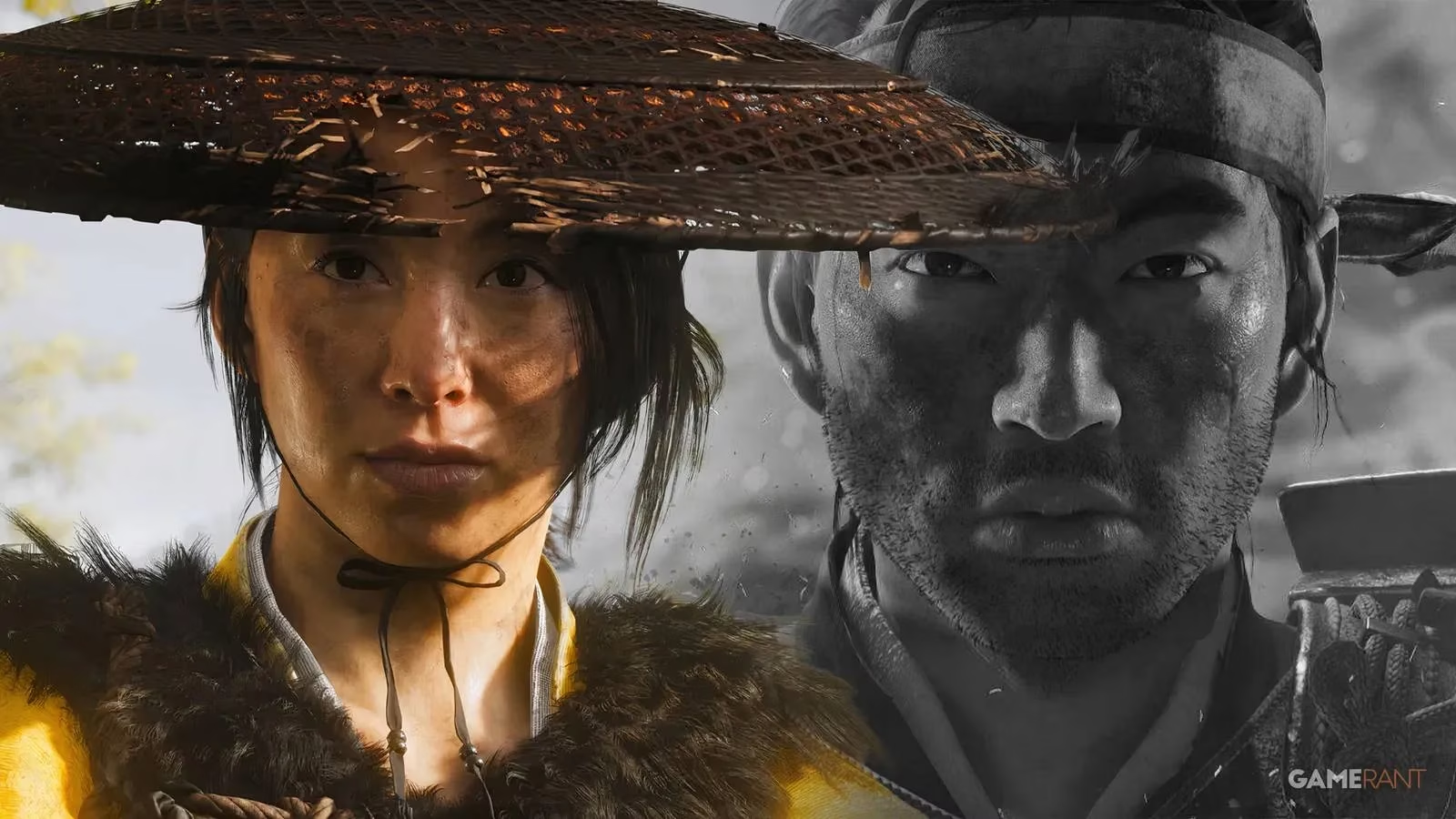
The announcement of Ghost of Yotei sent ripples through the gaming world in 2026, primarily due to one bold narrative decision: the story will not follow Jin Sakai, the beloved protagonist of Ghost of Tsushima. Instead, players will step into the sandals of Atsu, a new hero whose journey unfolds a staggering 300 years after the Mongol invasion of Tsushima. While this leap forward in time and change of protagonist is a dramatic shift for the franchise, it doesn't necessarily mean Jin's story is forgotten. In fact, Ghost of Yotei holds a unique opportunity to beautifully conclude the legend of the Ghost while forging its own path in the frozen wilderness of Ezo.
🗿 Echoes of a Legend: Jin's Story Through Artifacts & Folklore
One of the most elegant ways Ghost of Yotei can honor its predecessor is by weaving Jin's legacy into the very fabric of its world. The game is set in Ezo (modern-day Hokkaido), a land ripe for discovery. Imagine Atsu, navigating a blizzard-swept forest, stumbling upon a long-abandoned shrine. Within it, not gold or jewels, but a weathered set of armor, its lacquer cracked but the iconic Sakai clan mon still faintly visible. This isn't just loot; it's a historical artifact.
-
Relics of the Past: Players could discover Jin's personal effects scattered across Ezo. His katana, perhaps hidden in a cave, its blade still telling the story of a hundred battles. Fragments of his travel journals, detailing his thoughts after leaving Tsushima, his struggles with the mantle of the Ghost, and his eventual journey north.
-
The Power of Story: Throughout towns and nomadic camps, Atsu could hear bards singing "The Ballad of the Ghost of Tsushima" or elders recounting fireside tales. These wouldn't be dry history lessons but romanticized, slightly mythologized accounts of Jin's exploits—defeating Khotun Khan, liberating his homeland, and the moral cost of becoming a legend. This method allows Jin's story to live on as folklore, shaping the culture Atsu interacts with.
⚔️ Mythic Tales: The Perfect Vessel for Jin's Final Chapter
For a more direct and cinematic conclusion, Ghost of Yotei could utilize the brilliant Mythic Tales system from the first game. These were not your average fetch quests; they were epic, multi-part stories that granted legendary gear and abilities. They are the perfect narrative vehicle to give Jin's story the send-off it deserves.
| Mythic Tale Concept | How It Concludes Jin's Story |
|---|---|
| The Ghost's Final Stand | Atsu hears of a valley where a lone, masked warrior once held off an entire army. The quest leads to discovering the site of Jin's last battle, with flashback sequences letting players experience his final, defining moments. |
| The Legacy of the Sakai Steel | To forge a new blade, Atsu must find the "Breath of the Ghost," a fragment of Jin's broken sword. The quest involves piecing together the story of how and why the blade was shattered, revealing a pivotal, unknown chapter in Jin's life. |
| The Unwritten Code | Atsu seeks a legendary scroll containing the "true" Ghost's teachings—not of the samurai or the assassin, but of Jin's personal philosophy on protecting people. Finding it reveals his ultimate beliefs and peace (or lack thereof). |
These tales would be optional, deep-dive content that doesn't interfere with Atsu's primary narrative but enriches the world for players invested in the franchise's history. They could even feature stunning, playable flashbacks where players briefly control Jin again, delivering that emotional payoff fans crave.
🌉 Bridging Two Eras: Why This Approach Works
Some might argue that Jin deserves his own full sequel (and he might still get one someday!). However, integrating his conclusion into Ghost of Yotei offers distinct creative advantages:
-
It Elevates the Lore: It transforms Jin from a video game protagonist into a true myth within his own universe. His actions 300 years ago directly influence the world Atsu lives in, making the history feel alive and consequential.
-
It Serves Atsu's Story: Discovering Jin's legacy can be a source of inspiration, caution, or conflict for Atsu. Is the Ghost a hero to emulate or a warning of a path too dark to walk? This internal conflict can drive Atsu's character development.
-
It's Elegantly Efficient: It allows Sucker Punch to satisfyingly close the book on Jin's arc while fully committing to Atsu's new saga, all within a single, cohesive game experience. It's a narrative two-for-one that respects the past while embracing the future.
Ultimately, Ghost of Yotei stands at a crossroads. It can either treat Ghost of Tsushima as a distant prequel, or it can choose to be its spiritual and narrative successor. By using environmental storytelling, folklore, and the powerful Mythic Tales framework, it can weave the conclusion of Jin Sakai's journey into Atsu's adventure on the snowy peaks of Ezo. This approach ensures the Ghost is never forgotten, his legend forever etched not just in the history of Tsushima, but in the very soul of the franchise moving forward. The mantle of the Ghost may be passed, but the spirit of the warrior who first bore it can—and should—endure.