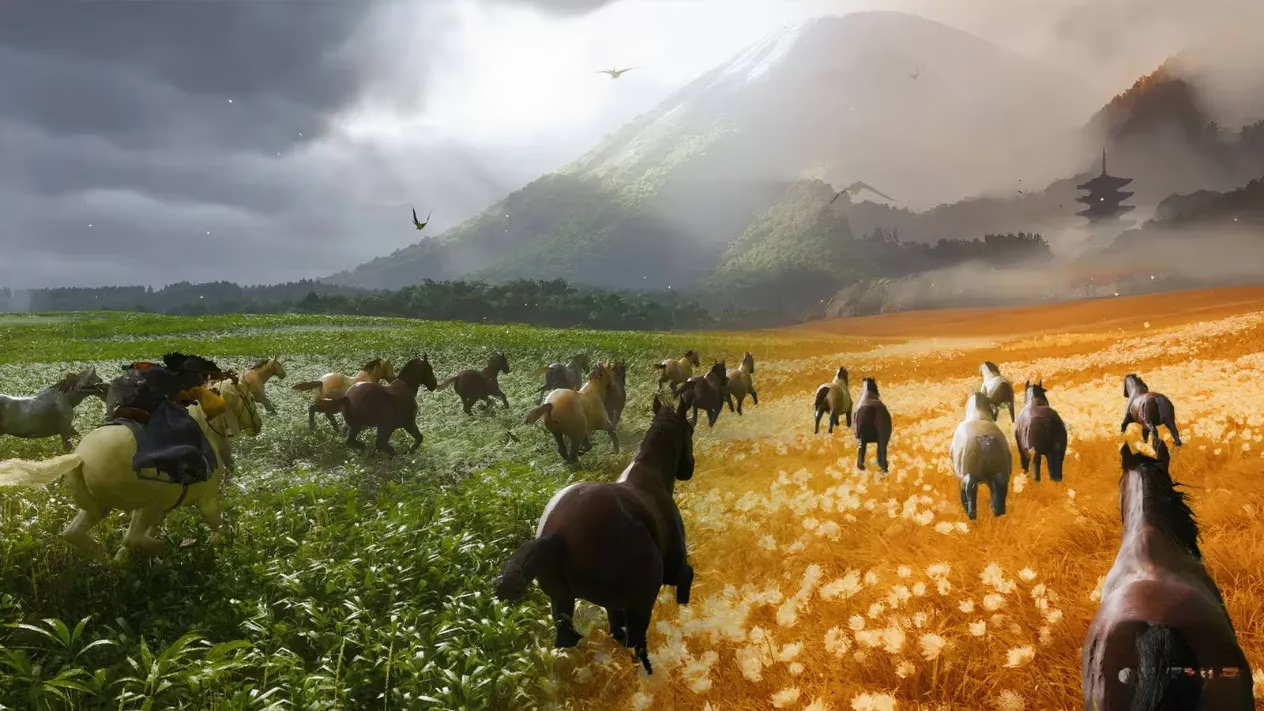
The original Ghost of Tsushima set a new benchmark for open-world beauty, immersing players in a painterly vision of feudal Japan. Its successor, Ghost of Yotei, is poised to transport gamers to the rugged, untamed frontier of Ezo (modern-day Hokkaido). While the shift from Tsushima's golden meadows to Ezo's snowy peaks is a visual upgrade in itself, the real game-changer for 2026 could be the implementation of a living, breathing annual seasonal cycle. This isn't just about prettier PS5 graphics; it's about creating a world that truly feels alive, where time itself becomes a core gameplay mechanic.
Why Seasons Are the Next Logical Step
Let's be real: Ghost of Tsushima's world was absolutely stunning, but it existed in a sort of perpetual, beautiful stasis. The lack of a full annual cycle was a missed opportunity to make its world feel like it was moving through time. For Ghost of Yotei, adding seasons is a no-brainer. Imagine the immersive potential: watching Ezo transform from a lush, green summer haven to a brutal, snow-blanketed winter wilderness. This wouldn't just be a visual treat; it would make the game world feel like a character in its own right, breathing and evolving right before the player's eyes. The wind mechanics from the first game, which were already iconic, could play a massive role here, with howling gales heralding winter storms or gentle breezes carrying autumn leaves.
Gameplay That Adapts with the Weather
An annual cycle isn't just for looks—it's for gameplay, fam. Ghost of Yotei has the chance to make seasons matter. Think about it:
-
Winter: Deep snow slows movement and traversal, forcing players to find new paths or use different tools. Visibility is low during blizzards, perfect for stealth ambushes... or getting ambushed. Wildlife is scarce, making survival and resource gathering a real challenge.
-
Spring: Melting snow causes rivers to swell, creating new waterways for exploration but also potential flood hazards. New plant life emerges, offering fresh crafting materials. Maybe certain mythical creatures only awaken with the spring thaw? \ud83e\udd14
-
Summer: Lush forests provide ample cover for guerrilla tactics, but dense foliage can also hide enemies. Heat could become a factor, requiring players to manage stamina or seek shade and water.
-
Autumn: This is the season of preparation and change. Foliage turns, creating beautiful but treacherous ground cover. Animals are fattening up for winter, making hunting more rewarding but also more competitive as other predators are active.
Quests and World Events Tied to the Calendar
To make players truly feel the passage of time, Ghost of Yotei could introduce seasonal quests and world events. This isn't just a gimmick; it's about deep immersion.
| Season | Potential Quest Types | World Events |
|---|---|---|
| Winter | Rescue missions for villagers trapped by storms; hunting legendary beasts that only appear in the deep cold. | Major blizzards that block mountain passes; frozen lakes that become new, risky shortcuts. |
| Spring | Rituals to honor the thaw and ensure a good harvest; investigating areas newly accessible after the snowmelt. | Cherry blossom viewings (Hanami) that become social hubs; seasonal festivals in villages. |
| Summer | Escort missions through sweltering forests; defending settlements from raids that increase in the warmer months. | Wildfires sparked by lightning or conflict that dynamically change the landscape. |
| Autumn | Helping villages prepare harvests for winter; hunting competitions during the migration season. | The "Red Leaf Festival" where the map's colors dramatically shift, and unique vendors appear. |
These time-locked activities would give players a reason to keep coming back, wondering, "What's Ezo like this season?" It creates a living calendar within the game world.
Balancing History with Gameplay "Time Magic"
Okay, let's address the elephant in the room: historical accuracy. If a full in-game year passes, does the main story's urgency make sense? This is where smart game design comes in. Ghost of Yotei could employ a "compressed time" system for the main narrative, where the critical path takes place over a shorter period, but the open-world exploration operates on a separate, fuller seasonal clock. Alternatively, the game could embrace a longer timeline for its story, with the changing seasons marking the protagonist's long campaign across Ezo. After all, the first game was all about the "Ghost" learning to adapt; what better metaphor for adaptation than surviving a full year in a harsh new land?
The Verdict: A World That Feels Truly Alive
Ultimately, a dynamic seasonal cycle in Ghost of Yotei isn't just a wishlist item; it's a potential game-defining feature. It pushes the open-world genre forward by making the environment an active, unpredictable participant in the adventure. Players wouldn't just be mastering the katana or the bow; they'd be learning to read the skies, prepare for the coming cold, and seize the opportunities each season presents.
For a game series built on the mantra of "observe and adapt," what could be more fitting than a world that constantly changes and challenges the player to adapt with it? If Sucker Punch pulls this off, Ghost of Yotei won't just be a successor; it could set a whole new standard for immersive open worlds in 2026 and beyond. The wind is changing direction, and it's bringing more than just guidance—it's bringing a storm of new possibilities. \ud83c\udf2c\ufe0f