I still think about Ghost of Tsushima as a game that was better to play than it was to argue about. That feels like an understatement in 2026, now that Sucker Punch has finally shown the sequel—titled Ghost of Yōtei—but it is still true. The original was gorgeous, fluid, and easy to sink hours into. But the conversation around it became strange, and the sequel was never going to escape that.
When I looked at Sony's release cadence back then, I expected a long wait. God of War had four years between entries, Horizon five, and The Last of Us seven. Given Sucker Punch's size, the generational leap, and the pandemic, I figured Tsushima 2 was at least two years out. Now that Ghost of Yōtei exists, that patience has paid off, but the expectations have inflated in the meantime.
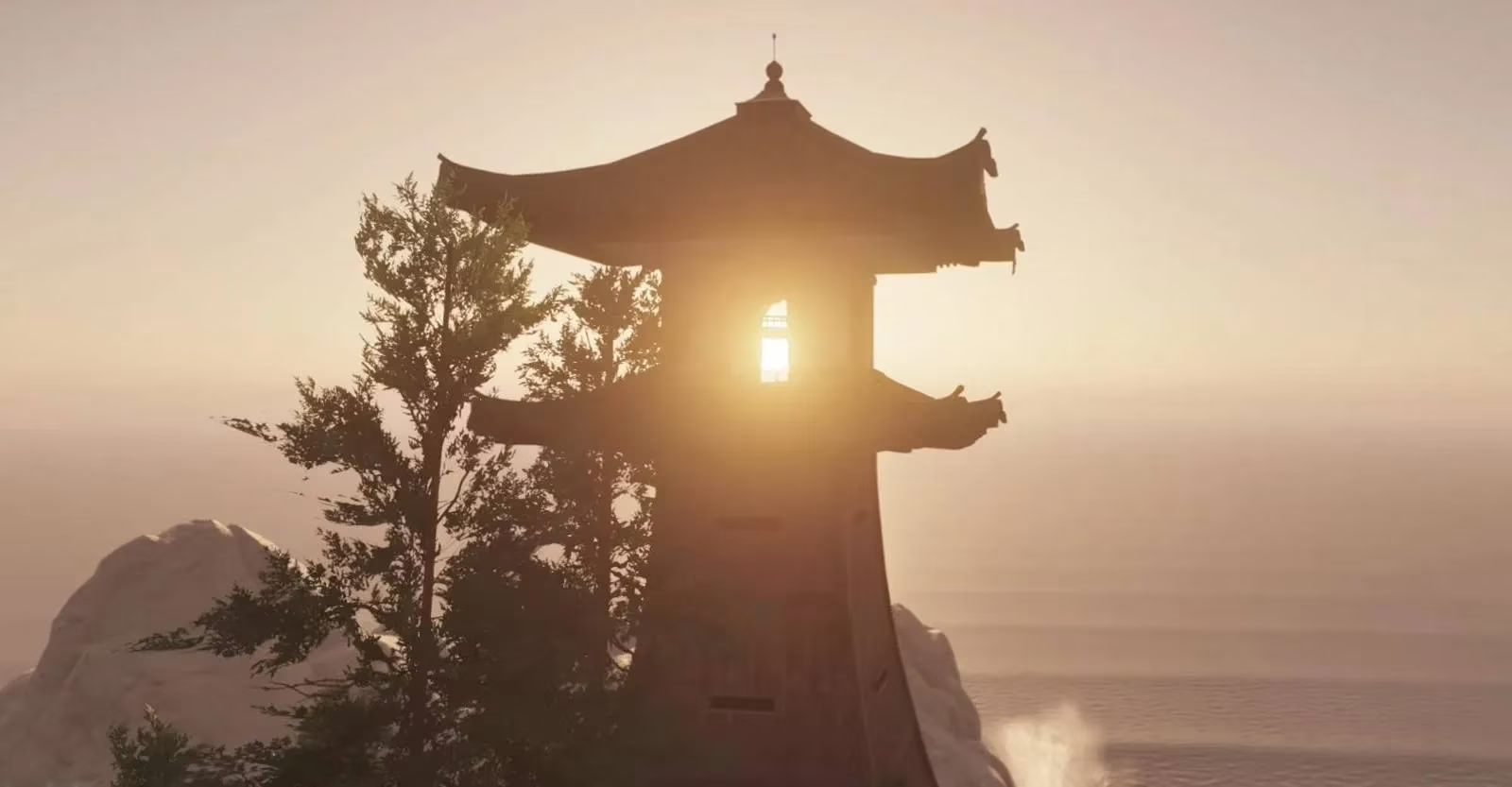
Part of the reason those expectations are so heavy is that Ghost of Tsushima accidentally became a culture war prop. It was a Western studio making a Japanese-inspired game, throwing historical accuracy out of the window while touching on a divisive period. The game loved Japanese cinema, but it sometimes showed that love in a skin-deep way. It had a black and white Kurosawa Mode even though Kurosawa was famous for vibrant colour in films like Ran. It charged for Japanese lip-sync after launch, and it tossed in haiku, hwacha, and katana despite some of those not existing during the game's setting. These details did not ruin the game, but they made it ripe for political framing.
Politically, Ghost of Tsushima wanted to say very little. At its core, it is a familiar story of a lone man fighting for what he believes is right, even if that means defying a rigid code of honour. It is liberal in its support of guerrilla warfare against invaders and in its clichéd depiction of war's horror. It is conservative in its might-makes-right philosophy and in a village-level distrust of samurai that can read like support the troops. In short, it is a video game. Most video games hold that same awkward middle ground: progressive enough to make you the underdog, regressive enough to make violence the answer to everything. Ghost of Tsushima did not subvert that balance. It just sat there.
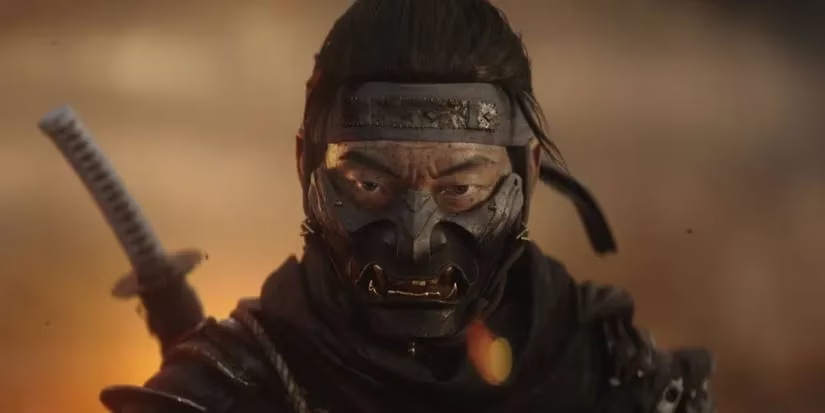
Then The Last of Us Part 2 happened. The two games became rivals in a discourse war that neither asked for. The Last of Us Part 2 was positioned as woke: female leads, a dead male protagonist, queer characters, and an openly political story. Critics adored it. Ghost of Tsushima was positioned as the opposite: a standard open-world game with map markers, filler quests, and a flat male hero you could project onto. Critics thought it was okay. Players who felt alienated by The Last of Us Part 2 rallied around Tsushima. When it won the Players' Voice award at The Game Awards, it felt like a symbolic victory against critics and against games that put politics before fun.
That is when the sequel started carrying a strange load. It was not just expected to be better. It was expected to be a champion. The first game had been imagined into something larger than itself, a bulwark against a certain type of game, and that imagined status created a fanbase with the potential to be wildly toxic. That pressure comes from a few places:
-
The original's accidental culture war role
-
Its Players' Voice win being framed as a win over The Last of Us Part 2
-
Fans inflating a fine open-world game into a legend
-
Sucker Punch's silence, which only made the sequel feel more mythic
Sucker Punch never asked for that. They made a solid foundation, nothing more and nothing less.
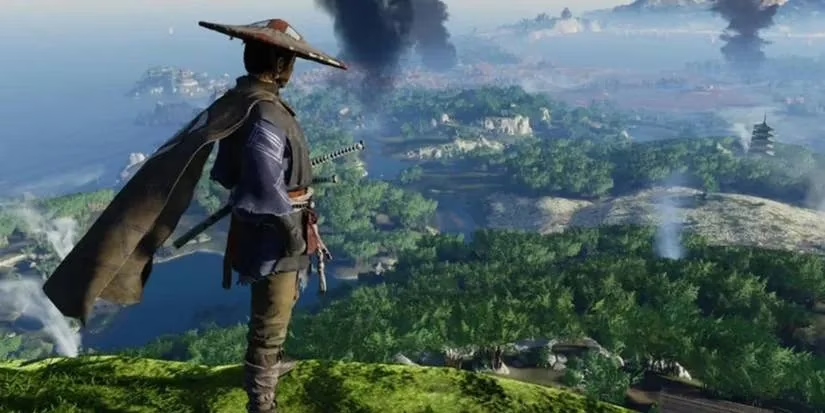
Do not get me wrong. Ghost of Tsushima does not deserve to escape scrutiny for its depictions of Japan. But it also does not deserve the pressure of being a culture war beacon. The sequel, Ghost of Yōtei, will need to do more than just look prettier and play smoother. It needs to step out from a shadow that was built by fans who projected their own frustrations onto a perfectly fine game.
I hope it builds on the original's foundation. I hope it gives us more of that just one more feeling. But I worry that being good will not be enough. Because a game that was merely fine has been turned into a legend, and legends are very hard to follow.
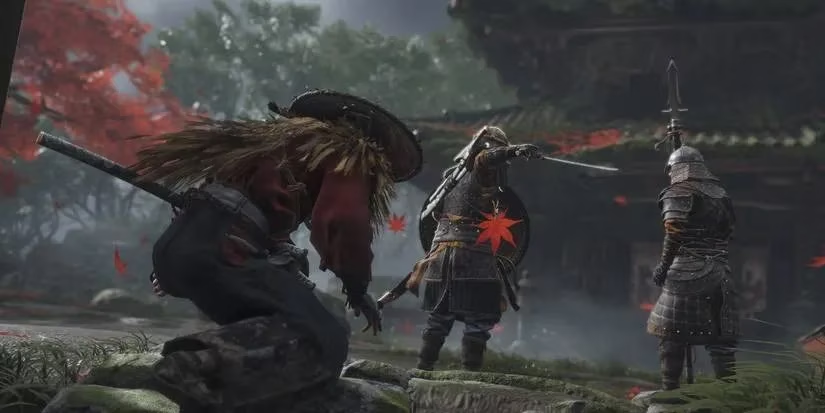
That is the strange part. Sequels are supposed to be better, but this one is expected to prove something about the entire medium. It was never supposed to be political, but it became political anyway. And now, in 2026, the sequel has to live with that.