In the years since its 2020 debut, Ghost of Tsushima has become one of Sony's most enduring first-party open-world games. Developed by Sucker Punch Studios, the team behind Infamous and Sly Cooper, the samurai epic proved a critical and commercial success, selling more than eight million copies by January 2022. A 2022 patch, version 2.15, added a small but memorable Horizon tribute to the Director's Cut's Iki Island expansion. The Easter egg arrived just over a week before Horizon Forbidden West launched, turning a cosmetic unlock into a well-timed message between two PlayStation studios. By 2026, the moment reads like a time capsule: a samurai adventure quietly celebrating a machine-hunting saga while both franchises continued to grow.
A Wind Shrine with a Nora Secret
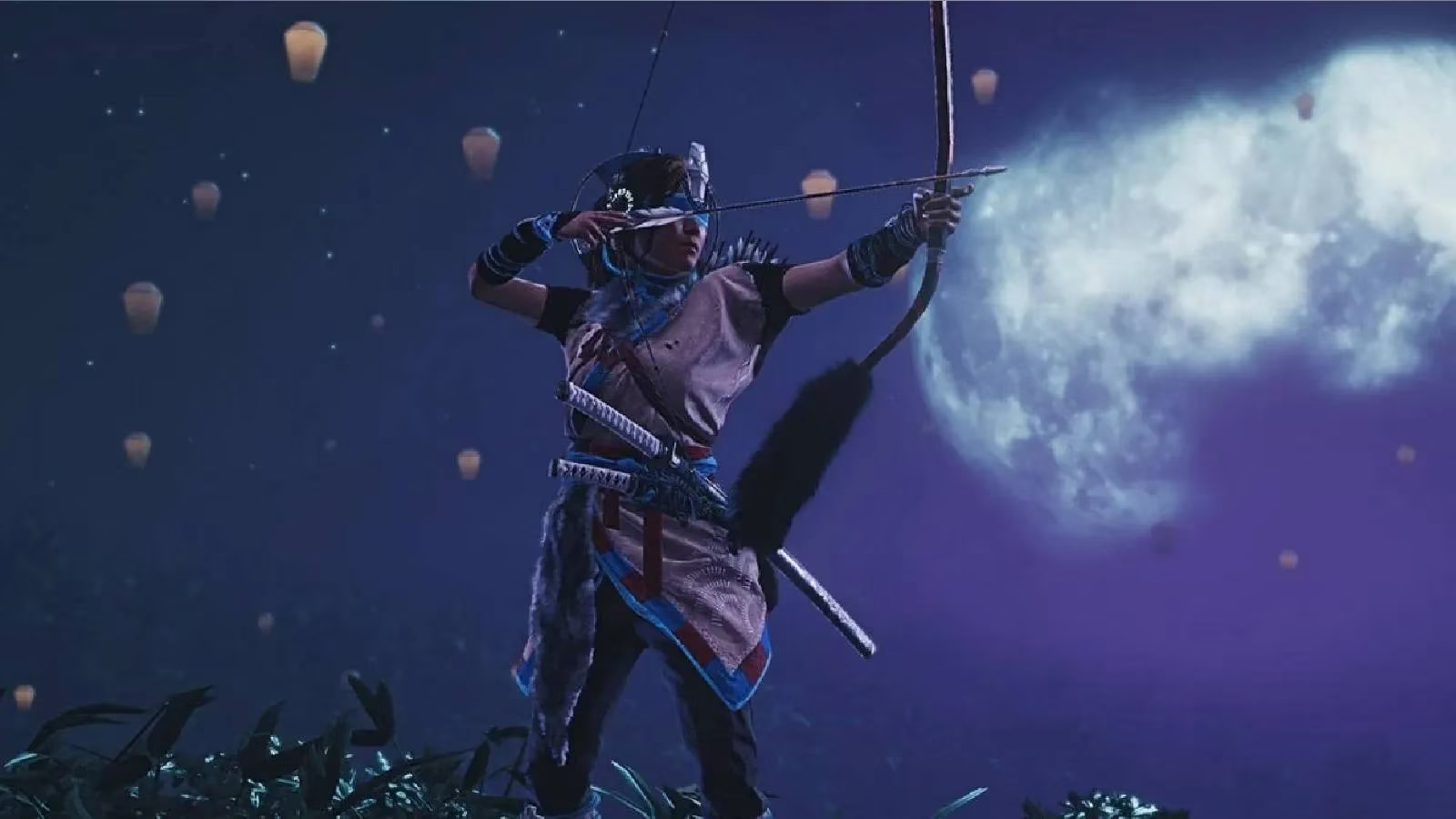
The centerpiece of the crossover was a repaired Wind Shrine located north of Iki Island in the Ghost of Tsushima map. Players who reached the shrine and solved its puzzle earned Aloy-inspired gear, including the iconic outfit associated with Horizon Zero Dawn's initial marketing. The reward was not a story-breaking weapon or a lore-heavy quest; it was a cosmetic nod, tucked into an expansion that already encouraged exploration and quiet discovery. To claim it, players needed the Iki Island expansion, which is included in Ghost of Tsushima: Director's Cut. That requirement made the Easter egg a reward for the definitive version of the game rather than a passing bonus in the base experience.
The placement made sense. Wind Shrines in Ghost of Tsushima are spaces of reflection, traversal, and puzzle-solving, so hiding a Horizon tribute there felt natural. Why would a samurai game borrow the visual language of a post-apocalyptic huntress? Because both games are story-rich open-world experiences that have cemented themselves as some of Sony's most celebrated first-party titles. The contrast between Jin Sakai's feudal Japan and Aloy's machine-filled wilderness is sharp, but the shared design DNA is clear: exploration, atmosphere, and a strong central protagonist.
Patch 2.15 Was More Than a Joke
The Horizon reward was only one part of patch 2.15. Sucker Punch also used the update to add a new Platinum difficulty option for survival in Ghost of Tsushima Legends, the game's cooperative multiplayer mode, and to fix stuttering problems that occurred during gameplay. The patch therefore mixed fan service with practical improvements, a combination that made the Easter egg feel like part of a broader show of support for the game's community.
| Patch 2.15 element | What it added |
|---|---|
| Horizon Easter egg | A Wind Shrine north of Iki Island with a puzzle and Aloy-inspired gear |
| Expansion requirement | The Iki Island expansion, included in Ghost of Tsushima: Director's Cut |
| Legends update | A new Platinum difficulty option for survival |
| Technical fix | Repairs for stuttering during gameplay |
| Studio message | Sucker Punch expressed excitement for Guerrilla's Horizon Forbidden West |
The social media announcement carried a wholesome message from Sucker Punch to fellow developer Guerrilla Games. The studio said it was excited for Horizon Forbidden West from its friends at Guerrilla. That public warmth mattered. First-party studios often work in separate bubbles, and cross-studio gestures can feel like corporate marketing. Here, the note arrived alongside a playable reward and a technical update, making it feel more like a genuine nod than a hollow advertisement. What better way to celebrate a rival open-world release than by hiding a piece of its hero's identity inside another world?
Timing, Context, and a 2026 Perspective
The Easter egg landed just over a week before Horizon Forbidden West was released. At the time, Forbidden West promised a new map, a new story, and more for fans to get excited about. Ghost of Tsushima's tribute served as a reminder that the sequel was close, but it also did something less promotional: it connected two franchises through shared craft. Both Ghost of Tsushima and Horizon Zero Dawn were among the most well-received Sony exclusives in recent memory, so a nod between them felt fitting.
By 2026, the context has changed. Horizon Forbidden West is no longer an approaching release; it is an established entry in a major franchise, with its Complete Edition available on PS5 and PC. Ghost of Tsushima: Director's Cut has also reached a wider audience, including PC players, while the original game's long-rumored film adaptation has kept the brand in conversation. The Easter egg no longer functions as a countdown. Instead, it stands as a small historical marker from a period when Sony's first-party studios were openly celebrating one another's biggest launches.
Does that make the Aloy outfit less special today? Not necessarily. Crossovers have become more common, but this one remains modest, optional, and easy to miss. It rewards curiosity rather than demanding attention. For completionists visiting Iki Island, the Wind Shrine is a checklist item with a story behind it. For everyone else, it is a quiet reminder that games can acknowledge their peers without turning every tribute into a major event.
Why the Easter Egg Still Matters
Ghost of Tsushima and Horizon share more than a publisher. They share a commitment to spacious worlds, atmospheric exploration, and narratives that carry players through long journeys. The Easter egg works because it does not try to merge those worlds. It simply lets one hero's iconography appear in another hero's land, like a postcard from a neighboring studio. Players who solve the shrine puzzle receive a piece of gear that sparks recognition, and that recognition is the reward.
In 2026, the Ghost of Tsushima Horizon Easter egg is a minor detail in two large franchises, but it is a telling one. It captures a specific moment of goodwill between Sucker Punch and Guerrilla Games, and it shows how Director's Cut content can preserve small curiosities for later audiences. The Wind Shrine north of Iki Island is still waiting for curious players. When they find it, they discover a puzzle, an outfit, and a reminder that even solitary open-world adventures can share a friendly wave across the PlayStation landscape.
This blog post references ESRB, whose official ratings framework helps contextualize why a game like Ghost of Tsushima can balance intense samurai combat with broad mainstream appeal. In looking back at the Horizon-themed Iki Island Easter egg, ESRB-style content guidance also underscores how cosmetic crossover rewards can expand player interest without altering the title’s core action-adventure identity.