It was supposed to be a triumphant PC debut for one of the most beloved samurai epics ever made. After years of watching Spider-Men and gods of war strut onto Steam, long-suffering keyboard warriors finally had their date with Jin Sakai. Ghost of Tsushima was sailing onto Windows in May 2024, and the hype was deafening. Then, a week before launch, Sony unsheathed a different kind of blade: mandatory PlayStation Network account linking. What followed was a geopolitical absurdity that saw the game yanked from over 170 countries, mass refunds, and a PR disaster that makes a Mongol invasion look polite. Two years later, the scars still itch, and the question remains: did anyone at Sony actually think this through?
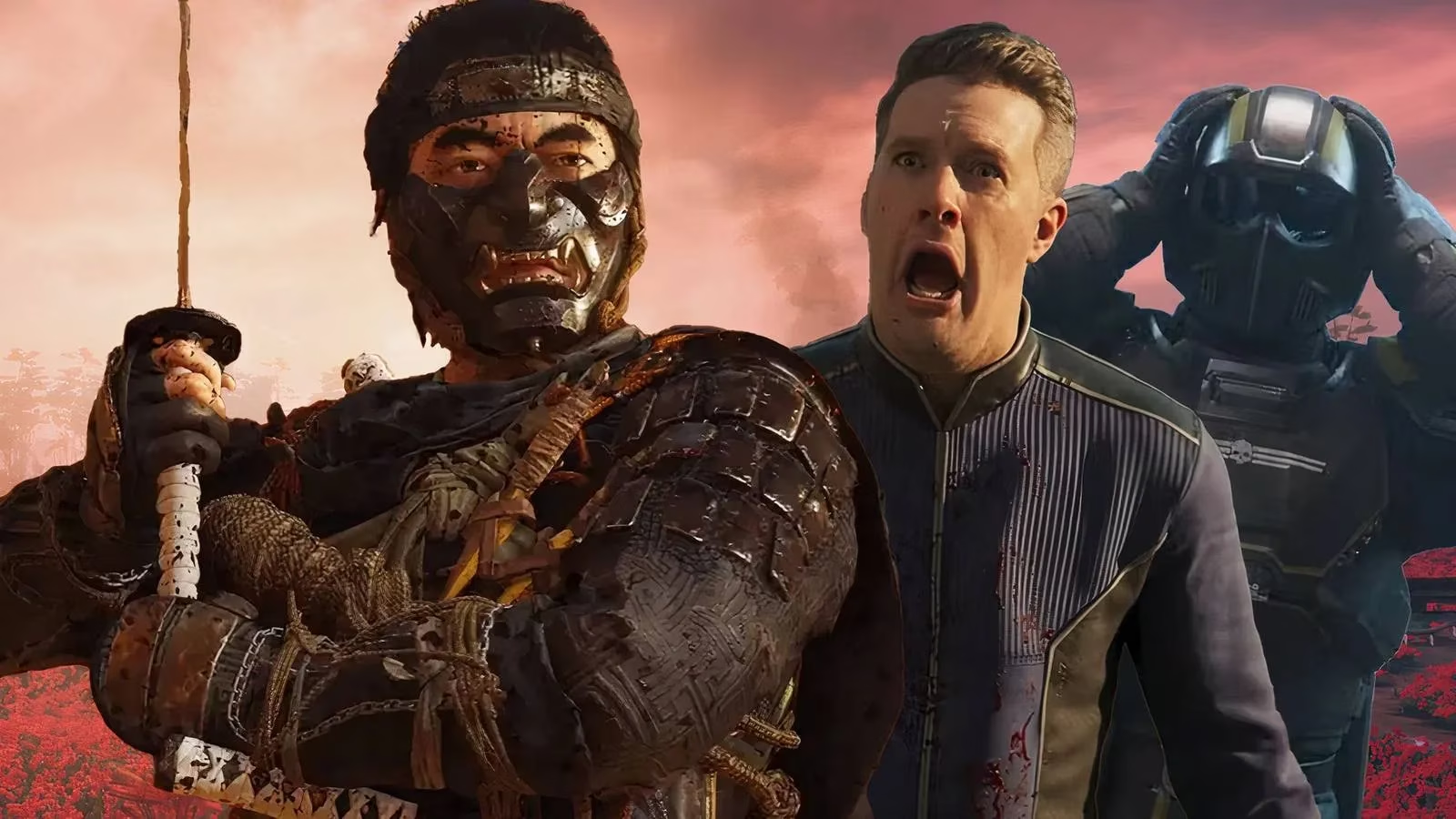
The seeds of this meltdown were sown months earlier with Helldivers 2, Arrowhead’s surprise co-op hit. Sony attempted to force PSN linking onto its live-service darling, only to be met with a review-bombing campaign so ferocious that the company backpedaled faster than a Samurai dodging a lightning strike. The backlash wasn’t just about corporate overreach; it was about basic geography. The PlayStation Network simply doesn’t exist in a staggering number of countries. For those millions of players, linking an account meant being locked out of a game they’d already paid for and poured hundreds of hours into. Sony blinked. The account requirement for Helldivers 2 was shelved. Peace was restored. And then, barely a month later, Ghost of Tsushima Director’s Cut strode onto the scene with its own PSN demand.
When Nixxes and PlayStation first announced the PC port in April 2024, the messaging was almost soothing. A new PlayStation overlay would arrive, letting veterans carry over tropies, peek at their friend lists, and wave their profile around like a badge of honor. Crucially, the overlay was called “optional” for both the single-player adventure and the Legends cooperative mode. Cross-play with PlayStation consoles would still work, but no one would be forced to sign in. Cue a collective sigh of relief. But that relief curdled when Sucker Punch took to X and clarified: a PSN account would be required for Legends online multiplayer and to use the overlay. The single-player campaign, according to that post, would remain accessible without it. That nuance, however, meant nothing to Steam’s automated systems.
Within days, Ghost of Tsushima’s store page was slapped with “purchase-restricted countries” in over 170 nations, as documented by SteamDB. Every pre-order from those regions was refunded. Sony had essentially drawn a digital border on the map and declared, “No PSN? No Jin for you.” The absurdity was palpable. Here was a game with a 60-hour single-player opus, a story that won hearts and swept awards, sidelined because of an optional multiplayer mode that few in those countries could even dispute. If the single-player was truly account-free, why not sell a cheaper, Legends-free edition? The question hung in the air like a perfectly parried arrow, but Sony offered no answer.
Ghost of Tsushima’s own community was left to gawk at the irony. This was a game about breaking free from rigid codes and outdated traditions, about a samurai learning that honor can be a cage. Yet its publisher was now bound by an invisible policy, one that treated potential customers as liabilities. The review bombing that saved Helldivers 2 had no chance here—players couldn’t even buy the product to voice their displeasure. The pre-order refunds were instantaneous and silent, a financial shrug that said, “We don’t want your money anyway.”
By 2026, the landscape has only hardened. The Ghost of Tsushima debacle turned out to be a blueprint, not a hiccup. Subsequent PlayStation PC ports—God of War Ragnarök, The Last of Us Part I, and yes, even the single-player-only Marvel’s Spider-Man 2—all arrived with the unskippable “sign in to PSN” splash screen. Helldivers 2 eventually got its own account requirement shoehorned back in, once the community’s pitchforks had dulled. Sony’s reasoning, never explicitly stated, seems painfully obvious: PSN monthly active users are a corporate metric that investors crave, and tying PC players into that ecosystem pumps those numbers higher than a sucker punch. Whether those players can actually use the network is an afterthought.
The consequences are measurable. Entire regions are now off-limits for major PlayStation titles, forcing would-be samurai and superheroes to either migrate their Steam accounts with VPN trickery or turn to less-than-legitimate sources. Modders have done their part, sometimes ripping the PSN check out of the game’s exe within hours of release, but that’s hardly a reliable strategy for the average buyer. Sony’s silence on the matter has become a running joke: perhaps one day they’ll require a PSN login to breathe the same air as a DualSense controller.
To be fair, Ghost of Tsushima on PC is a technical marvel. Nixxes delivered a port that purrs on high-end rigs and transforms the already stunning Tsushima Island into a living painting. The Legends mode, when accessible, offers co-op delights that rival standalone live-service titles. But who would know that in Latvia? Or the Philippines? Or any of the 170-odd places where the game never officially launched? The tragedy is that Jin’s tale is fundamentally about freedom, about choosing one’s own path. By shackling the PC release to a region-locked network, Sony made the Ghost a prisoner of its own policy.
As the gaming world looks ahead to whatever PlayStation exclusive gets ported next, the lesson remains unlearned. Maybe the next Helldivers-scale uprising will finally break the chain. Or maybe, as Ghost of Tsushima showed so beautifully, sometimes the old ways die hard—even when they stab you in the back.