The first Ghost of Tsushima was a haiku written in wind, steel, and golden ginkgo leaves—an open-world elegy that made players pause just to watch a fox slink through tall grass. But let’s be real: that lyrical beauty hit a flat note the moment Jin stepped into a town. As 2026 whispers grow louder about a sequel finally unfurling its banners, Sucker Punch has a golden chance to transform the game’s lifeless hamlets into places worth sheathing a katana for. After all, even a ghost deserves a decent place to grab a bowl of noodles.
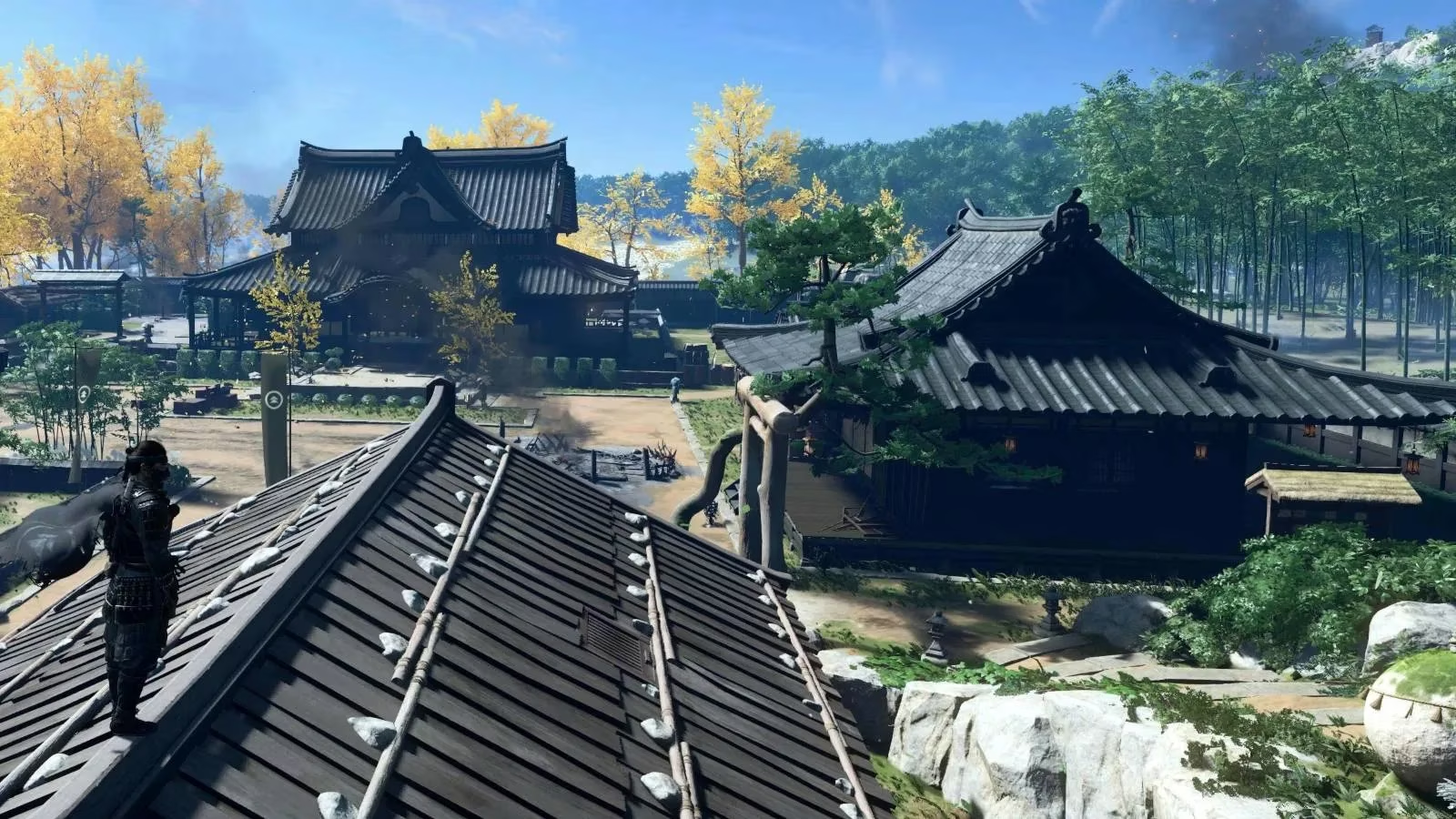
In the original, Tsushima’s towns suffered from a bad case of copy-paste exhaustion. You’ve seen one thatched roof, you’ve seen them all—literally. The handful of villages felt less like living communities and more like stage props waiting for their cue. Each one shuffled out the same trio of merchants, the same hunched-over quest givers, and the same suspiciously identical architecture. It’s as if the buildings themselves collectively decided to take a nap for the entire Mongol invasion. A sequel (let’s call it Ghost of Tsushima 2, because the rumor mill in 2026 is basically a screaming tea kettle) can absolutely fix this with a little imagination—and a lot more hustle.
Here’s the thing: Sucker Punch already proved they can paint with an endless palette. The natural landscapes weren’t just diverse; they were characters in their own right. Fields of pampas grass sighed in the breeze, marshes bubbled with eerie mystery, and snowy mountaintops stung the eyes. So why did the towns feel like the dev team ran out of ink? A sequel should carry that artistic fire indoors, giving every settlement a signature scar, a personality quirk. Imagine Buddhist temples with moss-caked statues that seem to judge your honor, or towering pagodas that creak and groan like old storytellers. Palace halls could boast sliding screens painted with fox spirits that shift when you’re not looking. All it takes is the same attention to detail that made every hot spring feel sacred.
But a fresh coat of paint isn’t enough. The real problem is that Tsushima’s towns had the energy of a sleepy cat on a warm porch—cute, but useless in a fight. A 2026 sequel needs to crank up the NPC routines tenfold. Let’s see blacksmiths actually hammering blades, kids chasing chickens through muddy alleyways, and sake vendors shouting over the din. Give every town a heart, a rhythm, some gossip. In-game events could pop up organically: a wedding procession blocks your path, a sumo wrestling challenge erupts in the square, or a thief steals your horse and you have to track him through back gardens. Suddenly, the town isn’t a checkpoint—it’s a living postcard that surprises you.
And here’s a little secret for Sucker Punch: if the sequel sails Jin to mainland Japan (a move fans have been begging for since the Iki Island DLC), the possibilities explode like a firework over Kyoto. The original game’s devotion to 13th-century rural aesthetics was commendable, but it also handcuffed the architecture. Mainland cities like Kamakura, Osaka, or Nagasaki could offer sprawling layouts, multi-tiered wooden fortresses, and red-lantern entertainment districts where danger and delight hold hands. Each district might speak in a different visual dialect—one steeped in Zen minimalism, another roaring with merchant bling. You know the drill: variety isn’t just the spice of life; it’s the secret sauce that keeps open-world games from feeling like a checklist.
To sum up, here’s a humorous three-point battle plan for Ghost of Tsushima 2’s developers, delivered with love and a hint of sarcasm:
| 🎯 Problem | 💡 Fix |
|---|---|
| Identical huts that blur together | Unique architectural styles: temples, guild halls, noble estates |
| NPCs with all the charisma of a fence post | Dynamic routines, side quests that spawn from daily life, and memorable town gossip |
| Towns as pit stops instead of destinations | Lively hubs with markets, competitions, and hidden sanctuaries |
There’s an unspoken rule in game design: a beautiful world needs beautiful inhabitants—and by inhabitants, we mean the buildings too. The original Ghost of Tsushima let its settlements doze off while the wilderness sang ballads. By the time the sequel inevitably slashes onto PS5 (and maybe even a mysterious new console), the technology will be primed to flood towns with advanced AI, deeper simulation, and the kind of architectural detail that makes you rotate the camera just to admire a rain-soaked veranda. So here’s to hoping that Ghost of Tsushima 2 doesn’t just give us another postcard—but a sprawling, messy, gloriously alive Japan worth fighting for. Sucker Punch, are you listening? Because even a samurai ghost deserves a town that never sleeps.