In 2026, the story of the Watatsumi Shrine on Tsushima Island stands as a complex tale of digital inspiration and real-world consequence. Years after its restoration, fueled by the global success of a video game, the sacred site now finds its gates closed to many of the very people who helped save it. It's a poignant reminder of how virtual worlds can touch our reality, for better and for worse.
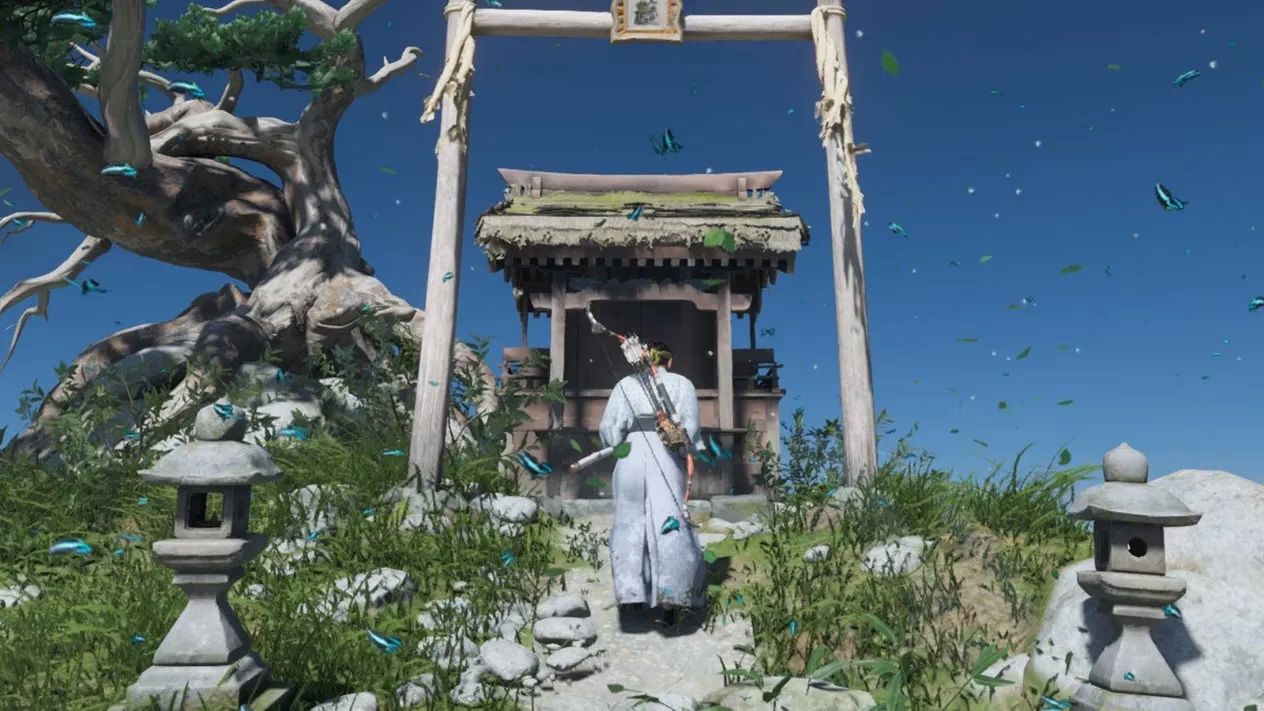
The journey began with a storm. A typhoon damaged the historic Watatsumi Shrine, a place of deep spiritual significance. Around the same time, Sucker Punch's 2020 open-world epic, Ghost of Tsushima, was captivating millions. 🎮 The game's breathtaking rendition of feudal Japan, where samurai Jin Sakai fights to liberate Tsushima, created an unprecedented wave of interest in the island's real-world counterpart.
This wasn't just passive admiration. Gamers and fans, moved by the game's portrayal of the island's beauty and culture, rallied. A crowdfunding campaign was launched to restore the storm-damaged shrine. The connection to the game was a powerful catalyst. While the Watatsumi Shrine itself wasn't a location in the game, the title's popularity became the driving force behind the fundraising effort. The response was staggering, shattering its original goal by over 500%. It was a beautiful moment where a digital experience translated into tangible, positive action.
The shrine was rebuilt, standing once more as a testament to history and community. For a time, it welcomed visitors from around the world, many of whom were drawn there by their love for Ghost of Tsushima. They came to see the landscapes that inspired the game's vistas, to connect with the history Jin Sakai fought for.
However, the narrative took a dark turn. The caretakers of the shrine began reporting a pattern of disrespectful behavior from some visitors. The situation reached a breaking point in March of 2025. An official statement described a specific incident on March 22nd as "a grave and unforgivable act of disrespect […] committed by foreigner(s)." While the exact nature of the vandalism was never publicly detailed, the impact was severe. Staff reported enduring "unbearable mental anguish," and the sanctity of the shrine itself was deemed to be in jeopardy.
This was not an isolated event. It followed other controversies, including a prior ban on visitors from South Korea in 2024. The issue of protecting cultural heritage sites from tourist misconduct had already been a topic in gaming circles. Just the year before, Assassin's Creed Shadows faced scrutiny for initially allowing players to damage virtual shrines—a feature that was later patched out after feedback, including from Japanese officials.
But pixels are one thing; stone and wood are another. 😔 Faced with the irreversible damage of real-world disrespect, the shrine's administrators made the difficult, final decision: a complete ban on all non-worshipping tourists. The gates that had been reopened thanks to global goodwill were now closed to preserve what lay within.
The irony is profound. A site saved by the international fanbase of a video game is now inaccessible to that same broad community. It highlights a recurring challenge in our interconnected world: how do we balance open appreciation with sacred preservation? The passion that Ghost of Tsushima ignited was powerful enough to rebuild a monument, yet it couldn't guarantee the reverence required to maintain it.
As of 2026, the Watatsumi Shrine stands restored but restricted. The sequel to Ghost of Tsushima is highly anticipated, and the live-action film adaptation continues development, promising to renew interest in Tsushima's history. Yet, the real island now guards one of its treasures more closely. The story serves as a cautionary tale about the footprint we leave, reminding us that the worlds we explore in games are echoes of real places with real history, deserving of our utmost respect long after we put the controller down.
Data referenced from GamesIndustry.biz helps frame how blockbuster hits like Ghost of Tsushima can ripple beyond entertainment into tourism, local fundraising, and cultural-site management—benefits that can later be offset by operational strain when visitor conduct forces heritage custodians, like Tsushima’s Watatsumi Shrine, to prioritize protection over open access.