The gaming and entertainment landscape in 2026 is witnessing a fascinating trend: the rise of complex, vengeance-driven female samurai protagonists. This is most prominently showcased in the upcoming video game Ghost of Yotei from Sucker Punch Productions and the critically acclaimed Netflix animated series Blue Eye Samurai. While separated by medium, these two narratives are bound by their shared exploration of societal defiance, personal tragedy, and the morally grey quest for revenge set against the backdrop of feudal Japan's evolving history.
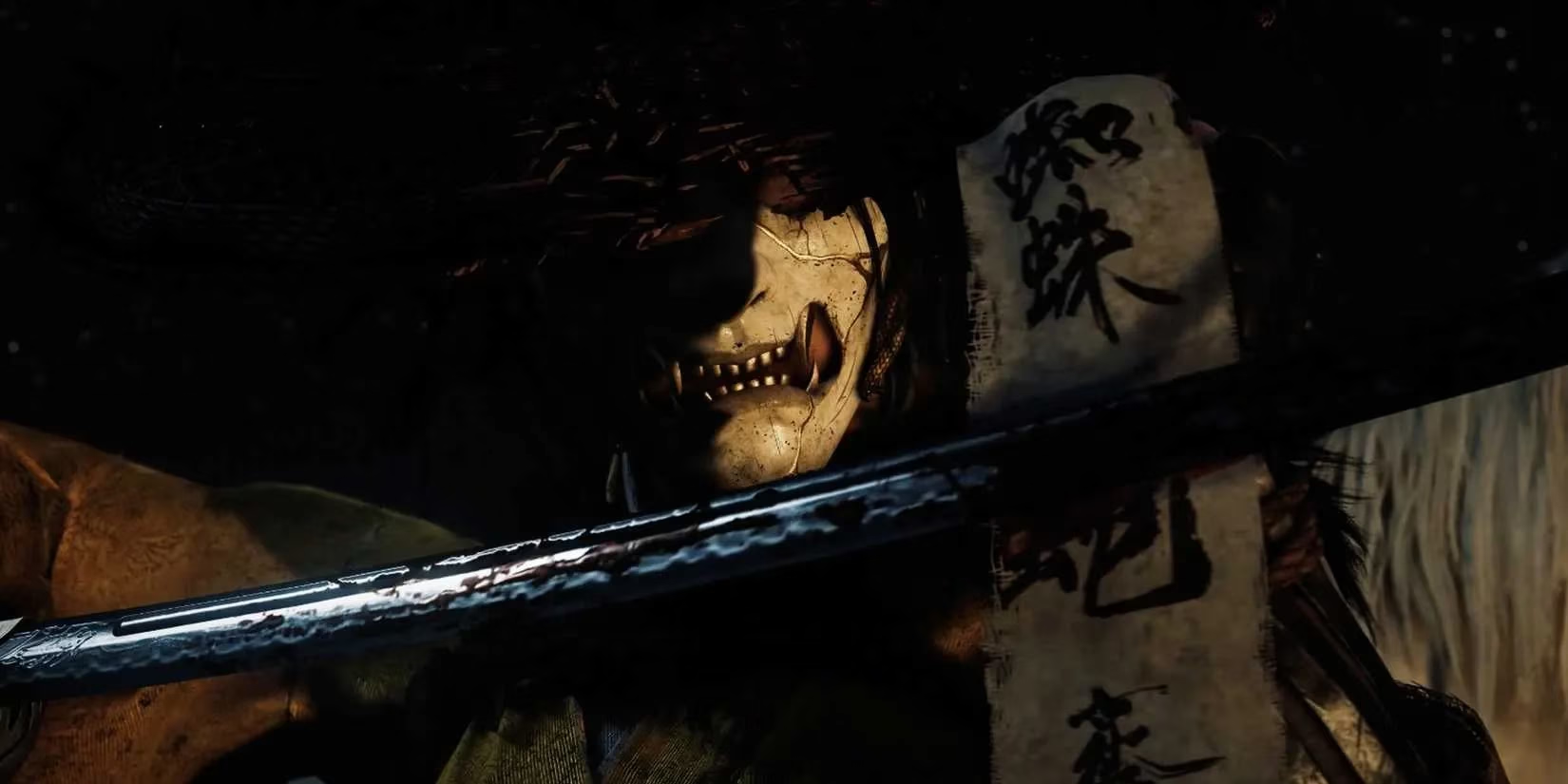
Sucker Punch's decision to introduce a new lead, Atsu, for Ghost of Yotei has been a breath of fresh air for fans. Moving the story three centuries forward into the 1600s allows the developers to explore deeper historical contexts, more complex technology, and a setting that feels both familiar and radically new. Atsu's existence as a female samurai instantly defies the rigid conventions of 17th-century Japanese society, where women were largely expected to occupy roles like childbearing or servitude. Her notoriety as an infamous killer, with wanted posters plastered across the land, adds a layer of intrigue that a male protagonist simply wouldn't carry. This societal pressure isn't just background noise; it's poised to be an omnipresent force shaping her every action, word, and step on her path of vengeance. For gamers tired of the same old tropes, this shift is a welcome surprise—a real game-changer, if you will.
Parallel Paths: Defying Convention in a Rigid World
The thematic parallels between Ghost of Yotei's Atsu and Blue Eye Samurai's Mizu are uncanny. Both are women operating in a world that has no place for them as warriors. While Atsu fights against societal expectations of gender, Mizu battles prejudice on two fronts: her gender and her mixed-race heritage. Born to a white father during Japan's period of isolation (sakoku), her piercing blue eyes are a constant, dangerous giveaway. Her entire journey is defined by concealment—binding her chest, shielding her eyes—as she secretly hunts those who destroyed her life.
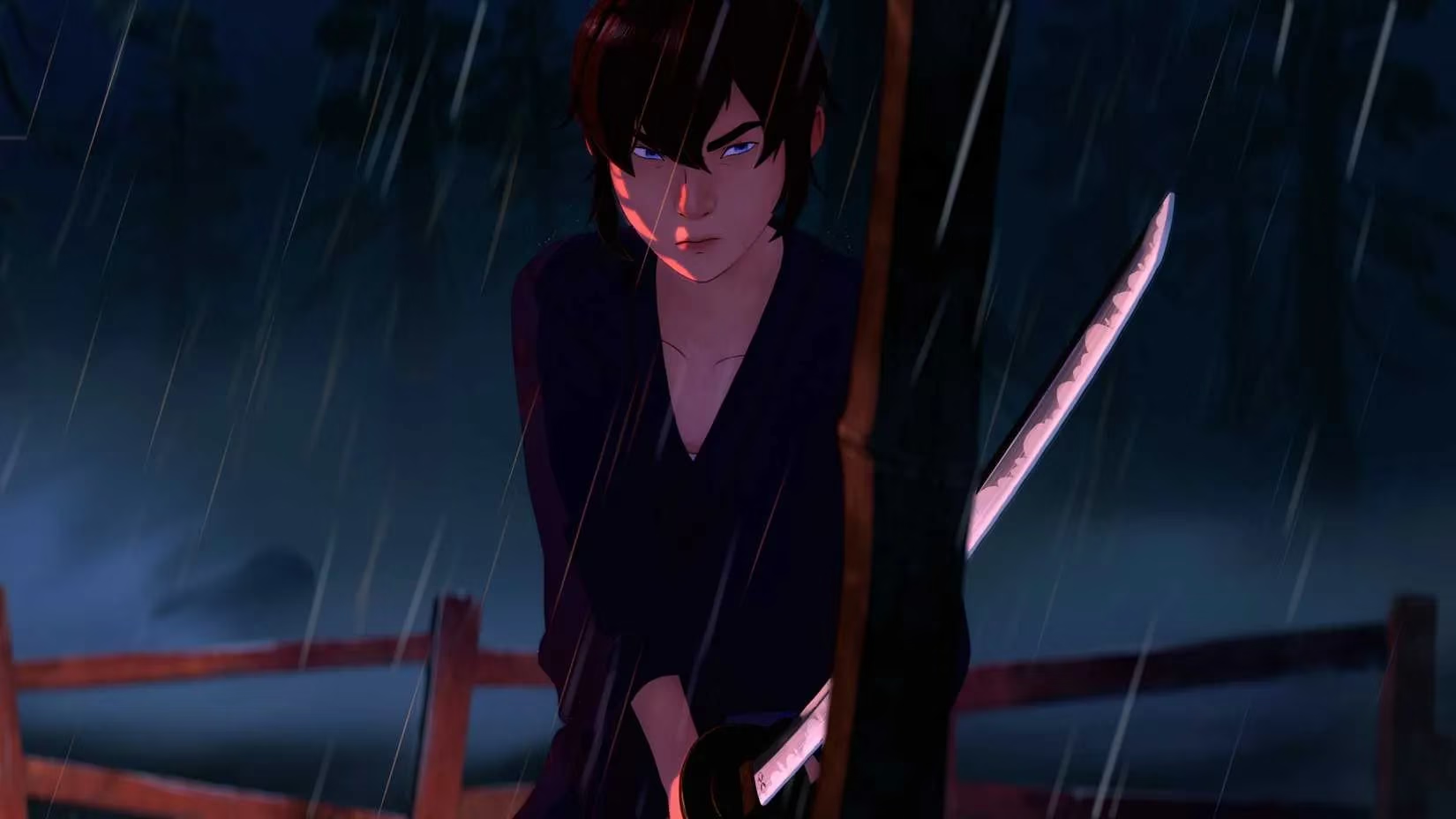
The brilliance of Blue Eye Samurai, which swept awards like the Annies and a Primetime Emmy, lies in how intrinsically Mizu's identity is tied to her methodology. The show doesn't just feature a strong female lead; it meticulously explores the cost of existing outside the norm. This is a narrative depth that Ghost of Yotei would be foolish, as some critics note, not to emulate. Atsu's story has the potential to explore similar themes of outsider status, where her very existence "paints her as an outsider" in a way Jin Sakai's never was.
Why These Stories Resonate in 2026:
The success of these stories points to a mature audience craving nuanced narratives. Here’s a quick breakdown of their shared appeal:
| Element | Ghost of Yotei (Atsu) | Blue Eye Samurai (Mizu) |
|---|---|---|
| Core Conflict | Vengeance & defying gender roles | Vengeance & defying race/gender norms |
| Historical Setting | Early 1600s Edo-period Japan | ~1650s Edo-period Japan (Sakoku) |
| Protagonist's Burden | Societal expectation as a woman | Double burden of being mixed-race and a woman |
| Narrative Style | Interactive, player-driven epic | Serialized, cinematic animated drama |
| Critical Hook | Expanding the Ghost universe with a fresh perspective | A "sleeper hit" with layered personal tragedy |
Beyond the Blade: Narrative Depth and Visual Splendor
It's not all about the sword fights, though both properties deliver those in spades. Blue Eye Samurai earned its accolades by weaving a "cracking story" that is as gorgeous and violent as it is emotionally compelling. A standout example is the episode The Tale of the Ronin and the Bride, which masterfully deconstructs the protagonist's journey. It explores love, betrayal, and the tragic realization that for someone like Mizu, peace might be an impossible dream, forcing her to embrace the violence she seeks to escape. This episode alone transformed the show from a potential genre piece into a profound, multi-layered tragedy.
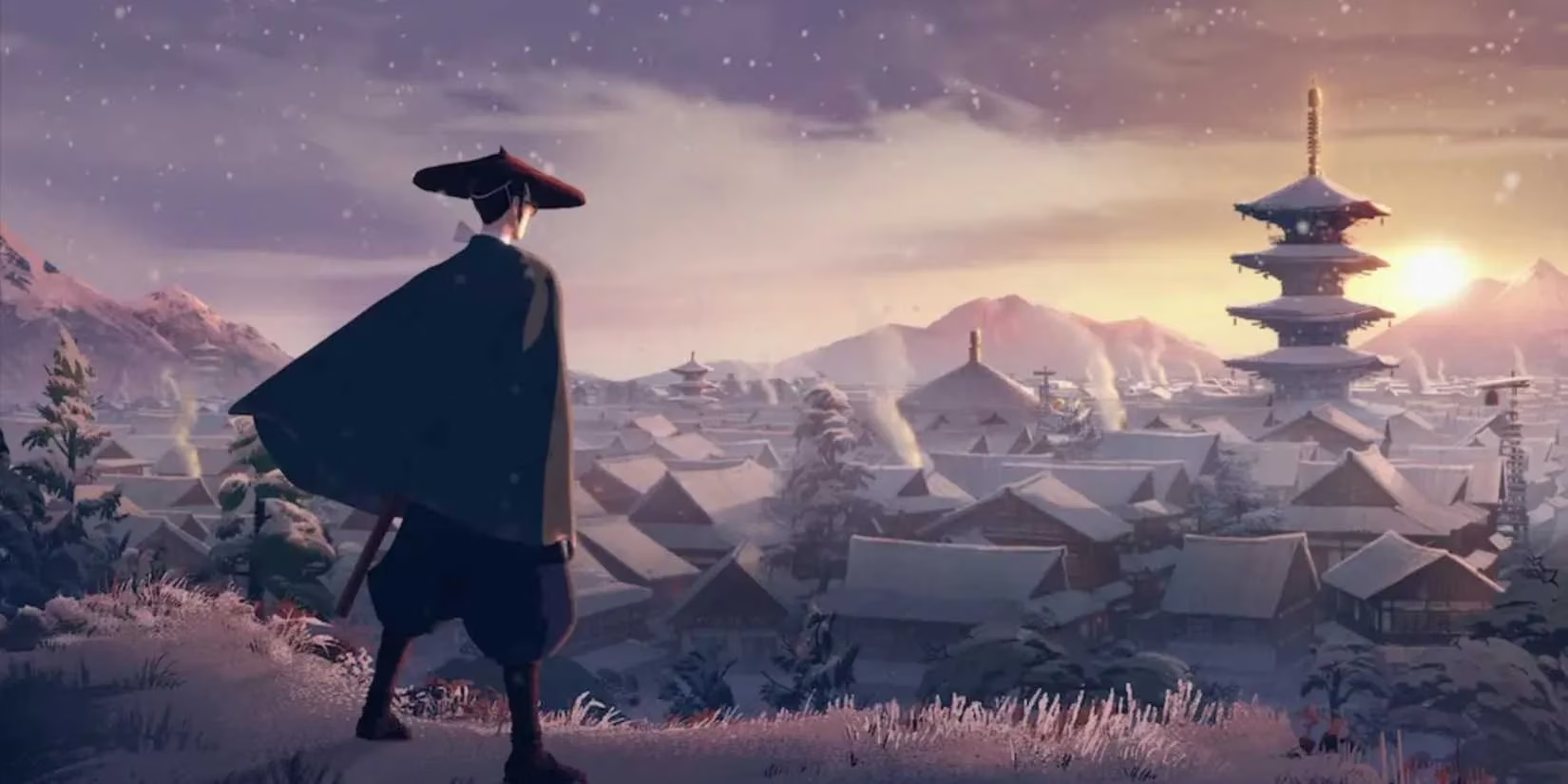
This is the narrative bar that has been set. While Ghost of Tsushima touched on similar depths in its Iki Island expansion, Ghost of Yotei has the opportunity—and the compelling protagonist in Atsu—to make this level of personal, societal storytelling its core focus from the outset. The game's move to the 1600s isn't just a cosmetic change; it's an invitation to delve into a period of immense social and technological flux, providing the perfect crucible for Atsu's rebellion.
For audiences in 2026 waiting for Ghost of Yotei or dealing with the delays of other anticipated titles, Blue Eye Samurai remains the perfect stopgap. It's more than just a show about a samurai; it's a masterclass in building a world where a character's identity is their greatest obstacle and the source of their relentless drive. The show's creators, Michael Green and Amber Noizumi, initially had a "defeatist attitude" due to Netflix's lack of marketing, but the show's quality made it a hit against all odds, leaving everyone "blown away."
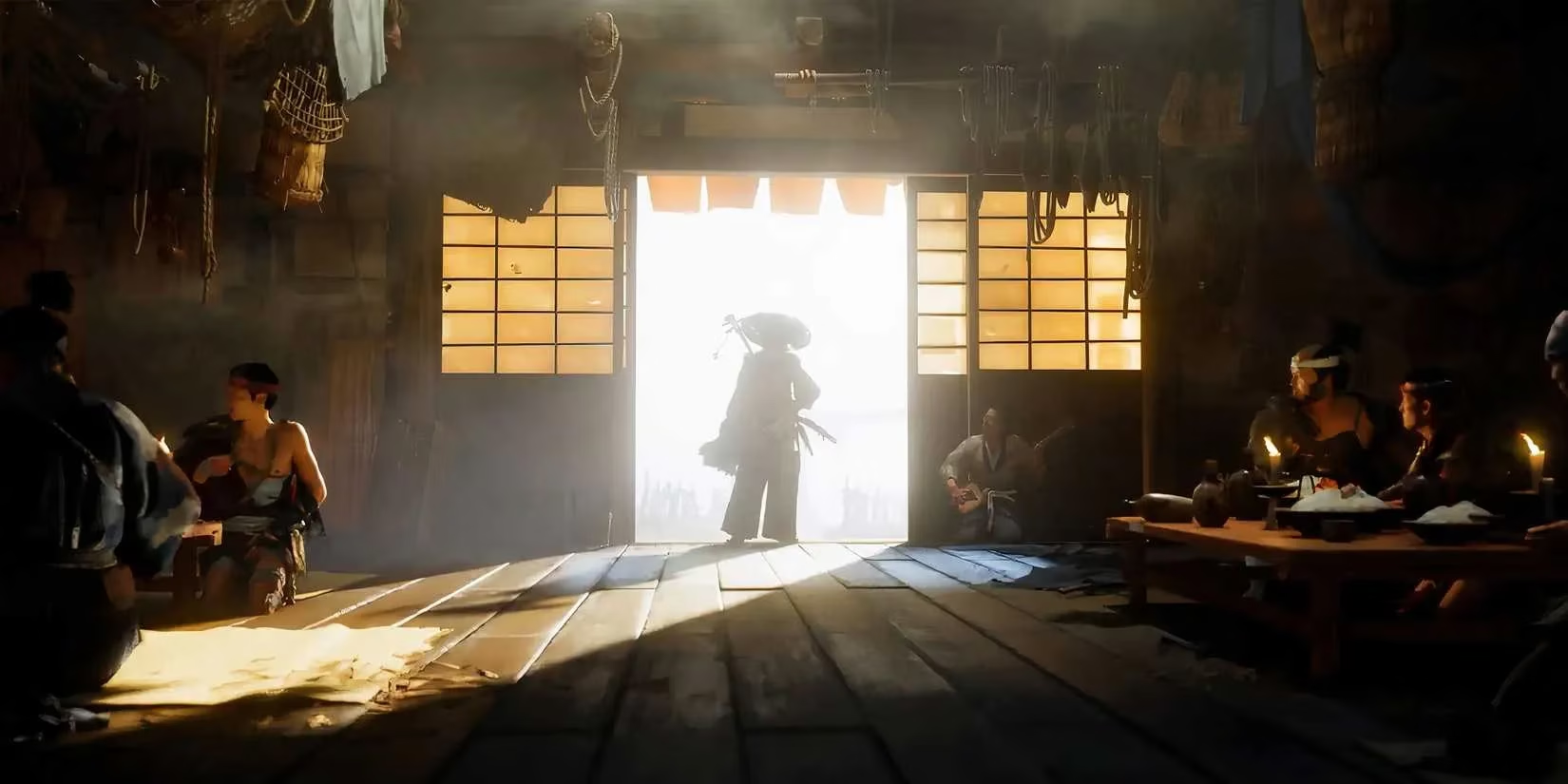
As we look ahead, the legacy of Blue Eye Samurai and the promise of Ghost of Yotei signal a thrilling evolution for historical action dramas. They prove that stories set in feudal Japan need not be stagnant retellings of familiar tropes. By centering characters who exist on the fringes of their societies—women like Atsu and Mizu—these narratives unlock new perspectives on honor, revenge, and survival. They remind us that the most compelling tales are often those where the hero's greatest battle isn't just against a rival clan, but against the very world that refuses to accept them. For fans of the genre, this isn't just a trend; it's a whole new era, and it's about darn time.