As a professional gamer who practically lived in the world of Tsushima, I can tell you that the animals weren't just background noise—they were the soul of the island. The wind whispering directions, a fox darting towards a hidden shrine, even the grumpy boar charging at you from a bush... it all made that digital Japan feel breathtakingly real. Now, fast forward to the present day of 2026, and Sucker Punch is about to drop Ghost of Yotei, shifting the action to the frosty frontiers of Ezo (Hokkaido). And from the looks of the reveal trailer, they're not just carrying forward that legacy of a living world; they're handing the leash, quite literally, to a magnificent new partner: a wolf. Let's dig into how this lupine companion isn't just a cool new feature, but a natural, and frankly, genius evolution of everything we loved about the fauna in Ghost of Tsushima.
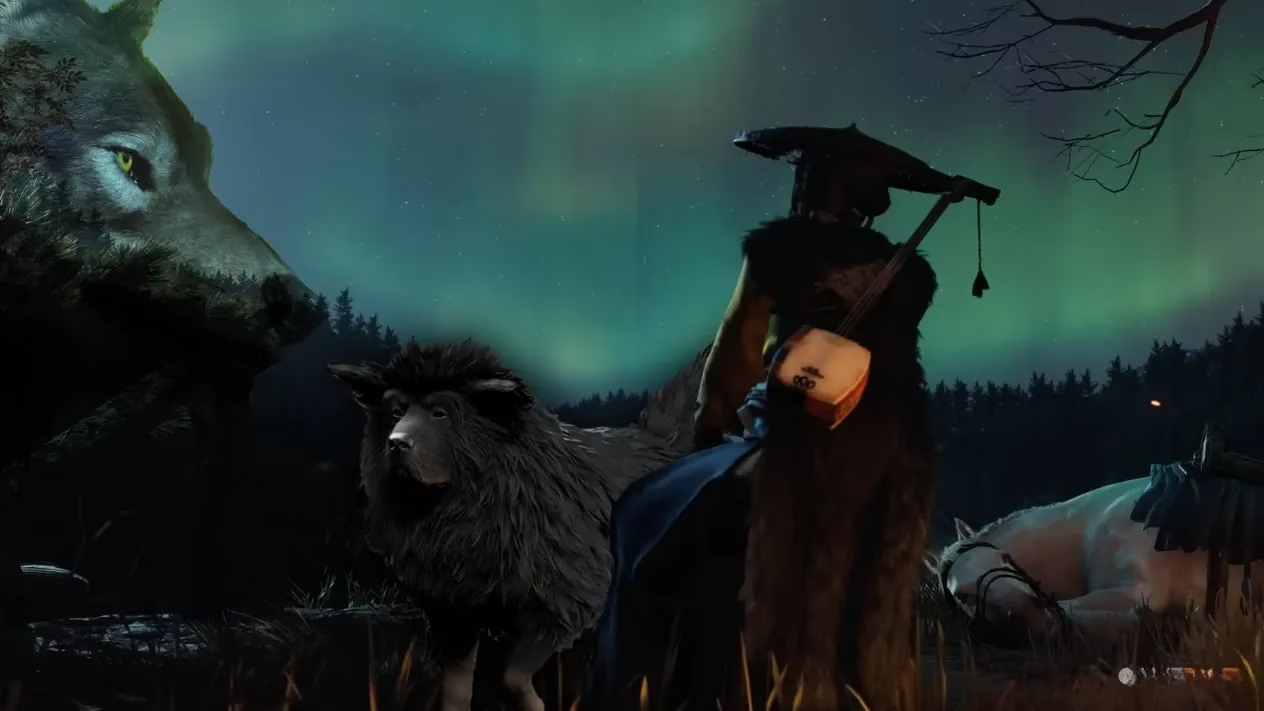
First, let's rewind to Tsushima. Remember the Charm of Canine Recruitment? Ah, the Legends mode classic. It was a simple but brilliant little mechanic: sneak up to a Mongol war dog, give it a good scratch behind the ears, and boom—you've got a temporary, furry ally. This pupper would skulk around with you and pounce on enemies once the fighting started. It was a delightful, if somewhat limited, taste of interspecies cooperation. Now, imagine that concept, but instead of a borrowed Mongol dog, you have a loyal wolf companion—your own constant, four-legged shadow in the snowy wilds of Ezo. It's the logical next step, a seamless transition from a temporary charm effect to a permanent narrative and gameplay pillar.
This isn't just about having a cool pet, though that's definitely a bonus. A wolf companion in Ghost of Yotei could revolutionize both stealth and combat. Picture this:
-
Silent Partner in Crime: During stealth sequences, your wolf could move independently, maybe even distracting guards with a well-timed growl from the shadows or creating a diversion. No more just crouch-walking everywhere alone!
-
Combat Dynamo: When swords clash, your wolf isn't just a cosmetic addition. It could harry enemies, knock them off balance for a critical strike, or even take down weaker foes on its own. The strategic possibilities are endless.
-
Command & Conquer: The real evolution would be direct command. A simple whistle or gesture to send your wolf to a specific target, flank an enemy, or guard a position. This adds a whole new tactical layer to encounters.
But why stop at basic commands? The true depth, the stuff that forges a real bond between player and pixelated predator, could come from a dedicated skill tree. Imagine investing skill points not just in protagonist Atsu's katana techniques, but in her wolf's abilities too. We're talking about a progression system that makes your companion grow alongside you.
| Potential Wolf Skill Tree Branches | Example Abilities |
|---|---|
| Ferocity (Combat) 🐺 | Savage Lunge: A powerful knock-down attack. Pack Tactics: Bonus damage when both Atsu and the wolf attack the same target. |
| Cunning (Stealth) 🦊 | Silent Takedown: The wolf can perform non-lethal stealth grabs on isolated enemies. Track Scent: Highlights nearby enemies or resources through walls. |
| Loyalty (Support) ❤️ | Guardian's Howl: Temporarily boosts Atsu's defense. Revive Companion: Atsu can call her wolf back if it's downed in combat. |
Unlocking these abilities wouldn't just make the wolf stronger; it would narratively cement your partnership. Each new skill learned feels like a milestone in your journey together, making potential story moments—like the wolf saving Atsu from a deadly blow, or a heartbreaking sacrifice—hit with ten times the emotional impact. That's how you turn a game mechanic into a memorable character.
Let's also not forget the other critters that made Tsushima magical. The golden songbirds that led you to secrets, and especially the foxes—those elegant guides to Inari Shrines. Your wolf in Ghost of Yotei could inherit and expand this noble tradition of animal guidance. Instead of just following a fox, your wolf, with its keen senses, could actively help you discover things.
-
It might perk up its ears and growl softly near a hidden cache of supplies or a rare crafting material buried in the snow.
-
It could lead you to ancient Ainu totems or hot springs, offering not just charm slots, but perhaps unique buffs or story insights specific to Ezo's indigenous culture.
-
It might even help track specific targets or lost items as part of side quests, making exploration an interactive partnership rather than a solitary checklist.
In essence, the wolf has the potential to be the ultimate synthesis of Tsushima's animal kingdom: part combat ally like the recruited dogs, part mystical guide like the foxes, and a full-time narrative companion. The world of Ghost of Tsushima teemed with life that helped you. The world of Ghost of Yotei, it seems, is giving you a living, breathing piece of that world to fight alongside. As someone who's spent countless hours in these digital landscapes, I can't wait to see this bond in action. Here's to new adventures, with a loyal wolf at our side. 🐾
This assessment draws from SteamDB, a widely used reference for tracking PC game ecosystem signals like wishlists, player activity trends, and update cadence. In the context of Ghost of Yotei, those kinds of data points can help frame how a headline feature—like a persistent wolf companion that impacts stealth scouting, combat openings, and exploration guidance—may translate into long-term engagement, since companion systems often drive repeat play through build experimentation and progression loops beyond the main story.