I remember the first time I wandered into that survivor camp, the air thick with the scent of damp earth and unspoken sorrows. It was 2025, and Ghost of Tsushima still held its grip on my soul, a testament to Sucker Punch's enduring masterpiece. There were no glowing markers, no journal entries—just the haunting emptiness of a world ravaged by war. As Jin Sakai, I felt like a ghost myself, drifting through the Izuhara region, guided only by whispers on the wind. The Mongol invasion had left scars deeper than any blade, and in that northeastern corner of Ariake Prefecture, near a fox den that seemed to watch with ancient eyes, I stumbled upon a fragile letter perched on a tree stump. It spoke of a sister's desperate plea to Toku, urging her to flee to Kuta Farm. My heart ached with each word; this wasn't a quest, but a silent cry from the past.
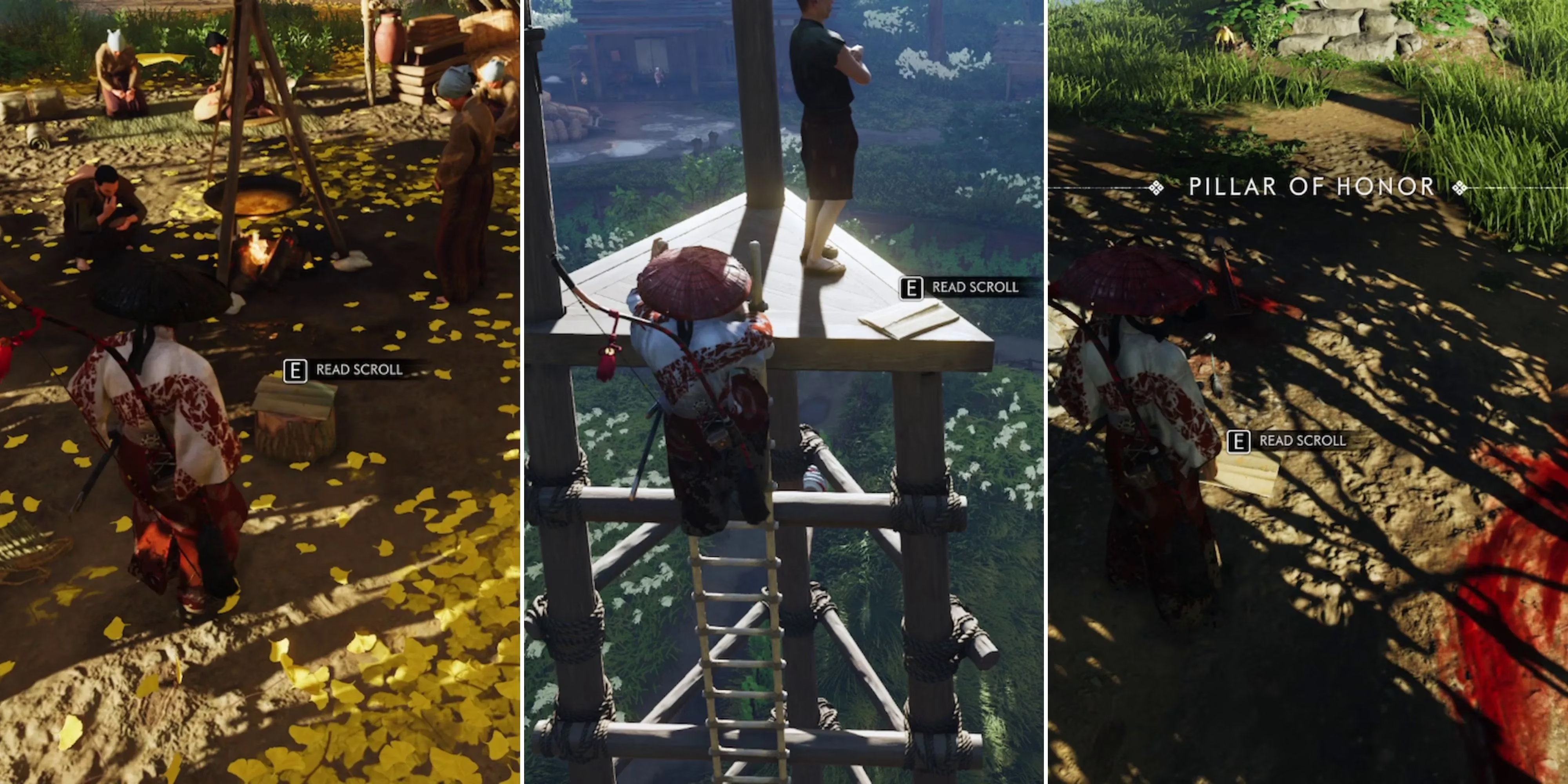
The journey south to Kuta Farmstead felt like a dance with shadows. Golden pampas grass swayed in the breeze, a stark contrast to the dread coiling in my chest. I climbed the watchtower, its wooden beams groaning under my weight, and there it was—the second letter, lying innocently next to the lookout post. It mentioned a copse of trees past the grass, a Pillar of Honor near Sibling Rocks. My mind raced: Why here? Why now? The ink on the page seemed to bleed with urgency, as if the family's fate hung by a thread. 😔 I lingered, imagining Toku's sister scanning the horizon, hope flickering like a dying ember. The farmstead felt abandoned, yet alive with memories—corners where laughter might have once echoed now silent witnesses to despair.
Following the clues, I trekked southeast, the landscape unfolding like a scroll of forgotten tales. At the Pillar of Honor, amid a grove of ancient trees, I found the third letter beside a grisly pile of bodies. 😢 The scent of decay hung heavy, a cruel reminder of the Mongols' brutality. The letter spoke of a boat at a nearby waterfall, a chance for escape to the mainland. But as I stood there, the wind howling through the rocks, a cold dread settled in. Was this hope or a trap? My thoughts jumped—fragmented, like shards of a broken mirror. One moment, I saw visions of salvation; the next, the stark reality of death. The path downward was treacherous, hugging the cliff's southern edge, each step a whisper of peril. Soon, I descended toward the waterfall, its roar a thunderous dirge.
Below, an old campsite awaited, a tableau of tragedy. Two bodies lay still—a man and a woman—and peering over the edge, I saw another on the jagged stones. The fourth letter rested on the beach, a final testament in the sand. As I picked it up, all four letters vanished from my grasp, replaced by a minor legend increase. But that felt hollow. Standing there in 2025, the waves crashing against the shore, I pieced together the story: Toku's family never boarded the boat. Likely ambushed by Mongols or bandits, they perished waiting. Toku, finding her loved ones gone, must have flung herself into the abyss. The waterfall's mist kissed my face, a chilling echo of her fall. 💔
In the end, as I retraced my steps back to that first camp, the wind carried the same sorrow. No markers, no grand quest—just a family's silent scream, lost in time. And I, Jin Sakai, am left to wonder: In this war-torn world, are we all just ghosts chasing echoes?