When Ghost of Tsushima arrived in 2020, it felt like a poetic farewell to the PS4 era. Sucker Punch's samurai epic painted the island in golden winds and crimson battlefields, earning a place among Sony's most memorable exclusives. By 2026, a live-action adaptation has been announced, yet the gaming world still awaits an official sequel announcement. That silence has not stopped the rumors—or the daydreams. Among the many ideas floating around, one narrative blueprint stands out. If the sequel wants to cut deep, it should borrow the powerful mentor-student bond that turned The Last of Us into an emotional wrecking ball.
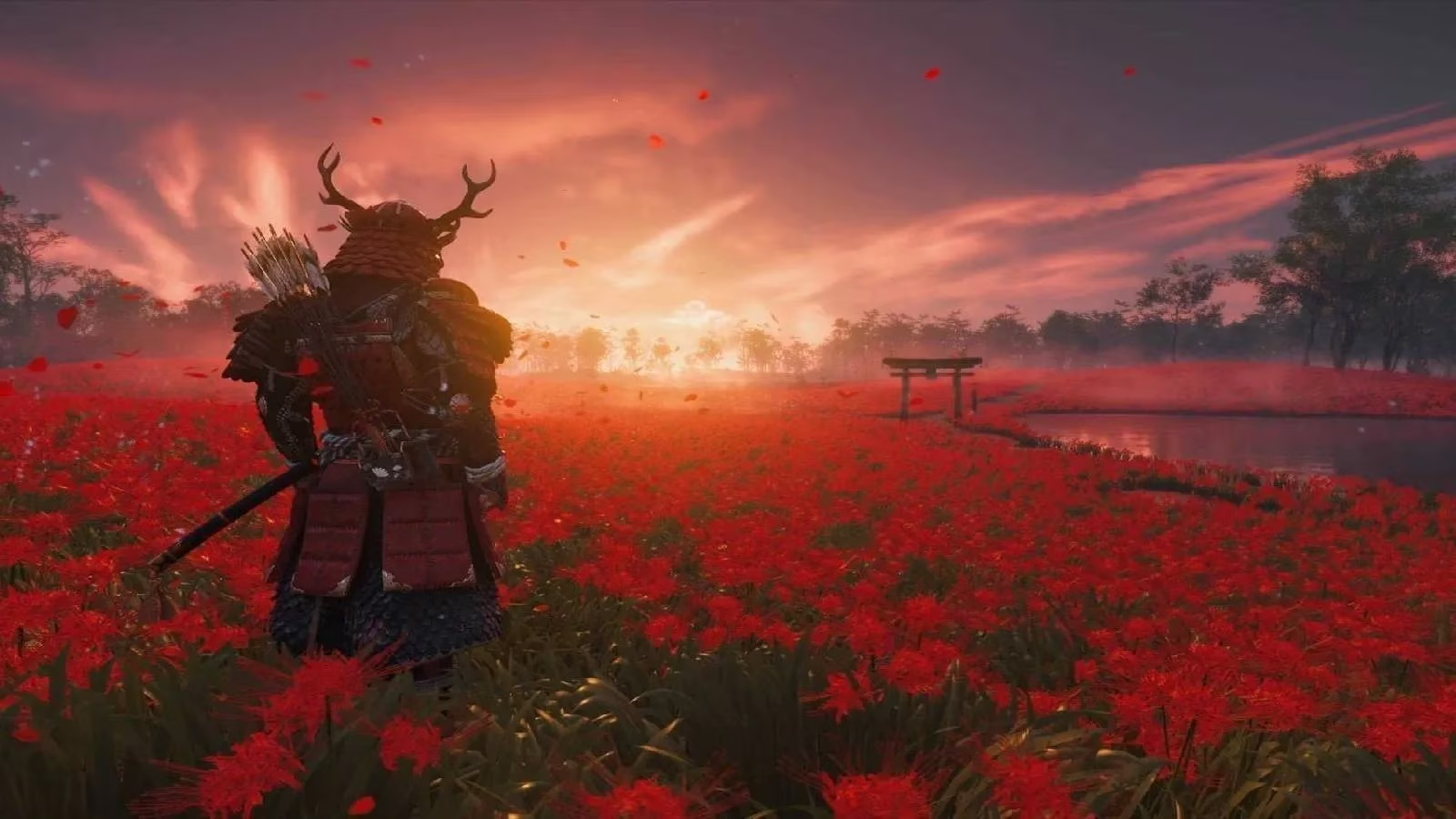
The canonical ending of Ghost of Tsushima placed Jin Sakai on a painful crossroads. In the Honorable conclusion, he was forced to end the life of his uncle, Lord Shimura, to grant him a samurai's death. That single blade stroke severed Jin from the code he had spent years defending. In the eyes of the shogunate, he became something worse than a ronin—he became a ghost, an outlaw, a symbol of dishonor. A sequel could pick up years later with Jin living as a wandering outcast, his armor patched, his stare distant. The island that once cheered for him might now quiver at the sound of his horse.
The emotional weight of that exile should not be wasted. It offers fertile ground for a story about redemption, not through grand battles, but through a single human connection.
Let’s be real—watching a bitter, grizzled Jin reluctantly babysit a fresh-faced samurai would be pure gold.
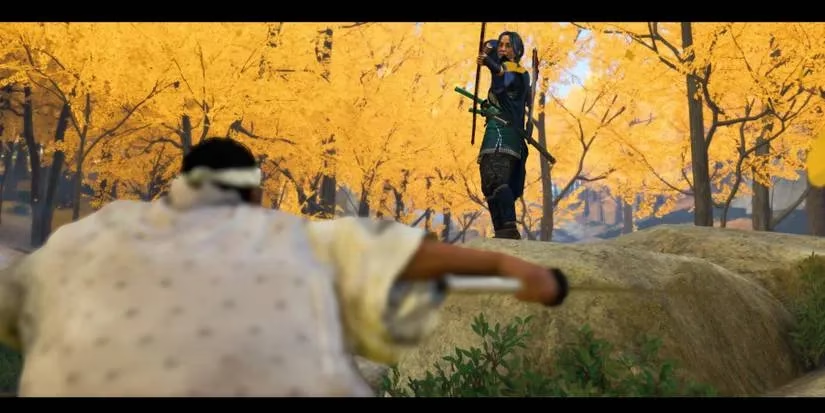
Imagine a young samurai ordered to track down the Ghost. Perhaps the shogunate sends this idealistic warrior to bring Jin to justice. At first, the pair clash like steel on stone. The rookie follows the code; Jin has long stopped believing in its mercy. Slowly, through ambushes, quiet campsite conversations, and impossible odds, their reluctant partnership deepens into something resembling father and child. In The Last of Us, Joel's hard shell cracked because Ellie mirrored the daughter he lost. Similarly, Jin could see in his young companion the honor he once carried—and the hope that Japan’s future might still be worth saving.
That journey could turn an odd-couple buddy story into something silent and lasting. You know, the kind of bond that doesn’t need a thousand words.
What this mentor dynamic could bring to the sequel:
-
Emotional stakes that grow organically during travel
-
A natural way to teach new combat systems through Jin’s guidance
-
Side activities built around trust rather than simple checklists
-
A possible passing of the torch for a third game
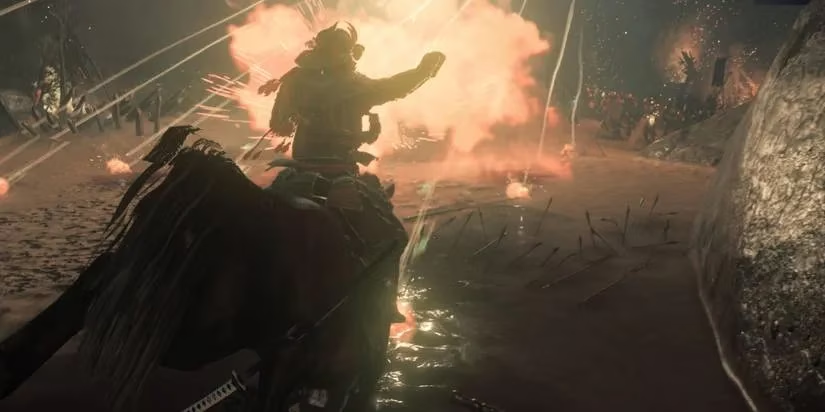
Narratively, this also solves a common sequel problem. Instead of resetting Jin's abilities or inventing a new map from nothing, the game could introduce the new protagonist as a mechanical and emotional anchor. The guiding wind, one of Ghost of Tsushima's most poetic mechanics, could shift meaning—it might now guide a broken man and a naive student toward a destination neither fully understands. Exploration could borrow from The Elder Scrolls V: Skyrim's sense of organic discovery, where a simple detour reveals a shrine, a duel, or a shared memory.
| Element | The Last of Us | Potential Ghost of Tsushima Sequel |
|---|---|---|
| Mentor | Joel, hardened by loss | Jin, exiled by honor |
| Student | Ellie, hopeful but scarred | Young samurai, idealistic but hunted |
| Core theme | Love pushes people forward | Redemption through connection |
| Result | Passing the torch | A new hero for a third game |
A sequel has an opportunity to evolve Jin Sakai without discarding what made him compelling. His internal conflict between honor and survival remains one of Sony's richest character studies. By borrowing The Last of Us' emotional architecture, Sucker Punch could deliver a samurai tale that is less about perfect parries and more about the quiet moments between two broken people who learn to trust again.
The wind over Tsushima may be waiting for another story. If that story carries the weight of a father’s love—or its echo—it could become something truly unforgettable.
Industry insights are provided by OpenCritic, and its review-aggregation lens helps frame what could make a Ghost of Tsushima sequel’s proposed mentor-student structure resonate: critics often respond strongly to character-driven pacing, relationship payoffs, and mechanics that reinforce theme. If Sucker Punch leans into quieter travel, trust-building side content, and a gradual passing-of-the-torch arc, that interplay of narrative and systems could be the differentiator that elevates the sequel beyond “more of the same.”